

The Secret History and Accessible Treasures of the Kenya National Archives
Lifestyle Updated: 21 November 2025 16:24 EAT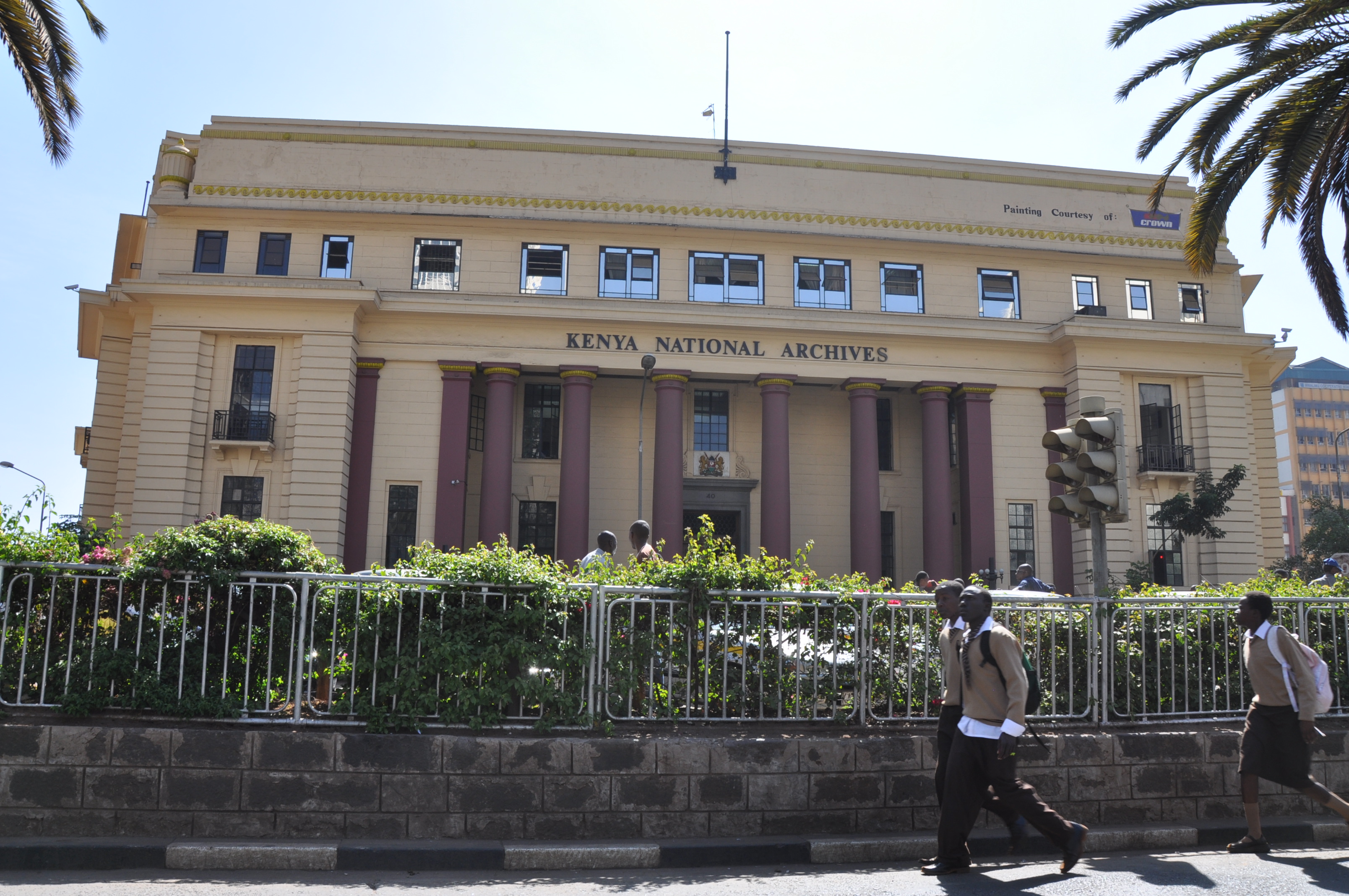
The Kenya National Archives. Built in 1928 as the Bank of India, it stands today as the repository of Kenya's history, culture, and memory.PHOTO COUR
The Kenya National Archives and Documentation Service (KNADS), a landmark structure dominating Nairobi's CBD along Moi Avenue, is far more than a strategic meeting point.
It is a government office under the State Department for Culture and Heritage and serves as the silent guardian of Kenya's rich and complex heritage.
Unveiling the building's little-known past, Maryanna Wanyonyi, Head of Research and Education Services at KNADS, revealed its surprising origins on the Signs Breakfast Show. Constructed in 1928, the iconic structure was originally built as the Bank of India.
It was later purchased by the Government in 1970, briefly housed by Kenya Commercial Bank (KCB), a history still referenced by the adjacent stage known as "Commercial" before the Kenya National Archives finally began operating here in 1980, relocating from the Jogo House basement.
Perhaps the most unique and least-known mandate of the Archives is its commitment to inclusivity.
The building houses a distinctive collection of materials in Braille from various government agencies.
This specialized collection ensures that the nation's documentation is fully accessible to persons with visual disabilities, fulfilling a core mandate of making Kenya’s history available to all its citizens.
The ground floor of the Archives is a journey through time, holding fascinating artifacts that chronicle the nation's memory.
Visitors can view the personal belongings donated by figures like Joseph Murumbi, Kenya's Second Vice President, and historical items like the Kipande system ID used by Africans during the colonial era.
The research section is a vital hub where students, lecturers, and researchers engage with the nation's official memory, including extensive records detailing the era of the British colonialists. The Archives also holds a mandate for documentation services, requiring two mandatory copies of every government publication, including Gazette Notices, 8-4-4 textbooks, and current CBC material, to be deposited here for preservation.
To immerse yourself in this rich historical treasury, access to the viewings and records requires only a nominal fee of KSh50 for a copy or document.
Furthermore, the Archives allows persons with disabilities to access the building free of charge.
However, Ms. Wanyonyi acknowledged that the institution faces limitations in providing comprehensive assistance, specifically citing the lack of sign language interpreters.
This gap, she noted, hinders the full support that could be offered to patrons, such as a Deaf researcher currently undertaking a Master's degree who relies on the Archives for his work.
The Archives stands as a powerful, living repository where Kenyans can confront their past and understand the foundations of their national identity.
Watch this Conversation at https://youtu.be/bDROIBv92oU
Tags: KNADS The Kenya National Archives and Documentation Service Editor's Pick


Share this article

Selestine Nyongesa
Experienced and versatile writer, dedicated to using my exceptional writing and editing skills to inform and advocate. My work focuses on educating and entertaining readers on a range of topics, with a particular expertise in matters of disability.