Yoon Suk Yeol Jailed For Life Over Martial Law Insurrection
News Updated: 19 February 2026 16:28 EAT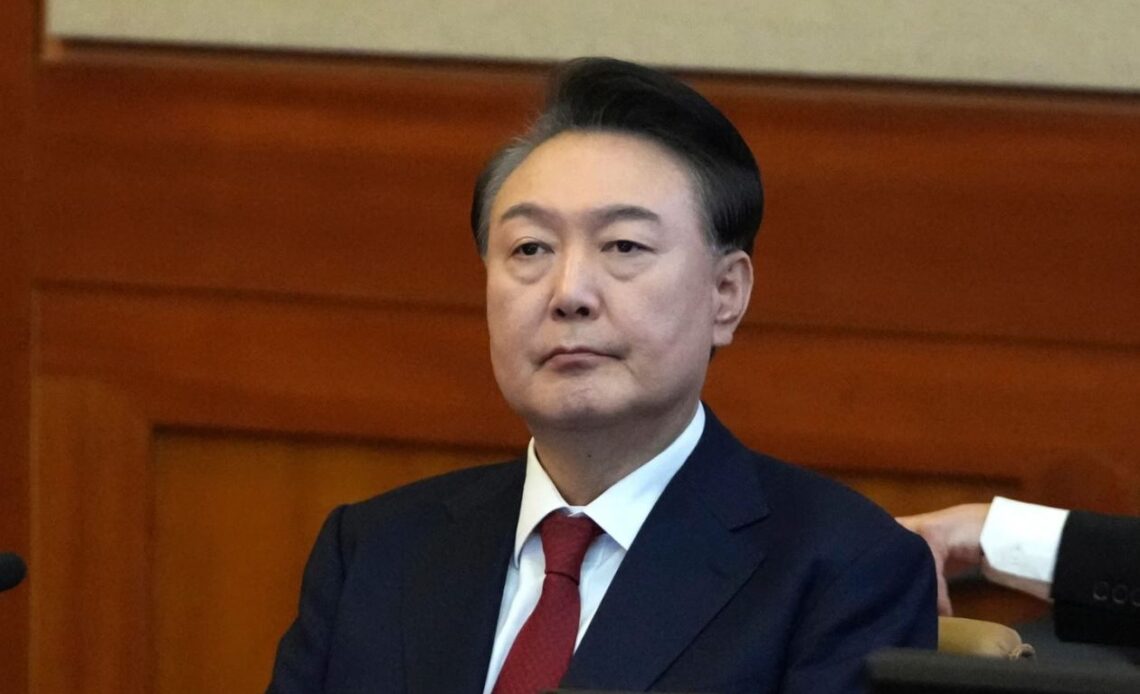
Former South Korean President Yoon Suk Yeol has been sentenced to life imprisonment after a Seoul court found him guilty of leading an insurrection linked to his brief declaration of martial law in December 2024. The ruling marks one of the most dramatic judicial reckonings in the country’s democratic history, sealing a political collapse that unfolded over little more than a year.
The verdict was delivered by the Seoul Central District Court, which concluded that Yoon’s actions constituted a grave violation of constitutional order. Judges determined that the former head of state mobilised military and police forces in a manner designed to obstruct the functioning of government and concentrate executive authority beyond legal limits.
At the heart of the case was Yoon’s late-night declaration of martial law on December 3, 2024, a move he defended at the time as necessary to break political deadlock. Lawmakers and civil society groups swiftly denounced the decision, arguing it lacked constitutional justification and posed a direct threat to democratic governance.
Within hours of the declaration, members of the National Assembly of South Korea forced their way into parliament despite security blockades and voted to reject the martial law order. The measure was subsequently lifted, but the political damage proved irreversible.
In the weeks that followed, impeachment proceedings were initiated. Lawmakers accused Yoon of abusing his authority and attempting to undermine constitutional checks and balances. The crisis triggered nationwide protests, reflecting a sharply divided public mood.
In April 2025, the Constitutional Court of Korea unanimously upheld the impeachment, formally removing Yoon from office. That decision paved the way for criminal prosecution on charges of insurrection and abuse of power.
Prosecutors argued that the deployment of troops to key government sites, including the legislature, amounted to an unlawful attempt to suppress institutional opposition. They sought the death penalty, describing the acts as a fundamental assault on the constitutional framework established after decades of authoritarian rule.
The court ultimately opted for life imprisonment instead of capital punishment, citing the absence of fatalities during the brief martial law period. Nevertheless, the sentence stands among the harshest ever imposed on a democratically elected leader in South Korea.
Several senior officials who served in Yoon’s administration have also faced trial. Former defence and security officials received lengthy prison terms for their roles in executing the martial law directive, reinforcing the breadth of the legal fallout.
The ruling has reverberated far beyond Seoul, drawing international attention to South Korea’s institutional resilience. Analysts describe the judgment as a powerful demonstration that even the highest office remains subject to constitutional constraints and judicial scrutiny.
As the country moves forward, the life sentence against Yoon closes a turbulent chapter that tested the strength of its democratic institutions. The decision underscores the enduring weight of constitutional order in a nation shaped by a complex history of authoritarianism and reform.
Tags: Editor's Pick Politics Signsmedia Signstvkenya South Korea
Share this article

FELIX MAKONA
FACT FINDER AND DATA DRIVEN JOURNALIST. DATA MINING AT IT'S BEST. GET FACTS RANGING FROM MATTERS DISABILITY AND INCLUSION, POLITICS, ECONOMY, SPORTS AND GENERAL NEWS AROUND THE WORLD