

No New Constituencies Before 2027, IEBC Tells Kenyans
News Updated: 24 June 2026 16:35 EAT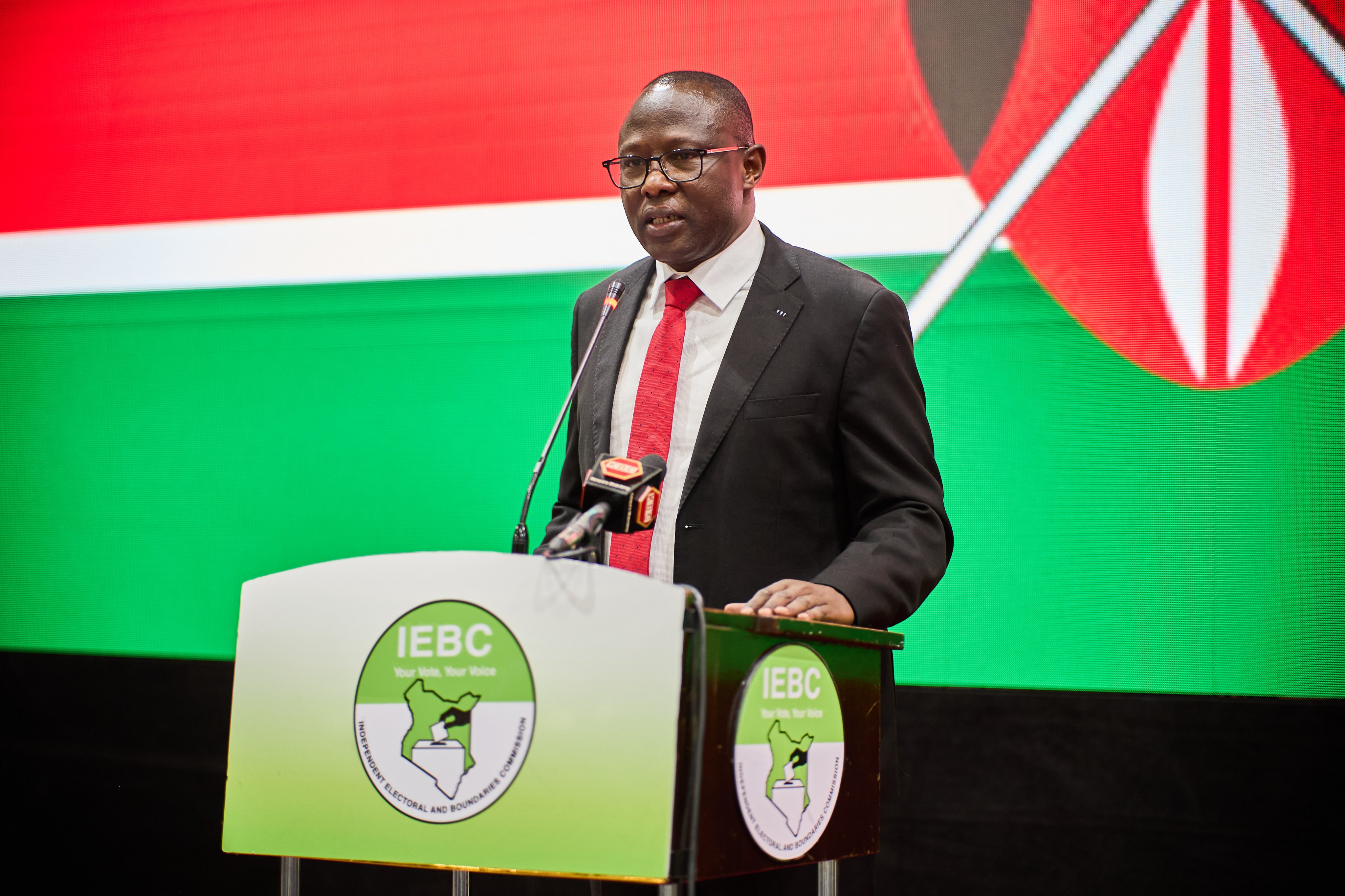
Photo Courtesy: IEBC Chairperson Erastus Ethekon speaking during the 2024–2029 Strategic Plan, as well as Election Operation Plan 2025-2027
The Independent Electoral and Boundaries Commission (IEBC) has assured Kenyans that preparations for the 2027 General Election remain on course despite challenges that have delayed the constitutionally mandated review of electoral boundaries. IEBC Chairperson Erastus Ethekon said the commission remains committed to conducting a transparent, impartial and credible election while safeguarding the secrecy of the ballot and ensuring that electoral outcomes reflect the will of the people.
Ethekon said the commission had resolved to adopt a phased approach to the boundary review process after assessing legal, constitutional and operational realities facing the electoral body. He noted that boundary delimitation is a key pillar of Kenya’s representative democracy because it ensures electoral units reflect population changes, geographical realities and constitutional principles of equal representation through the “one person, one vote, one value” doctrine.
“Boundary delimitation is a cornerstone of Kenya's representative democracy. It operationalizes the constitutional principle of one person, one vote, one value by ensuring that electoral units respond to population dynamics and evolving geographical realities.”
The commission explained that the Constitution requires periodic reviews of electoral boundaries every eight to 12 years to prevent voter dilution and promote equitable representation. The last review was completed in 2012, meaning the second cycle should have been concluded by March 2024. However, a series of setbacks prevented the completion of the exercise within the stipulated timeframe.
“The constitution obligates the commission to periodically review electoral boundaries to promote equitable representation and prevent voter dilution in line with democratic principles.”
According to the IEBC, extensive groundwork had already been undertaken under the Boundaries Review Operations Plan 2019–2024. The preparations included development of review methodologies, timelines, data collection frameworks, public participation strategies, acquisition of Geographic Information Systems (GIS) technology, geolocation systems, pilot studies and staff training to support what the commission described as a highly technical and resource-intensive process.
“Significant preparatory work has been undertaken since 2019, including comprehensive situational analysis, pilot studies, acquisition of GIS and geolocation systems, training and capacity development to support this complex exercise.”
A major setback emerged following the exit of the previous team of commissioners in January 2023. The electoral agency remained without commissioners until July 2025, creating a leadership vacuum that affected policy decisions and oversight functions required for critical electoral activities. During that period, the secretariat could not proceed with several boundary review processes that required approval and direction from commissioners.
“After the previous commission left office in January 2023, IEBC remained without commissioners until July 2025, forcing the secretariat to pause activities that required policy decisions and oversight.”
The commission further cited ongoing court battles surrounding the 2019 Kenya Population and Housing Census data in Garissa, Wajir and Mandera counties. A High Court ruling delivered in January 2025 invalidated the census results for the three counties after finding procedural and legal shortcomings in the census process. The matter is currently before the Court of Appeal, which directed that the status quo be maintained pending determination of the appeal.
“The High Court invalidated the 2019 Kenya Population and Housing Census data for Garissa, Wajir and Mandera counties, and the matter remains before the Court of Appeal.”
IEBC said the litigation has rendered the affected census data unusable for official purposes, creating a significant challenge because population figures are central to boundary delimitation. The commission relies on census data to determine population quotas used in reviewing the 290 constituencies and 1,450 wards across the country, making a legally valid census report indispensable to the exercise.
“The commission needs a valid and legally binding population census report to determine the population quota and undertake its constitutional mandate on electoral boundaries.”
Without an approved census dataset, the commission cannot publish a preliminary boundary review report or issue a notice of intention to delimit electoral units as required by law. IEBC officials said any attempt to proceed without legally recognised population data would expose the entire exercise to legal challenges and undermine its credibility.
“For us to publish the preliminary report and a notice of intention to delimit electoral boundaries, that data is very critical and remains indispensable to the process.”
The electoral body also acknowledged facing increasing litigation over delays in conducting the boundary review. Several court cases have already been filed by individuals and groups seeking orders compelling the commission to complete the exercise before the 2027 General Election. IEBC warned that continued legal disputes could further complicate the process depending on future court decisions.
“The commission continues to face litigation arising from delays in conducting and completing the boundary review exercise, creating additional risks for the process.”
The commission said it had also taken into account the advisory opinion issued by the Supreme Court, which directed IEBC to consider the constitutional and legal implications of the delayed review and determine an appropriate course of action. The guidance, together with legal advice from the Attorney-General and pending court proceedings, informed the commission’s decision to adopt a phased implementation strategy.
“The Supreme Court directed that the commission apply its mind to the issue and make a determination on the most appropriate way forward.”
Apart from the boundary review, IEBC is simultaneously handling a range of electoral responsibilities ahead of the next General Election. These include by-elections, continuous voter registration, institutional reforms, legislative proposals, voter education programmes and stakeholder engagement initiatives designed to strengthen electoral preparedness.
“The commission is currently managing by-elections, continuous voter registration, institutional reforms, voter education programmes and stakeholder engagement ahead of the 2027 General Election.”
Ethekon said undertaking a full-scale boundary delimitation exercise alongside these responsibilities would create substantial operational bottlenecks and could potentially compromise the commission’s readiness for the 2027 polls. He noted that electoral boundary reviews involve complex technical work, extensive public participation, stakeholder consultations and the possibility of prolonged legal disputes.
“Undertaking full delimitation alongside these other critical obligations would create significant operational bottlenecks and may compromise overall electoral preparedness for 2027.”
The commission estimates that a comprehensive delimitation exercise ordinarily takes about two years to complete. It also pointed out that the Constitution requires any boundary review intended for use in a General Election to be finalised at least 12 months before that election, a timeline that has already become difficult to achieve given existing constraints.
“A full delimitation exercise generally requires about two years, yet the Constitution requires any review intended for use in a General Election to be completed at least twelve months before polling day.”
Under the phased approach, IEBC will continue with activities not affected by litigation, including geospatial data collection, data validation, technical preparations, acquisition of specialised tools and staff capacity development. These activities are expected to ensure that the commission remains prepared to resume substantive boundary delimitation once the legal and data-related obstacles are resolved.
“The commission will progressively implement activities not affected by litigation, including geospatial data collection, validation, capacity building and acquisition of requisite tools.”
The commission has indicated that substantive boundary delimitation will likely take place after the 2027 General Election using a legally valid and nationally applicable population census. It also clarified that while many Kenyans have petitioned for the creation of additional constituencies and wards, the Constitution caps the number of constituencies at 290, meaning any review can only alter boundaries and names rather than increase or reduce the total number of constituencies.
“Substantive boundary delimitation will be undertaken after the General Election using a legally applicable population census. The Constitution caps the number of constituencies at 290, meaning the review can alter boundaries but not increase or reduce the total number.”
Tags: Article Edit Editor's Pick Editors choice Edung Ethekon Factual data Get facts Iebc Iebc Commisioners IEBC Iebc Voter Internews News Article Signs Signs Media Signs Media Kenya Limited Signs Tv Signsmedia Signst Signstv Signstvkenya Signsv Ssignstv



Share this article

FELIX MAKONA
FACT FINDER AND DATA DRIVEN JOURNALIST. DATA MINING AT IT'S BEST. GET FACTS RANGING FROM MATTERS DISABILITY AND INCLUSION, POLITICS, ECONOMY, SPORTS AND GENERAL NEWS AROUND THE WORLD