

NFDK Donates KSh 3.7 Million Worth of Assistive Devices to Persons With Disabilities in North Eastern Kenya
News Updated: 09 February 2026 13:00 EAT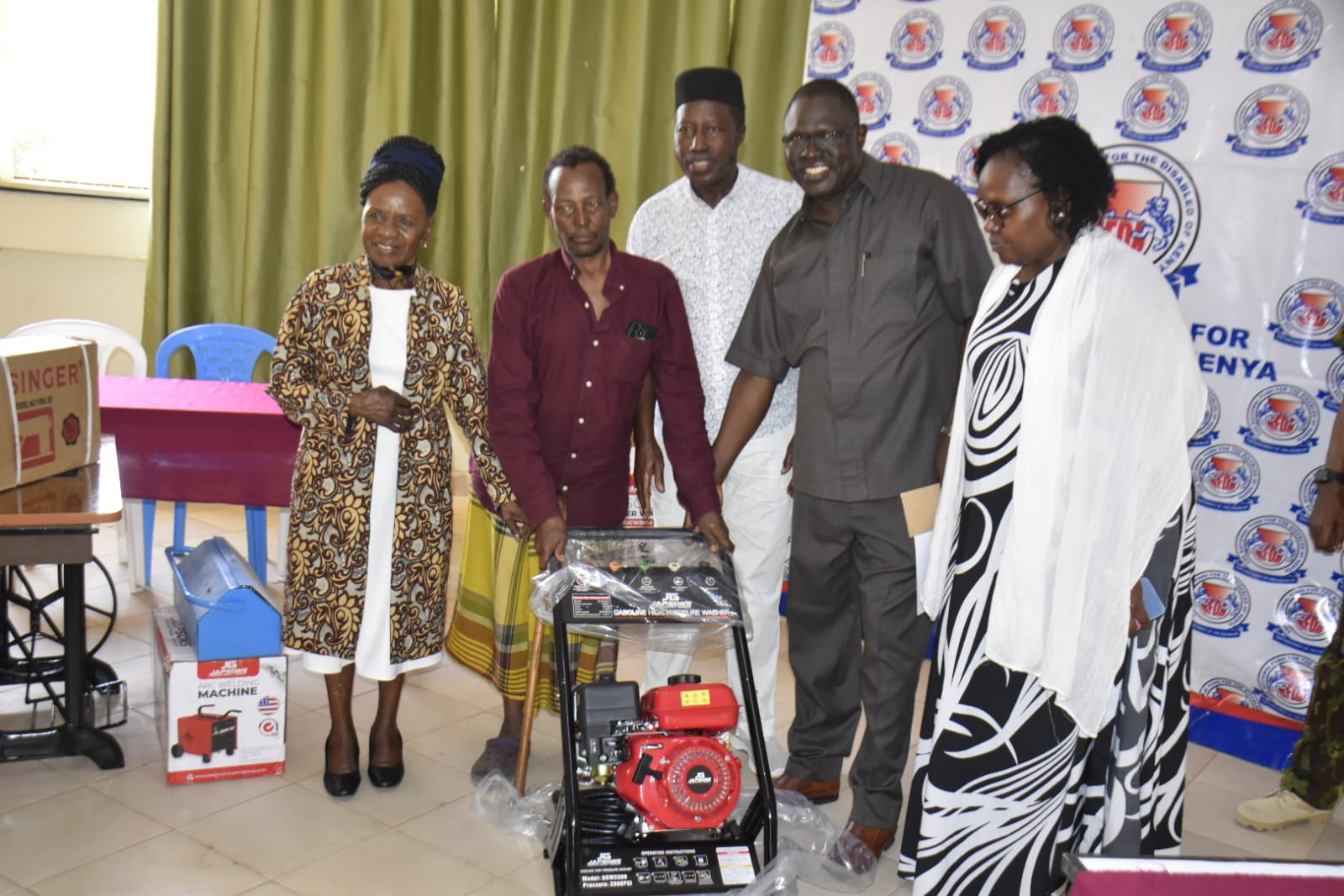
The National Fund for the Disabled of Kenya (NFDK)has donated assorted assistive devices and vocational tools valued at KSh 3.7 million to Persons With Disabilities drawn from the counties of Garissa, Mandera, and Wajir in the North Eastern region.
The donation exercise was conducted at the Government Guest House in Garissa town.
Speaking during the distribution of the donations, NFDK Programmes Committee Chairperson Prof. Julia Ojiambo said the initiative seeks to promote self-reliance, resilience, and sustainable livelihoods among Persons With Disabilities.
Prof. Ojiambo noted that empowering Persons With Disabilities enables them to meet their needs in a dignified and sustainable manner, while reducing dependency on society. She emphasized that access to assistive devices and tools of trade plays a critical role in enhancing economic independence.
The donated items included wheelchairs, walking crutches, car wash equipment, sewing machines, welding machines, and other assistive devices and vocational tools.
She added that the donation forms part of NFDK’s broader efforts to strengthen social and economic empowerment for persons with disabilities across the country. “One way to do this is through the provision of assistive devices and vocational tools of trade to individual persons with disabilities and grants to institutions for learners with disabilities,” Prof. Ojiambo said.
She further urged beneficiaries to use the donated items responsibly and for their intended purpose to achieve long-term impact. “I want to encourage you to use the items, whether tools of trade or grants, for the intended purpose so that they can truly support your livelihoods and create lasting impact for you, your families, and your communities,” she added.
The Chairperson underscored that meaningful disability inclusion requires collective effort and partnership.
She noted that NFDK recognises that disability inclusion cannot be achieved by one institution alone, but calls for strong collaboration among national and county governments, development partners, community leaders, families, and Persons With Disabilities themselves.
Tags: Matters Disability NFDK PWD Editor's Pick
Share this article