

Former DP Gachagua Condemns Brutal Githurai Evictions
News Updated: 19 February 2026 17:47 EAT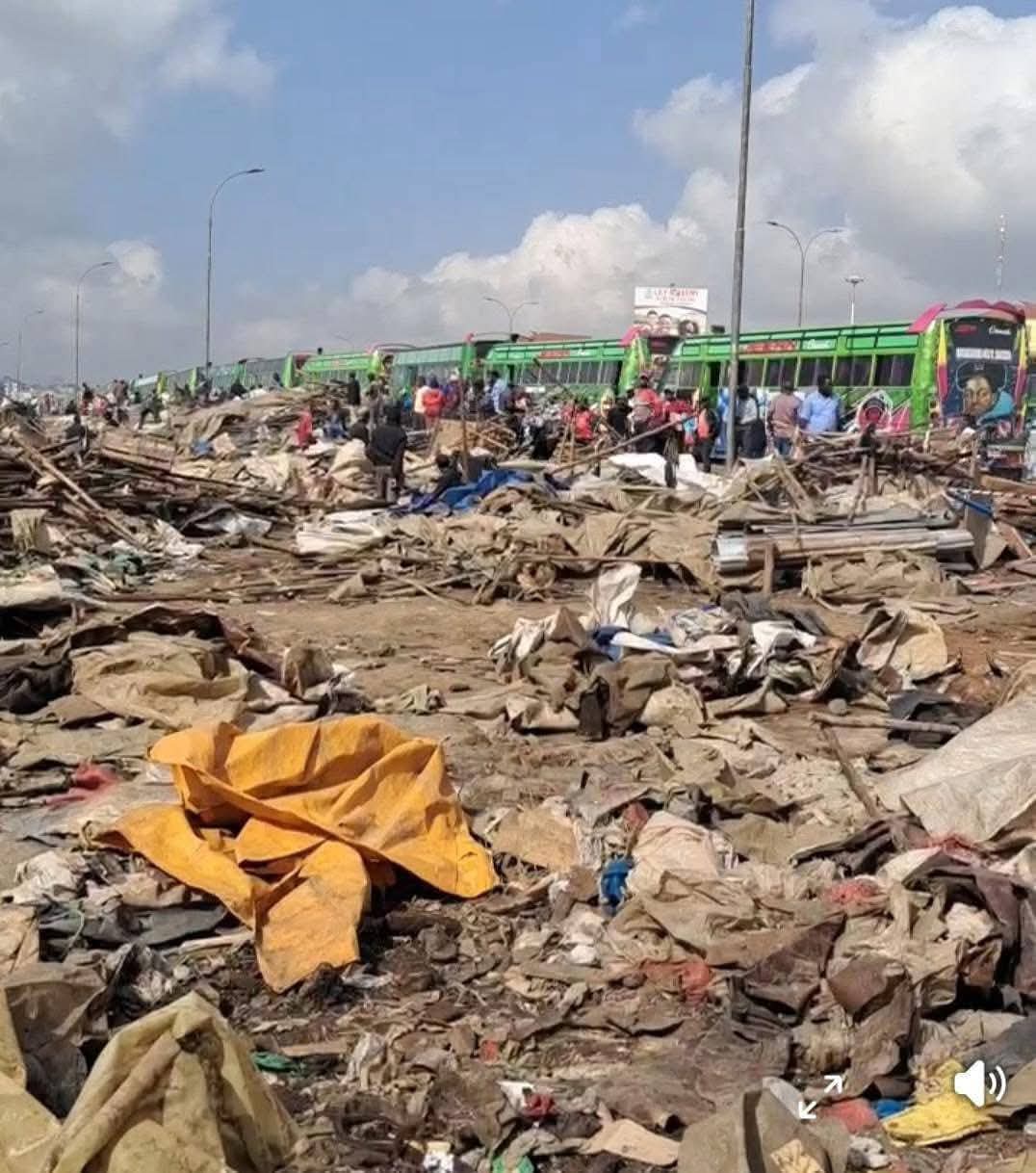
Githurai roundabout market place market stalls demolished overnight
In the early hours of February 19, 2026, traders in Githurai woke to the sight of heavy machinery dismantling their stalls and kiosks along the Thika Superhighway. The demolition, carried out by the Kenya National Highways Authority (KeNHA), was part of a larger plan to clear the road reserve for infrastructure projects, including bus bays and road widening. The suddenness of the operation left many traders scrambling to salvage their belongings.
A significant police presence accompanied the demolition teams, with officers positioned along the road and near the market area. Authorities maintained that the deployment was necessary to maintain order and prevent any disruptions during the operation. However, for residents, the sight of heavily armed officers overseeing the dismantling of livelihoods sparked outrage and deep anxiety.
Traders protested the action, arguing that the notice to vacate was too short and that they had not been adequately consulted. Many said they had invested their savings into their stalls and businesses, only to watch them torn down in a single night. The confrontations between traders and police escalated into heated exchanges, though major injuries were not widely reported.
The demolition sparked a broader debate about the government’s approach to enforcing regulations along public infrastructure corridors. Critics argued that the operation reflected a lack of empathy for citizens struggling in a challenging economy, where small-scale businesses are often the only source of income for families.
Former Deputy President Rigathi Gachagua condemned the demolition, describing it as both senseless and inhuman. He accused the government of deploying extreme measures against ordinary citizens while ignoring pressing security concerns elsewhere in the country. His statements highlighted growing political tensions and underscored the frustrations of ordinary Kenyans affected by such operations.
Gachagua contrasted the Githurai demolitions with a tragic incident in Isiolo, where a deputy principal and teacher of Physics and Mathematics at Leparua Secondary School, William Mwangi Gitobu, was brutally attacked and killed by bandits on the same night. The teacher’s murder, coupled with a subsequent raid on a local police station, exposed what critics called the government’s misplaced priorities.
Residents of Githurai expressed feelings of betrayal and helplessness, noting that their businesses supported entire families and communities. For many, the demolition symbolized a disconnect between government planning and the realities faced by ordinary citizens. Social media erupted with images and videos of overturned stalls and frustrated traders, amplifying public debate.
The Kenya National Highways Authority maintained that the operation was lawful and aimed at improving traffic flow and public safety. They insisted that traders had received prior notice and that the demolition was part of a nationwide effort to enforce road reserve laws. Yet, for residents and political observers, the explanation did little to ease tensions or restore livelihoods.
Local leaders called for dialogue between authorities and affected traders to find immediate relief measures. Proposals included temporary relocation spaces and compensation for lost goods, though no formal plan had been confirmed at the time of reporting. Meanwhile, the heavy police presence remained a stark reminder of the high-stakes enforcement measures used in urban areas.
Analysts note that such operations can have long-term economic and social consequences, particularly for small-scale entrepreneurs who rely on daily trade. The Githurai demolitions serve as a case study in balancing development needs with human-centered policy, highlighting the challenges governments face in enforcing regulations without alienating citizens.
As the day progressed, the mood in Githurai remained tense but resolute. Traders vowed to rebuild and continue their livelihoods despite the loss, while the public awaited further statements from the government regarding compensation and future enforcement practices. The events underscored ongoing debates about governance, economic hardship, and the rights of citizens in urban Kenya.
Tags: Article #Business Editor's Pick Rigathi Gachagua Signs Media Kenya Limited Signsmedia


Share this article

FELIX MAKONA
FACT FINDER AND DATA DRIVEN JOURNALIST. DATA MINING AT IT'S BEST. GET FACTS RANGING FROM MATTERS DISABILITY AND INCLUSION, POLITICS, ECONOMY, SPORTS AND GENERAL NEWS AROUND THE WORLD