

Design for Exclusion: Why Public Restrooms Force Short Stature Men to Struggle in Silence
Matters Disability Updated: 19 November 2025 16:10 EAT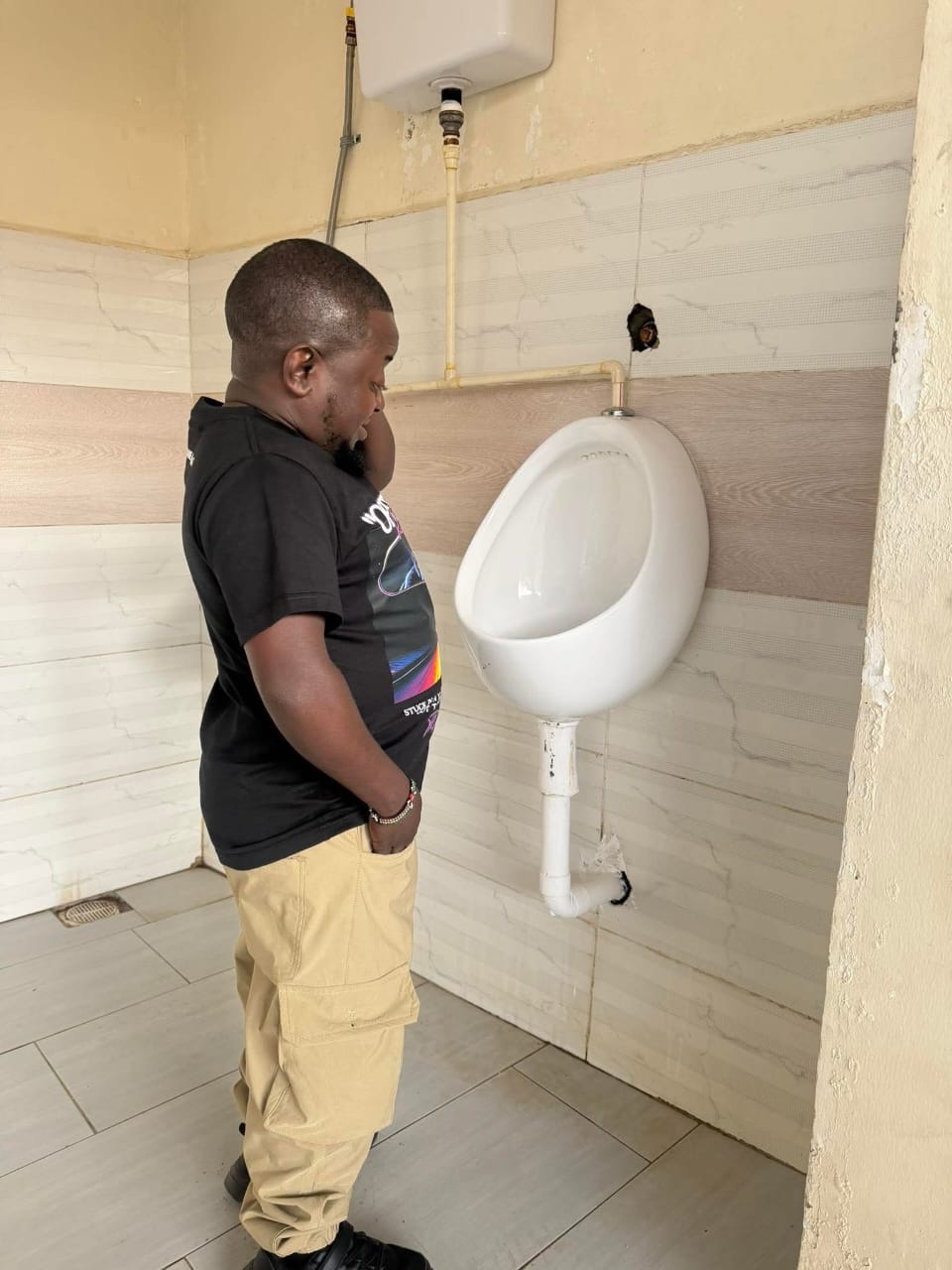
By Daniel Weloba
It’s an ordinary fixture, white porcelain on a tiled wall. Yet for many short-stature men in Kenya, what looks ‘normal’ is anything but. Public urinals mounted at heights intended for the average or tall male user can turn a simple biological need into a moment of awkwardness, struggle, or even humiliation.
To cope, some perch on their toes, others lean uncomfortably, some avoid public washrooms altogether, and many quietly pray for a stall to be free.
A few carry a small block in their bag or ask a companion for support. The friction seems tiny, but repeated daily, it becomes a quiet form of exclusion.
Why urinal height matters, more than you’d think
Built spaces reflect assumptions about who will use them. While global accessibility policies, including the UN Convention on the Rights of Persons with Disabilities, ask governments to design for all bodies, implementation often focuses on wheelchair access.
The distinct ergonomic needs of short-stature individuals remain largely unaddressed in most building guidelines, catalogues, and architectural templates.
Kenya’s own accessibility discourse has grown stronger over the past decade, but short-stature representation is still emerging.
Across Kenya, urban centres are modernizing at different speeds, and this shows clearly in their public facilities.
Nairobi’s newest malls, such as those in Westlands and Karen, have begun adopting more universal-design restroom layouts, though few include low-rim urinals.
In Mombasa, the hospitality sector leads modest progress, with a handful of hotels offering dual-height fixtures after renovations.
Kisumu’s public buildings remain a mix: older washrooms at the bus parks and markets are rarely inclusive, while newer offices around Milimani are more likely to follow updated standards.
Counties like Nakuru, Eldoret, and Machakos, currently expanding their stadiums, parks, and county offices, have opportunities to set the pace, though adoption is inconsistent.
In short, Kenya is moving, but unevenly, and short-stature-friendly urinals remain the exception rather than the rule.
Codes, standards, and the missing pieces
Some international standards, such as ADA-linked guidelines, recommend maximum rim heights for accessible urinals.
But even these were mainly designed with wheelchair access in mind, not for individuals who can stand but are significantly shorter than average.
Kenya’s standard building codes and many county approvals follow broad accessibility principles but rarely specify alternative urinal heights. In the rush to meet minimum compliance, ramps, grab bars, and wider doors, vertical body variation is often overlooked.
Architects typically select from standard-height product catalogues, which rarely include lower-rim urinals.
Invisibility in design leads to invisibility in society. When a man must strategize every time he needs to relieve himself, he may avoid certain venues, limit travel, or feel embarrassed in social spaces. Workplaces may unintentionally disadvantage employees who need private or alternative facilities.
Families adapt privately, installing custom fixtures or adjusting routines, but public inclusion remains missing.
A urinal rim might seem like a trivial detail, but for short-stature men, it can shape their daily comfort and confidence in public spaces.
Kenya’s cities are evolving; inclusivity should evolve with them. When counties, architects, manufacturers and user communities work together, no one has to carry a block in their backpack just to use a public restroom.
Achieving height-based accessibility in public restrooms for short-stature men is a straightforward and inexpensive process that hinges on minor structural adjustments and a shift in policy.
Practical solutions proposed include the installation of dual-height urinals (one standard, one lower) in multi-urinal facilities, the use of adjustable wall-mounted fixtures, and the adoption of temporary step-blocks in high-traffic areas pending permanent retrofits.
Crucially, counties must update their procurement rules to specifically require at least one low-rim urinal or an equivalent accessible option, ensuring that such fixtures are respected and functional through clear signage and staff awareness.
These adjustments are emphasized as costing little in comparison to the immense dignity and confidence they provide
Implementing this change is a shared responsibility across multiple stakeholders. Government and Counties, particularly major urban centers like Nairobi, Mombasa, Kisumu, Eldoret, and Nakuru, must take the lead by updating building standards and enforcing inclusive procurement policies.
Disability groups, specifically short-stature associations, are vital for offering lived-experience insights to inform code revisions and product testing.
Furthermore, Manufacturers and Architects must expand their product ranges to normalize low-rim options in design specifications, while Venue Managers must conduct regular audits and low-cost retrofits to rapidly close the inclusion gap in their facilities.
The goal is simple: to design Kenya for all of Kenya, quietly, respectfully, and with dignity built right into the wall.
Tags: NCPWD SHORT STATURE United Nations Convention On The Rights Of Persons With Disabilities
Share this article