
WHO Donates Ksh 10 Million in Emergency Health Kits to Combat Flood Risks
News Updated: 23 March 2026 13:06 EAT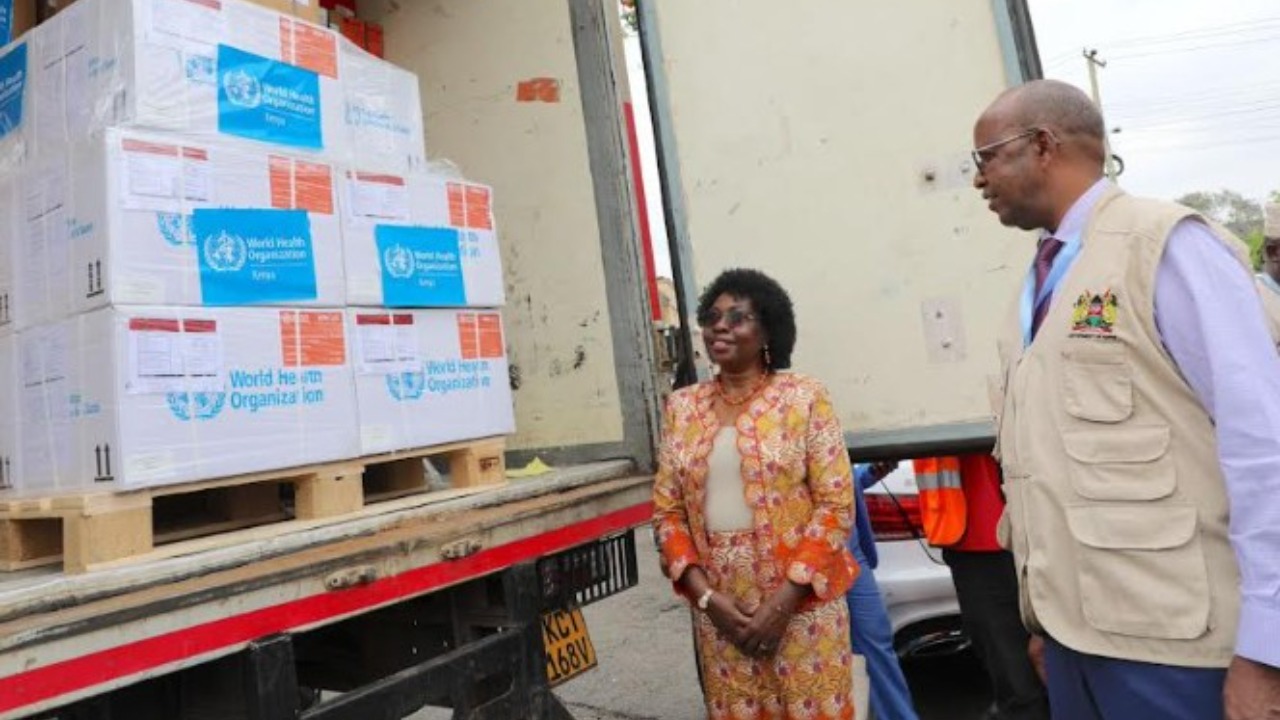
The Ministry of Health has received a significant boost in its efforts to manage the health impacts of the ongoing March–April–May long rains following a donation of emergency health kits from the World Health Organization valued at approximately Sh 10 million. The supplies were officially handed over at Afya House in Nairobi, where Secretary of Administration Mr. Adan Halakhe represented Health Cabinet Secretary Aden Duale alongside WHO Acting Representative to Kenya Dr. Neema Rusibamayila Kimambo.
During the ceremony, CS Duale expressed his gratitude for the timely intervention, noting that the contribution is essential for strengthening Kenya’s capacity to handle public health risks linked to heavy flooding. These kits contain a range of essential medicines, medical supplies, and life-saving equipment designed to assist frontline health workers in providing critical care, managing potential disease outbreaks, and maintaining indispensable health services in the hardest-hit regions. The Cabinet Secretary highlighted that the current rainy season has already caused significant displacement and service disruptions, increasing the vulnerability of many communities.
To counter these challenges, the Government has activated emergency preparedness and response mechanisms in coordination with county governments. These measures focus on intensifying disease surveillance, deploying rapid response teams, and ensuring that essential medicines remain available to those in need. CS Duale also issued a call for public vigilance, urging citizens to prioritize hygiene, use safe water sources, sleep under treated mosquito nets, and seek immediate medical attention if they fall ill.
Dr. Kimambo echoed these concerns, offering condolences to affected families while reaffirming the WHO’s commitment to Kenya’s recovery efforts. She pointed out that the disruption of sanitation and clean water access significantly elevates the risk of cholera and malaria. The donated supplies, which include cholera management kits, rapid diagnostic tools, water treatment supplies, and trauma kits, are expected to provide vital health support for at least 5,000 people in the most severely impacted areas.
Tags: Editor's Pick WHO


Share this article

Edith stacy
I specialize in developing compelling stories and leading teams to produce high-quality, impactful journalism.