

Pakistan Hosts Crucial US–Iran Talks Amid Fragile Ceasefire
News Updated: 11 April 2026 12:37 EAT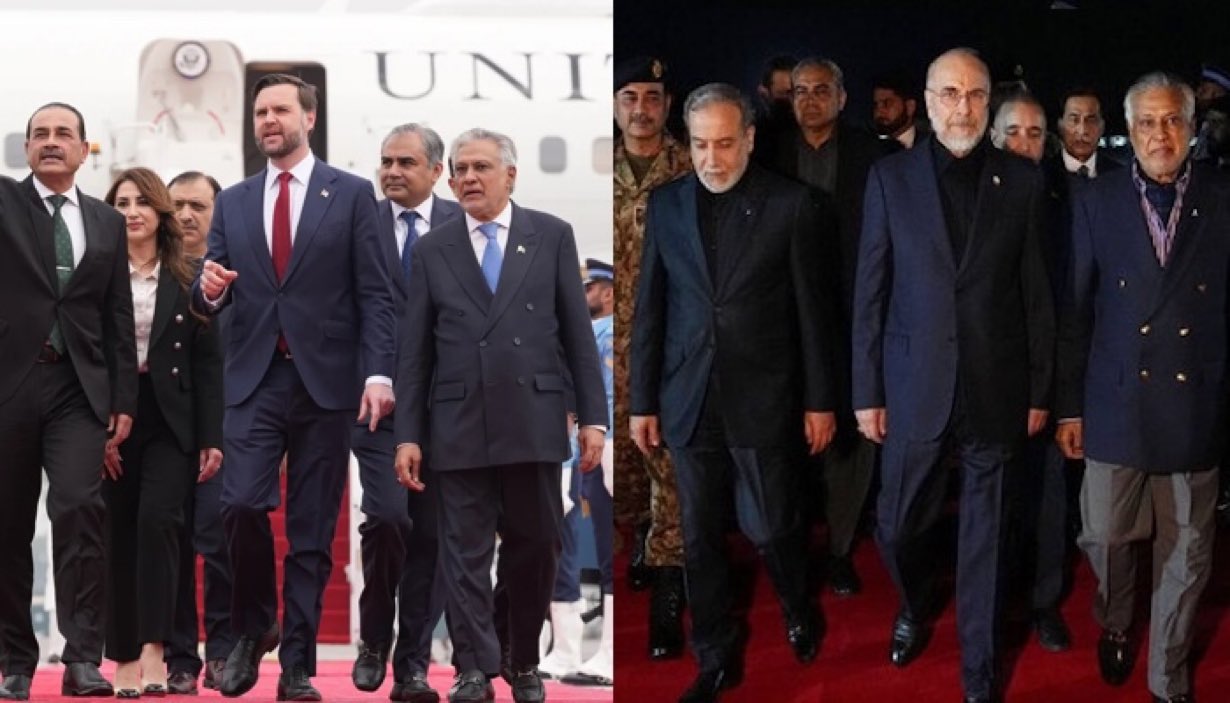
Pakistan Hosts Crucial US–Iran Talks Amid Fragile Ceasefire
Negotiators from Iran and the United States have arrived in Islamabad, Pakistan, for high-level talks aimed at easing tensions between the two long-time adversaries. The delegations touched down on Saturday under tight security, signaling the start of a closely watched diplomatic process.
The U.S. delegation is being led by Vice President JD Vance, marking one of the most senior American representations in direct engagement with Iran in recent years. His presence underscores Washington’s interest in achieving tangible outcomes from the negotiations.
Iran’s delegation includes senior leadership figures such as Foreign Minister Abbas Araghchi and parliamentary speaker Mohammad Bagher Ghalibaf. Their participation reflects Tehran’s willingness to engage at a high level despite ongoing tensions.
The talks are expected to focus on stabilizing a fragile ceasefire that followed a recent escalation involving military exchanges earlier in 2026. Both sides are seeking to prevent further deterioration into a broader regional conflict.
A key issue on the agenda is Iran’s nuclear programme, which has remained a central point of dispute for years. The United States is expected to push for stricter limitations and verification mechanisms.
Sanctions relief is another major topic, with Iran seeking the easing of economic restrictions that have heavily impacted its economy. Tehran has indicated that meaningful concessions will depend on concrete steps from Washington.
The status of the Strait of Hormuz is also under discussion, given its importance to global oil shipments. Disruptions in the waterway during recent tensions have raised concerns about energy security worldwide.
Regional conflicts, particularly those linked to Iran’s influence in the Middle East, are expected to feature prominently in the negotiations. The United States has consistently called for a reduction in Iran’s involvement in proxy conflicts.
Iran has reportedly set conditions ahead of the talks, including broader ceasefire guarantees tied to conflicts involving its regional allies. It is also pushing for the unfreezing of overseas financial assets.
Vice President JD Vance has publicly warned that the United States expects serious and honest engagement, cautioning against any attempts to delay or manipulate the process. His remarks highlight the cautious tone surrounding the negotiations.
Despite the high-level participation, expectations for a breakthrough remain modest. Analysts note that deep-rooted mistrust and conflicting strategic interests continue to pose major obstacles.
Pakistan is hosting the talks as a neutral party, leveraging its diplomatic ties with both countries. Shehbaz Sharif’s government has positioned itself as a facilitator of dialogue and de-escalation.
Security has been significantly heightened across Islamabad, with restricted access to key venues and increased military presence. Authorities are keen to ensure the safety of all delegations and prevent disruptions.
The talks are being closely monitored by the international community, including global powers and energy markets, due to their potential impact on regional stability and oil prices.
If successful, the negotiations could mark a significant step toward reducing decades of hostility between Iran and the United States. However, failure to reach consensus could risk renewed escalation and further instability in the region.
Tags: Article Donald Trump Edit Editor's Pick Editors choice Factual data Iran Iran Nuclear Deal Iran Israel News Article Signs Media Kenya Limited Trump Donald United States Israel VS Iran war Usa World War Three


Share this article

FELIX MAKONA
FACT FINDER AND DATA DRIVEN JOURNALIST. DATA MINING AT IT'S BEST. GET FACTS RANGING FROM MATTERS DISABILITY AND INCLUSION, POLITICS, ECONOMY, SPORTS AND GENERAL NEWS AROUND THE WORLD