

South Africa Sees Nationwide Anti-Migrant Protests as June 30 “Deadline” Sparks Tension
News Updated: 30 June 2026 14:11 EAT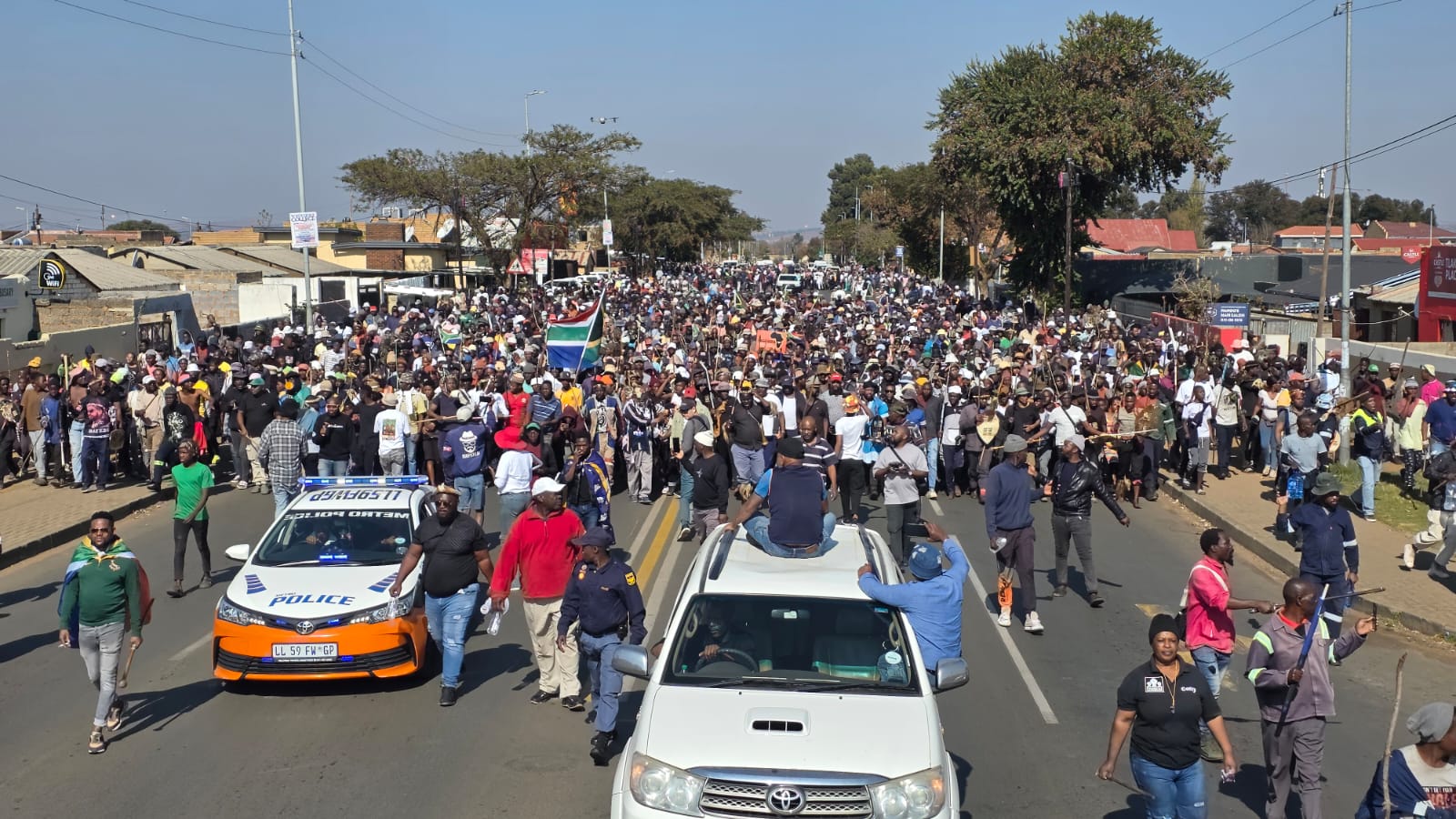
Photo Courtesy: Protesters in Soweto are marching to hand over a memorandum of demands to government officials
South Africa experienced widespread demonstrations on Tuesday as hundreds of protesters took to the streets in Johannesburg, Pretoria and Durban in opposition to undocumented migration. The gatherings were linked to a self-declared “June 30 deadline” issued by activist groups calling for foreign nationals without legal status to leave the country.
The protests were organised primarily by civic movements that have campaigned on anti-immigration platforms, arguing that undocumented migration places pressure on jobs, housing and public services. The ultimatum, however, was not recognised by the South African government, which maintained that immigration enforcement is a constitutional responsibility of state authorities.
Security forces were deployed across major urban centres as authorities moved to prevent possible escalation. Police presence was reinforced in Gauteng and KwaZulu-Natal, with additional readiness measures reported in other provinces amid concerns of unrest linked to past episodes of xenophobic violence.
In Johannesburg, large groups gathered in central districts, prompting temporary road disruptions and heightened security around key commercial areas. Similar scenes were reported in Pretoria, where marchers assembled at public squares before moving through government precincts under police supervision.
Durban also recorded significant turnout, with demonstrators converging in central business zones. Several businesses in affected areas reportedly closed or reduced operations due to uncertainty over safety conditions during the marches.
The “deadline” itself had circulated for weeks through online campaigns and local mobilisation networks, despite lacking any legal basis. Authorities reiterated that only formal state processes govern deportation or removal of undocumented migrants.
Government officials stressed that immigration enforcement remains under the jurisdiction of law enforcement agencies and immigration services, dismissing any parallel system of civic enforcement as unlawful.
Ahead of the protests, embassies from several African countries issued advisories to their nationals in South Africa, urging caution and situational awareness. Some migrant communities reported relocating temporarily or limiting movement in high-risk areas.
Humanitarian organisations raised concern over rising anxiety among foreign nationals, particularly in informal settlements and urban working districts where many migrants are concentrated. Reports indicated increased fear-driven closures of small businesses owned by foreign nationals.
The demonstrations came against a backdrop of persistent public debate in South Africa over unemployment and migration policy, issues that have periodically fuelled social tension in recent years. Analysts note that such grievances are often amplified during periods of economic strain.
Security agencies continue to monitor developments across provinces, with authorities indicating that while most demonstrations remained contained, the situation required ongoing vigilance to prevent isolated incidents from escalating.
Officials have urged calm and reiterated that any grievances related to migration must be addressed through legal and institutional channels rather than street-level enforcement campaigns.
Tags: Edit Editor's Pick Protests Signs Signs Media Signs Media Kenya Limited Signs Tv Signsmedia Signst Signstv SignsTV Signstvkenya Signsv South Africa Ssignstv The Kenya Editors Guild (KEG)


Share this article

FELIX MAKONA
FACT FINDER AND DATA DRIVEN JOURNALIST. DATA MINING AT IT'S BEST. GET FACTS RANGING FROM MATTERS DISABILITY AND INCLUSION, POLITICS, ECONOMY, SPORTS AND GENERAL NEWS AROUND THE WORLD