
Sam Mangwana: The Legendary Voice of Congolese Rumba
Entertainment Updated: 04 February 2026 20:16 EAT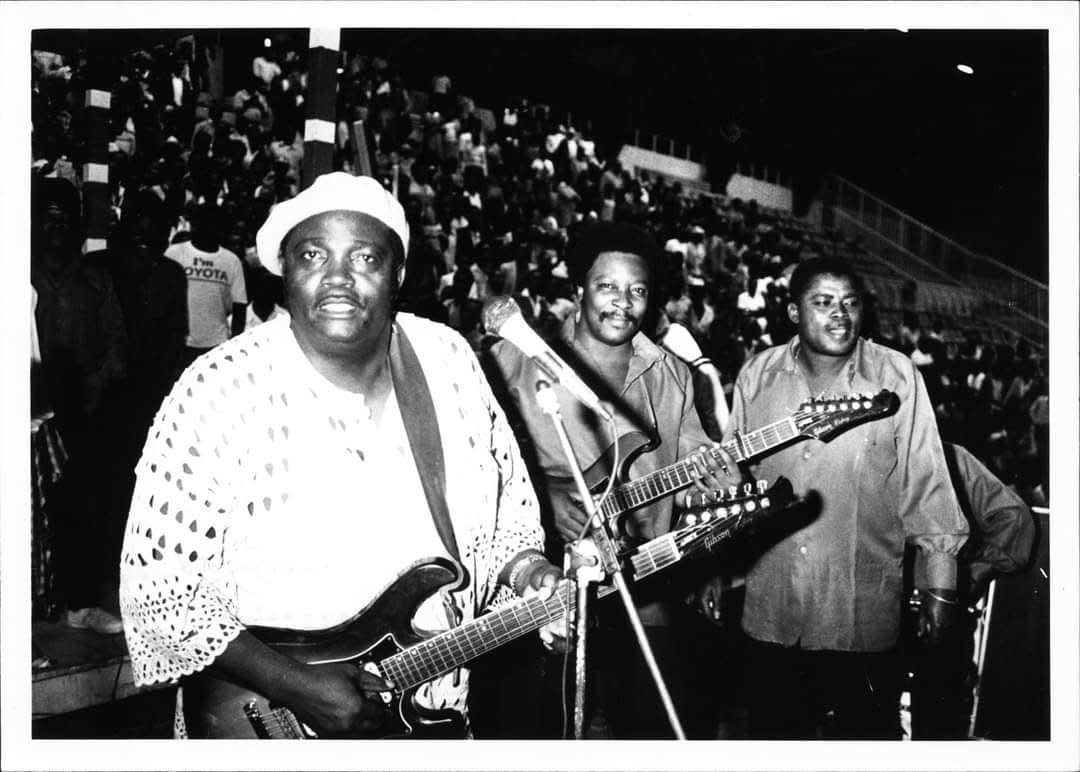
Sam Mangwana et le T.P. O.K. Jazz: "Les Rumeurs "- Inedits 1988 - 1989The last album before Franco Luambo luazzo Makiadi died in 1989
Sam Mangwana, born Samuel Mangwana on 21 February 1945 in Leopoldville, now Kinshasa, Democratic Republic of Congo, is a Congolese-born musician of Angolan heritage whose career has spanned more than five decades. He is widely recognized as one of the most influential figures in Congolese rumba and soukous music, genres that blend African rhythms with Afro-Latin melodies and have shaped Central African music for generations.
Mangwana grew up in a culturally rich environment, singing in Salvation Army choirs at a boarding school near Kinshasa, which helped him develop his expressive voice and passion for music. He began his professional career in 1963 with African Fiesta, a leading rumba band led by Tabu Ley Rochereau. This early experience gave him exposure to performance, composition, and collaboration with some of Congo’s most prominent musicians.
In the mid-1960s, Mangwana worked with several other bands, including Los Batchichas, Negro Band, and Orchestre Tembo, further expanding his skills and versatility as a vocalist. In 1967, he co-founded Festival des Maquisards, a collaborative ensemble of prominent Congolese musicians, which became known for fusing traditional rumba with other African musical styles.
Mangwana’s international profile grew significantly when he joined TPOK Jazz in 1972, the legendary band led by Franco Luambo Makiadi. As a lead vocalist, he contributed to numerous classic tracks and honed his style alongside some of Africa’s most influential musicians. After leaving TPOK Jazz, he briefly rejoined Tabu Ley’s Afrisa International before relocating to Abidjan, Côte d’Ivoire, to pursue further opportunities in West Africa.
In 1978, Mangwana co-founded African All Stars, a band blending Congolese rumba, soukous, and Caribbean and West African influences. The group gained popularity for its lively, danceable music and helped expand Mangwana’s reach across Africa. After the band disbanded in 1979, he launched a solo career, recording extensively and performing internationally.
Mangwana sings in multiple languages, including Lingala, French, Portuguese, Spanish, Kikongo, and Swahili, allowing him to connect with audiences across linguistic and cultural boundaries. His solo albums, such as Maria Tebbo, Cooperation (with Franco), Canta Moçambique, and Galo Negro, showcase his ability to blend traditional Congolese rhythms with global influences while addressing themes of love, unity, peace, and African identity.
The 1998 album Galo Negro, recorded in France, includes multilingual tracks that explore cultural heritage and colonial histories. Mangwana’s collaborations with artists like Franco and Tabu Ley and his extensive international tours earned him the nickname “pigeon voyageur” for his frequent travels and cultural bridging through music.
Mangwana has performed on stages across Africa, Europe, and the Americas, maintaining a global presence while promoting Congolese musical traditions. He has been honored in Angola and internationally for his contributions to African music, often described as an outstanding ambassador of African culture.
His career reflects a lifelong dedication to preserving Congolese rumba while innovating and embracing international influences. Mangwana’s influence extends to generations of African musicians who cite him as a primary inspiration, and his work continues to introduce global audiences to the richness of Central African music.
Today, Sam Mangwana remains an active and revered figure in African music, celebrated for his contributions to cultural heritage, his enduring voice, and his ability to unite audiences through the universal language of music.
Tags: Signs Media Kenya Limited Signstvkenya Signsmedia Centers For Disease Control Editor's Pick

Share this article

FELIX MAKONA
FACT FINDER AND DATA DRIVEN JOURNALIST. DATA MINING AT IT'S BEST. GET FACTS RANGING FROM MATTERS DISABILITY AND INCLUSION, POLITICS, ECONOMY, SPORTS AND GENERAL NEWS AROUND THE WORLD