

Awilo Longomba: The King of Congolese Soukouss Dance Floors
Entertainment Updated: 07 February 2026 20:53 EAT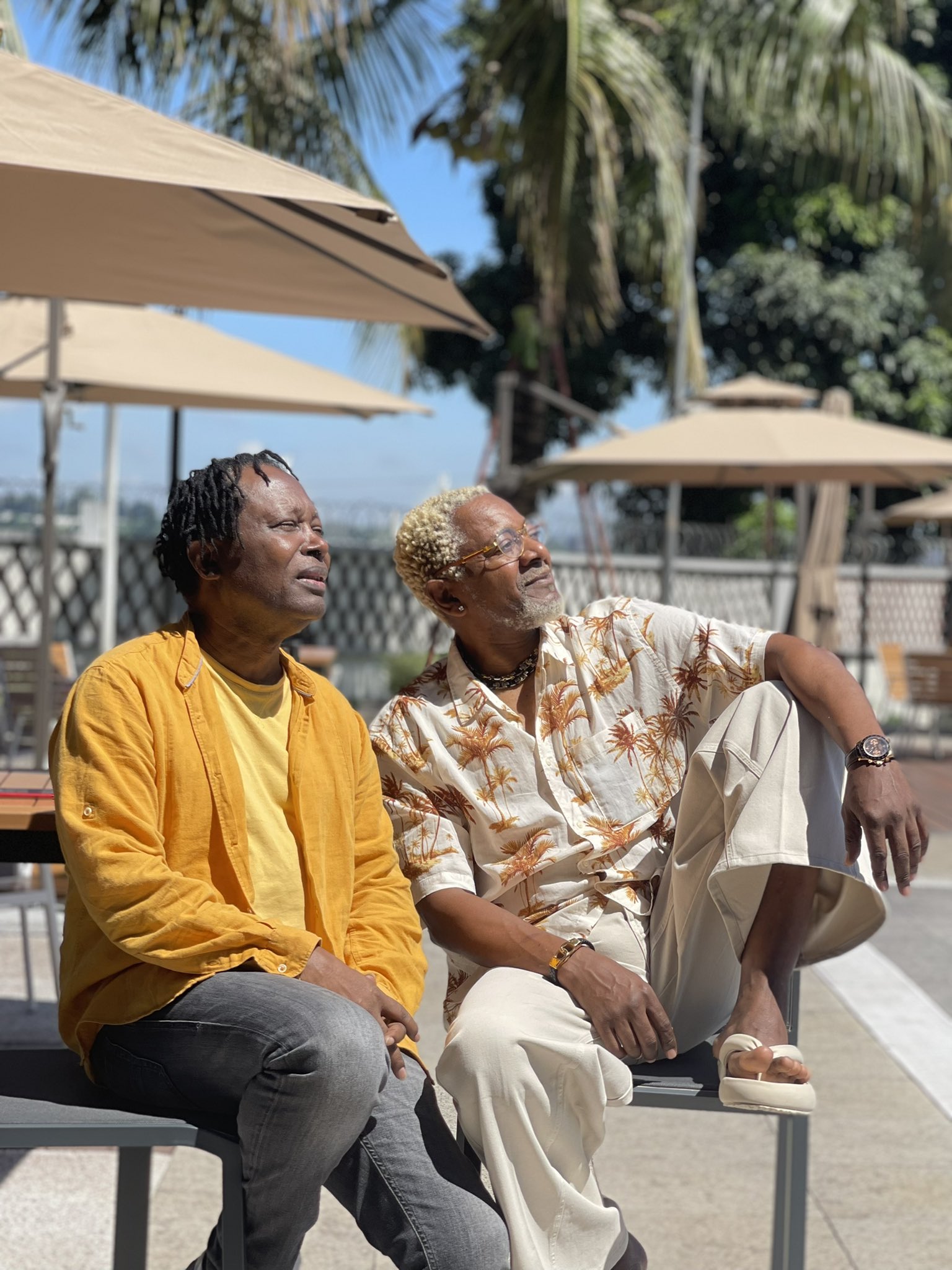
Awilo Longomba With his brother Lokua Kanza in Kinshasa DR Congo
Awilo Longomba was born on March 18, 1958, in Kinshasa, then Léopoldville, in what is now the Democratic Republic of Congo. He grew up in a musically rich environment at a time when Congolese rumba and its emerging offshoots dominated urban culture.
From an early age, Awilo showed a strong interest in rhythm and performance rather than formal singing. He was particularly drawn to drumming and dance, skills that would later define his unique identity in African music.
In the late 1970s, Awilo began his professional music career as a drummer. His technical ability and stamina quickly set him apart, earning him respect among seasoned musicians in Kinshasa’s competitive music scene.
His major breakthrough came when he joined Viva La Musica, the influential band founded by Papa Wemba. Within the group, Awilo served primarily as a drummer and dancer rather than a lead vocalist.
While at Viva La Musica, Awilo became known for his athletic stage performances and mastery of tempo. His drumming played a key role in shaping the band’s energetic live shows during the early 1980s.
Awilo spent several years with Viva La Musica, touring extensively across Africa and Europe. These tours exposed him to international audiences and modern production styles that later influenced his solo work.
In the late 1980s, Awilo left Viva La Musica to pursue an independent career. His decision marked a major transition from backing musician to front-line performer and recording artist.
Awilo released his debut solo album Mundele in 1988. The album introduced him as a vocalist and band leader, a shift that surprised many who previously knew him mainly as a drummer.
His second album, Carolina, released in 1993, brought him widespread recognition. The title track “Carolina” became a major hit across Africa and in Congolese diaspora communities.
With Carolina, Awilo helped popularize a faster, dance-driven form of soukous that emphasized movement, repetition, and club-friendly rhythms. This style resonated strongly with younger audiences.
In 1995, Awilo released Coupe Bibamba, an album that further cemented his status as a continental star. The song “Coupé Bibamba” became one of the most recognizable dance tracks in African popular music.
The success of Coupe Bibamba expanded Awilo’s reach beyond Central Africa into West, East, and Southern Africa. His music gained regular airplay in nightclubs, radio stations, and international festivals.
Awilo’s work is characterized by high-tempo percussion, catchy guitar lines, and minimal lyrical complexity, designed primarily to support dance and live performance rather than narrative storytelling.
Unlike many Congolese artists of his generation, Awilo placed less emphasis on long vocal sections and more on rhythm and choreography. This approach made his music adaptable to global dance scenes.
Throughout the late 1990s and early 2000s, Awilo continued releasing albums and singles, including Message, Goal, and Kafou Kafou, maintaining a consistent presence in African pop culture.
His performances became known for precision, discipline, and physical endurance. Awilo often rehearsed extensively with his band and dancers, setting high professional standards.
Awilo Longomba performed in major cities across Europe, North America, and Africa, particularly in France, where Congolese music enjoyed strong popularity among immigrant communities.
Despite shifts in musical trends, Awilo remained relevant by maintaining his core sound rather than radically changing his style. His music stayed closely tied to dance culture.
He collaborated with various African musicians and producers, though he largely maintained creative control over his musical direction and stage presentation.
Awilo’s influence can be seen in later generations of African dance music, particularly in the emphasis on rhythm-first composition and performance-based appeal.
He is often credited with helping modernize soukous, bridging traditional Congolese rumba with contemporary club and electronic sensibilities without abandoning its roots.
Beyond music, Awilo is known for maintaining a relatively private personal life. He has rarely been involved in public controversies compared to many peers.
His longevity in the industry is attributed to discipline, adaptability, and strong brand identity centered on dance and live entertainment.
Awilo has continued performing well into the 21st century, appearing at festivals, private events, and cultural celebrations across Africa and the diaspora.
He remains a respected figure in Congolese music history, frequently cited as one of the pioneers of modern soukous dance music.
Awilo Longomba’s career stands as an example of how rhythm, performance, and innovation can redefine a genre and secure lasting international recognition.
Tags: Dr Congo Drc Entertainment Signs Media Kenya Limited Signsmedia Signstvkenya


Share this article

FELIX MAKONA
FACT FINDER AND DATA DRIVEN JOURNALIST. DATA MINING AT IT'S BEST. GET FACTS RANGING FROM MATTERS DISABILITY AND INCLUSION, POLITICS, ECONOMY, SPORTS AND GENERAL NEWS AROUND THE WORLD