

Ruto to Push Africa’s Agenda at G7 as Mudavadi Calls for Global Economic Reform
News Updated: 16 June 2026 13:43 EAT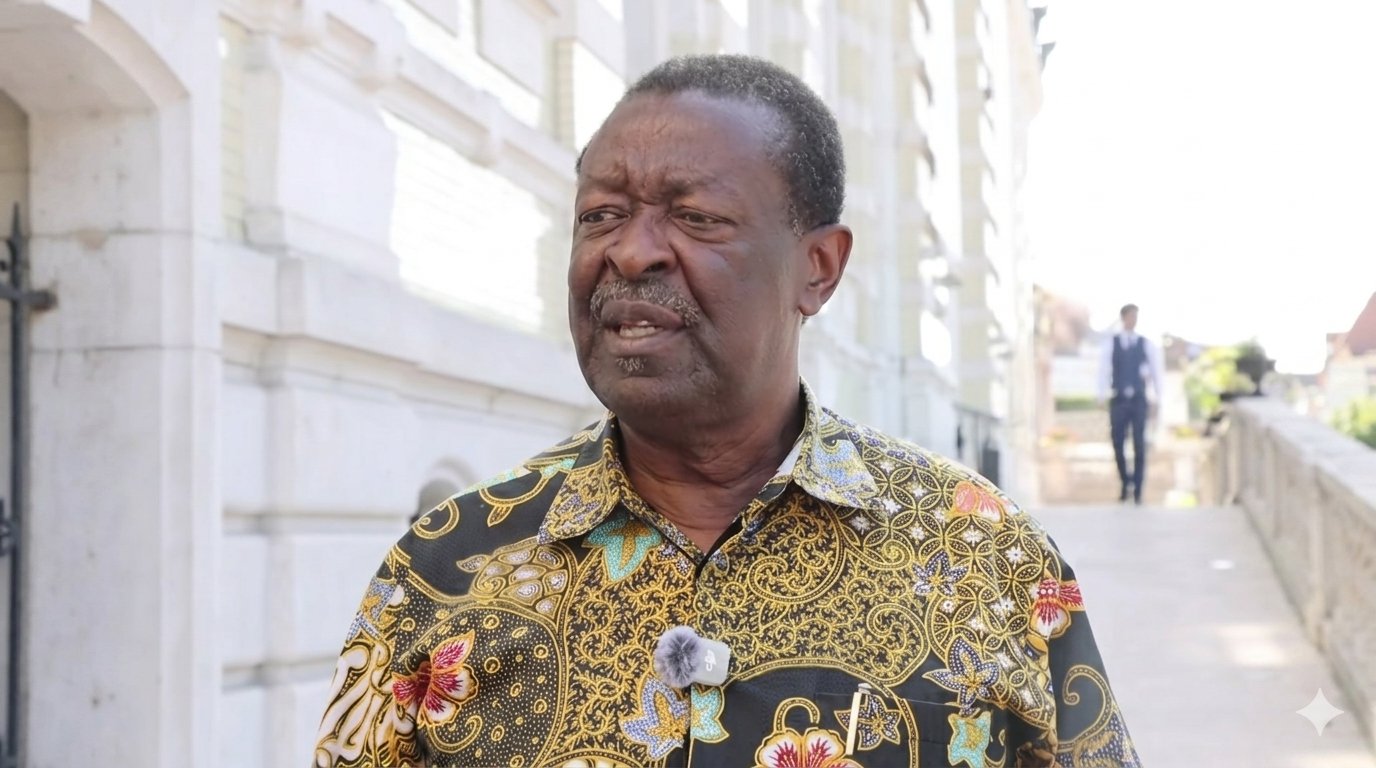
Prime Minister Musalia Mudavadi speaking in Évian-les-Bains, France, ahead of the G7 Summit.
Kenya has positioned its participation at the G7 Summit in France as an opportunity to advance both national and continental priorities, with President William Ruto expected to push for reforms in global economic governance and stronger international engagement on African challenges.
Speaking in Évian-les-Bains, France ahead of the summit, Foreign and Diaspora Affairs Cabinet Secretary Musalia Mudavadi said Kenya’s attendance reflects the country’s expanding diplomatic role and President Ruto’s influence in international discussions affecting developing economies.
Mudavadi said President Ruto is expected to champion issues affecting both Kenya and the wider African continent at a critical moment for global policy discussions.
“President Ruto has been a very, very important and consequential voice on behalf of the African Union on many global issues. So, we expect him to speak to issues that are critical for Kenya, but even more important, he'll be speaking on critical issues on behalf of the continent of Africa.”
A major focus of the summit, according to Mudavadi, will be discussions on reforming the global financial system to make it more responsive to the realities facing developing economies. Kenya is expected to advocate for financial structures that improve access to capital and support long-term economic resilience.
Mudavadi said debt sustainability and economic reform remain central concerns for African and emerging economies and are expected to feature prominently during engagements with global leaders.
“The agenda is largely going to be on how the global economic architecture can be re-engineered so that it can be more useful and more effective in helping countries on the African continent to address the various economic and social challenges. I think that is going to be a very important issue. In short, it's normally framed as a more equitable financial architecture. I think this is going to be a very important conversation, and this includes talking to issues of debt that affect many African countries or many emerging economies—middle-income, low-income, and emerging economies—that is going to be a core aspect of this conversation.”
Mudavadi also linked global instability to economic strain being experienced by countries around the world, saying Kenya has not been immune to external shocks triggered by international conflicts and disruptions in global markets.
While welcoming signs of diplomatic progress in the Middle East, he argued that peace agreements alone cannot immediately reverse the economic consequences already absorbed by affected economies.
“The other aspect that really needs to come out here is that global conflicts have had a devastating effect on many economies, and Kenya has not been spared. We welcome the announcement that a peace deal has been struck, particularly around the Middle East crisis, but what is more important is that that settlement or that agreement does not in itself erase the damage that has been caused to many economies. So, there has to be a conversation on a recovery strategy for many economies, because the impact and the consequences of the inflationary pressures have already fed into the systems of these countries. Therefore, there's going to be a prolonged recovery period, and this needs to be tackled effectively so that we can have critical intervention mechanisms from the G7, and also from the G7 in the context of global institutions like the IMF and the World Bank.”
Mudavadi added that international cooperation on public health and conflict resolution should remain central to global policy conversations, warning that unresolved crises continue to generate humanitarian and economic consequences.
He said Africa’s conflicts should receive greater international attention and called for stronger commitments from major economies to support peace and recovery efforts across the continent.
“We anticipate that there'll be a need to have a conversation on the global response to the Ebola challenge. It needs, again, a united and concerted effort. And finally"
He specifically highlighted the conflict in Sudan as an area requiring urgent international attention and stronger intervention. Mudavadi said meaningful outcomes and practical proposals from the G7 could contribute to stabilising economies, reducing humanitarian suffering and strengthening long-term global recovery efforts.
I would say that it will also be important that the G7 come to understand that the level of interest and commitment they have been putting into other conflict areas—whether it is in Europe or in the Middle East—the reality is that the G7 seem to have neglected active engagement on the conflict on the continent of Africa. Specifically, a classic example is the Sudan crisis. These are areas, in my view, that will require very, very special attention, and concrete outcomes and proposals on the way forward will be very, very useful to help in stabilizing the global economy and also putting an end to the conflicts that have caused severe disruption and humanitarian crises in many countries.”
Tags: Edit Editor's Pick Editors choice G7 Leaders Government Of Kenya KBB KBB Kumi Bila Break Musalia Mudavadi Musalia Mudavadi President William Ruto Signs Signs Media Signs Media Kenya Limited Signs Tv Signsmedia Signst Signstv Signstvkenya Signsv William Ruto William Samoei Ruto

Share this article

FELIX MAKONA
FACT FINDER AND DATA DRIVEN JOURNALIST. DATA MINING AT IT'S BEST. GET FACTS RANGING FROM MATTERS DISABILITY AND INCLUSION, POLITICS, ECONOMY, SPORTS AND GENERAL NEWS AROUND THE WORLD