

Ruto In Tanzania: Poverty, Is the Common Enemy
News Updated: 05 May 2026 13:20 EAT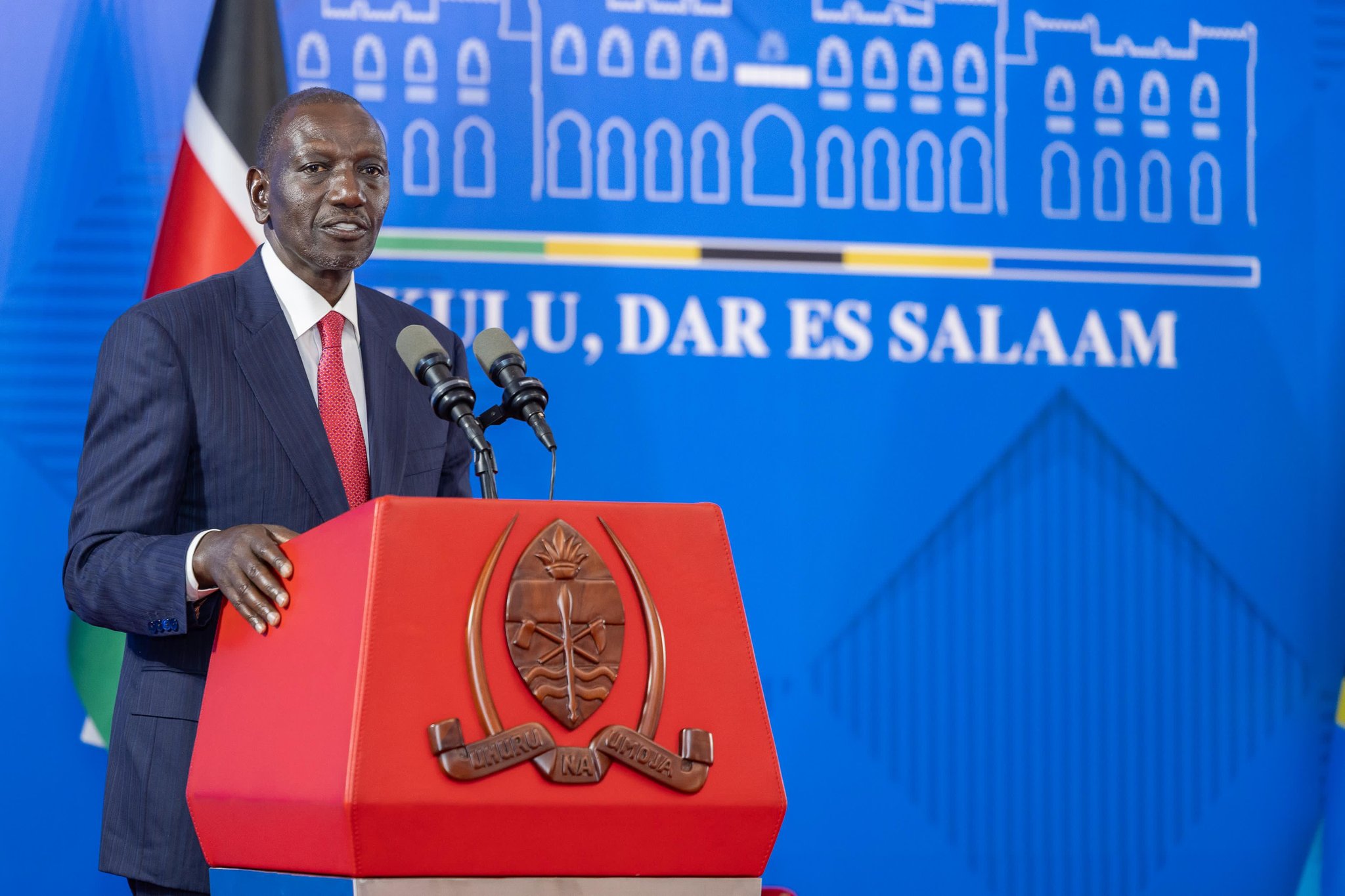
President William Samoei Ruto during the Address to Tanzania Parliament, Dodoma
President William Ruto has underscored the deepening diplomatic and economic ties between Kenya and Tanzania following a high-level state visit on May 4, 2026, describing the relationship as one rooted in shared history, identity, and a common future.
Speaking during the visit, Ruto said the engagement reflected long-standing bonds between the two nations, noting that “this visit reflects the deep rooted unending friendship that binds our two nations. A relationship that transcends political ties and is enriched by vibrant people to people connection, shared heritage and a common destiny.”
He further emphasized the importance of continued diplomatic engagement, stating that “President Samia Suluhu and I have held productive and candid and bilateral discussions during which we undertook a comprehensive review of our relations.”
Ruto highlighted the closeness of the two countries, insisting that “Kenya needs Tanzania as much as Tanzania needs Kenya. We are one people with a common destiny,” reinforcing the idea of regional unity within the East African Community framework.
He also acknowledged Tanzania’s role in Kenya’s development journey, noting that “the United Republic of Tanzania has been and continues to be a vital partner of Kenya,” especially in trade, infrastructure, and security cooperation.
On economic relations, Ruto pointed to growing bilateral trade performance, saying, “We welcome the continued growth in bilateral trade which reached 860 million USD in 2023 reflecting expanding opportunities and strong economic complementarities between our two nations.”
He added that trade relations had significantly improved in recent years, stating, “Today the story is very different. The trade between our two countries is balanced... That tells us the relationship between Tanzania and Kenya is mutually beneficial. And that means we should work on creating more synergy, creating more bridges, not barriers.”
Ruto called for urgent action to remove trade bottlenecks, saying, “I urge that our respective teams... resolve [non-tariff barriers] by the end of this month so that East Africans can do business, can invest and can trade without road blocks and without barriers.”
Turning to industrial policy, the President warned against continued export of raw materials without value addition, stating, “It is not tenable anymore for us to export raw materials as a region. We must make it deliberate and intentional not to export value, not to export jobs, not to export opportunity but appropriate it right here.”
He further explained the economic cost of this trend, noting, “The longer we continue exporting raw materials, we are exporting jobs, we are exporting opportunity, we are exporting wealth and in exchange importing inflation which is not what we should be doing.”
Ruto illustrated this concern using global energy trade examples, saying, “It makes absolutely no sense for us to export crude oil to all manner of places and then we go struggle to import finished product with challenges in the Strait of Hormuz and all the other places.”
On infrastructure development, he reaffirmed joint commitments, stating, “We also reaffirmed our commitment to revive the Voi Mwatate Taveta Railway line,” a key transport corridor expected to enhance regional connectivity.
He also outlined broader regional integration plans, saying, “I have requested that road should also be connected to Singida so that we can find a transport corridor joining your SGR all the way to Burundi,” highlighting ambitions for cross-border rail and road integration.
Security cooperation was also a key theme of the discussions, with Ruto noting, “We agreed that we should bring back the Ujirani Mwema framework... that helped public officials on both sides of the border to better manage the border so that we can keep away criminals, terrorists, drug traffickers, [and] human trafficking cartels.”
The President stressed that such cooperation is essential for safeguarding border communities and ensuring smooth movement of legitimate trade and travel between the two nations.
Ruto said stronger coordination in security matters would also enhance trust between border communities and governments, reinforcing stability across the region.
He added that the East African region must remain vigilant against transnational threats while preserving open and cooperative borders.
During the visit, both leaders also witnessed the signing of multiple bilateral agreements aimed at strengthening cooperation in trade, infrastructure, and security.
Ruto expressed gratitude to his host, concluding with a Swahili statement: “Asanteni sana viongozi wetu marais kwa kuvumilia na kushuhudia utiaji wa saini wa mikataba nane lakini pia kwa kutoa maono na mwelekeo wa namna tunaweza kuimarisha na kuendeleza ushirikiano wa nchi zetu mbili.”
He reiterated that the agreements signed mark a new phase in Kenya–Tanzania relations, focused on practical implementation rather than rhetoric.
The President emphasized that East African integration must move beyond speeches into actionable economic transformation that benefits ordinary citizens.
He concluded that Kenya and Tanzania must lead by example in demonstrating how neighbouring countries can turn historical ties into modern economic advantage.
Ruto’s visit to Tanzania was widely viewed as part of ongoing efforts to deepen regional cooperation under the East African Community framework, with both countries reaffirming their commitment to shared prosperity and stability.
Tags: Article Article 37 Edit Editor's Pick Editors choice News Article President William Ruto Signs Signs Media Kenya Limited Signs Tv Signsmedia Signstv Signstvkenya William Ruto William Samoei Ruto Government Of Kenya Tanzania

Share this article

FELIX MAKONA
FACT FINDER AND DATA DRIVEN JOURNALIST. DATA MINING AT IT'S BEST. GET FACTS RANGING FROM MATTERS DISABILITY AND INCLUSION, POLITICS, ECONOMY, SPORTS AND GENERAL NEWS AROUND THE WORLD