

Rastafarians Challenge Cannabis Ban, Claim Holy Herb Is Central to Worship
Lifestyle Updated: 13 March 2026 19:41 EAT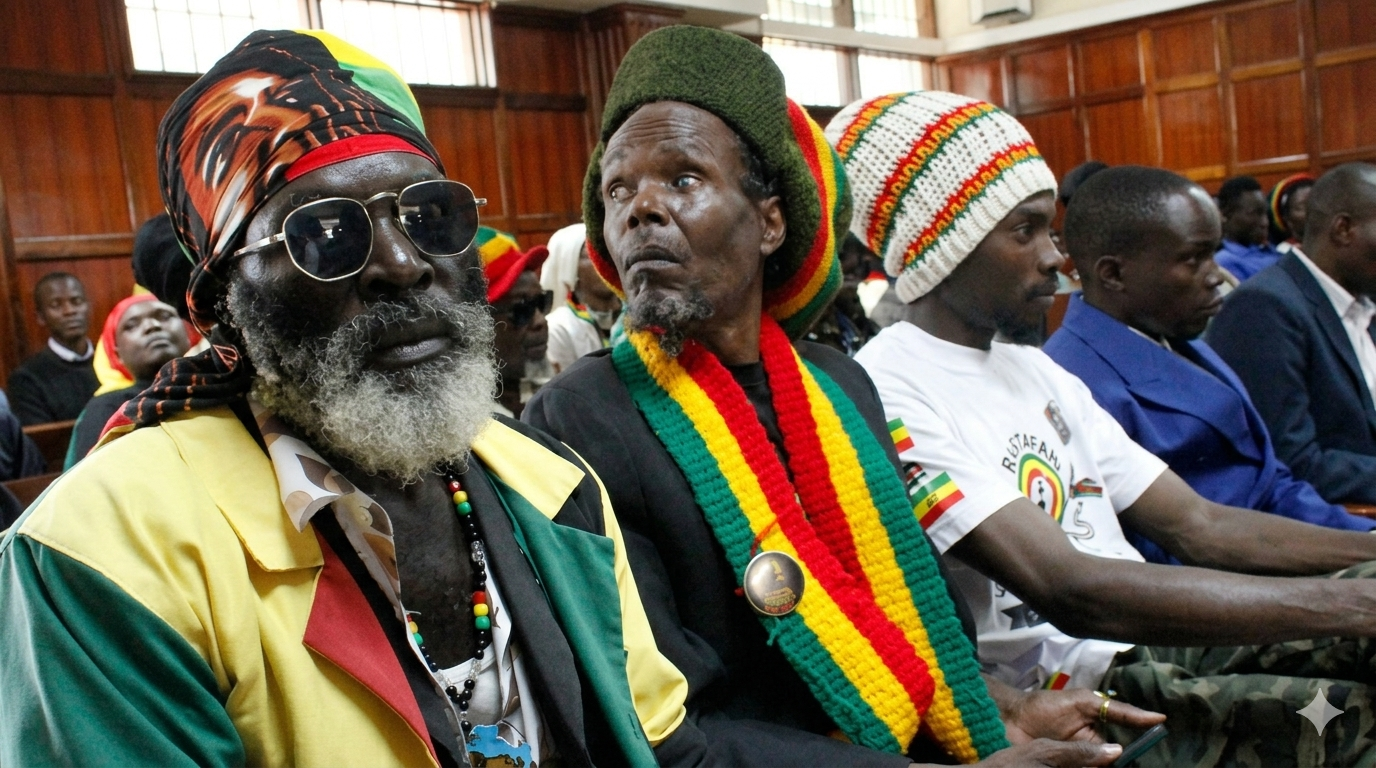
Rastafarians in milimani court earlier today
Members of the Rastafarian Society of Kenya have appeared before the High Court in Nairobi arguing that laws criminalising cannabis, commonly called bhang, violate their constitutional rights to freedom of religion and worship. The group insists cannabis is a holy herb used in spiritual practices, meditation, and reasoning sessions where adherents discuss life and societal issues.
The petitioners told Justice Bahati Mwamuye that cannabis is central to their religious rites and that adult Rastafarians above the age of 18 use it strictly for spiritual purposes. They argue that current narcotics laws criminalising private use and possession infringe on their rights under the Constitution.
Legal counsel for the society says the prohibition on cannabis use interferes with freedom of conscience, religious worship, and cultural practices, and should be reconsidered to allow sacramental use by their communities in private settings.
The legal challenge is not new: the society first filed its constitutional petition seeking limited decriminalisation and recognition of cannabis for religious use several years ago, arguing that colonial-era drug laws clash with modern constitutional protections.
Proceedings have encountered procedural delays. Earlier hearings were postponed after allowing the National Authority for the Campaign Against Alcohol and Drug Abuse (NACADA) to join the case as an interested party, reflecting the government’s interest in the drug policy implications of the case.
NACADA’s involvement has complicated the timeline: hearings scheduled earlier were rescheduled, and a ruling is expected to be delivered on March 19, 2026, as the court awaits further submissions from government counsel.
The society’s campaign has also faced obstacles in court practice. In a recent hearing, judges refused to admit cannabis seeds as evidence in support of the petition, citing legal and procedural concerns over handling prohibited substances in court.
A separate issue arose when the High Court declined a request to bar police from arresting Rastafarian members for cannabis use while the constitutional petition is pending, urging the society to file formal applications and produce evidence of alleged harassment.
Advocates for the petition argue that denying religious use amounts to discrimination, pointing to constitutional protections that guarantee equality before the law and freedom from discrimination based on religion. Lawyers cite these provisions to underscore that the State should not interfere with spiritual practices observed by religious minorities.
The case has ignited a broader public debate in Kenya over drug policy, freedom of belief, and how the legal system balances public health concerns with individual religious liberties. A ruling in favour of the society could set a noteworthy precedent for how spiritual practices intersect with narcotics laws in Kenya.
Tags: Edit Editor's Pick Rastaman Signs Signs Media Kenya Limited Signsmedia Signstvkenya


Share this article

FELIX MAKONA
FACT FINDER AND DATA DRIVEN JOURNALIST. DATA MINING AT IT'S BEST. GET FACTS RANGING FROM MATTERS DISABILITY AND INCLUSION, POLITICS, ECONOMY, SPORTS AND GENERAL NEWS AROUND THE WORLD