

President Stands By Trump-Backed Ebola Centre, Cites Decades Of US Support
News Updated: 02 June 2026 11:28 EAT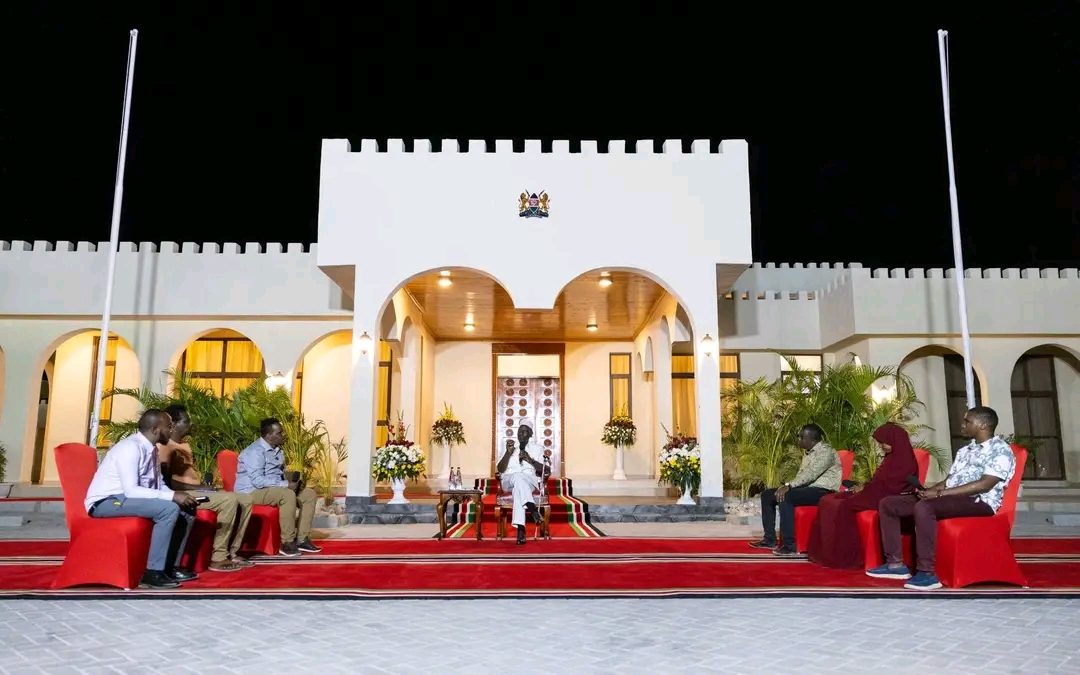
President William Samoei Ruto addressing the press via the North Eastern Media Roundtable
President William Ruto has defended the government's Ebola preparedness strategy amid growing public debate over a quarantine facility linked to Kenya's cooperation with the United States. Speaking during a national address via the North Eastern Media Roundtable, the President sought to reassure citizens that the country is fully prepared to respond to any Ebola threat and has invested heavily in systems designed to prevent an outbreak from spreading within Kenya. He emphasized that the government is approaching the situation with the same seriousness that characterized its response during the COVID-19 pandemic.
"We've had the challenge of COVID before. We now have the issue of Ebola. But I want to assure this nation that the government of Kenya has made adequate arrangements. We have deployed every arsenal that we have to make sure that we protect Kenya, that we deal with a challenge."
Ruto said the government has strengthened its preparedness framework by establishing isolation units, surveillance systems and treatment facilities across multiple regions of the country. According to him, health authorities have spent months building the capacity needed to detect, isolate and manage suspected Ebola cases. He explained that the objective is to ensure that any case identified within Kenya can be handled swiftly before the disease has an opportunity to spread to communities.
"We have made preparations for isolation units, for surveillance, for treatment in 23 counties. We have activated different mechanisms and different hospitals have been already set up to make sure that if there was a case of Ebola in Kenya, we would know what to do with it."
The President disclosed that Kenya's disease monitoring systems have been significantly enhanced at all points of entry into the country. Airports, border crossings and transit facilities have been placed under heightened surveillance as health officials work to ensure that anyone arriving from affected regions undergoes proper screening. The measures form part of a broader effort aimed at preventing imported infections from entering the country unnoticed.
"As I talk to the country this evening, we are screening every day any visitor who comes to Kenya. All our borders are on high alert. All our borders—land borders, air borders—are already activated. There is surveillance. There is screening."
According to Ruto, thousands of travelers are currently being screened daily under the government's Ebola preparedness programme. He noted that individuals displaying symptoms associated with the disease are immediately isolated, tested and monitored by health professionals. The President said the process has allowed authorities to maintain a high level of vigilance while ensuring that public safety remains protected throughout the country.
"On average, we screen close to 3,000 people every day who either come to Kenya or are in transit to make sure that those who show symptoms, we quarantine them, we isolate them, test them."
The Head of State revealed that despite the extensive screening operations taking place across Kenya, no confirmed Ebola case has been detected among those tested so far. He described this as encouraging evidence that the country's surveillance systems are functioning effectively. At the same time, he cautioned that continued vigilance remains necessary because Ebola outbreaks in neighboring regions continue to pose a potential risk to Kenya.
"Fortunately for our country, not a single person tested has tested positive for Ebola."
Ruto also challenged critics questioning the government's readiness, arguing that Kenya's public health institutions possess the expertise and infrastructure required to manage any emergency. He urged political leaders and members of the public to have confidence in the measures already implemented and warned against spreading fear or misinformation that could undermine ongoing preparedness efforts.
"And I want to ask leaders and citizens who have any doubt on the level of preparedness by the government of Kenya that they should not have any such doubt."
Addressing controversy surrounding Kenya's cooperation with the United States, the President defended the partnership as one that has delivered significant benefits to both countries over many years. He said collaboration between Nairobi and Washington has played an important role in strengthening Kenya's healthcare system and improving its ability to respond to major public health challenges.
"Our partnership with our friends, the American government, is a partnership that is mutually beneficial to us and to them."
The President further disclosed that he personally approved a request from US President Donald Trump regarding the establishment of a facility at Manda Bay Air Base. According to Ruto, the decision was made within the framework of a longstanding relationship between Kenya and the United States, with both countries working together on security, health and humanitarian initiatives over several decades.
"When President Trump asked the government of Kenya to support them by having a center in Manda Bay Air Base, I gave the okay because it was an agreement and a partnership with friends who have walked with Kenya."
Ruto emphasized that American support has contributed substantially to Kenya's fight against major diseases, including HIV/AIDS and Ebola. He noted that international partnerships have enabled Kenya to access resources, expertise and research opportunities that have strengthened the country's healthcare sector and improved its capacity to respond to emerging health threats.
"For 30, 40 years, the American government has supported us. They have deployed huge resources in Kenya to work with us on HIV, AIDS, to work with us on other diseases. They worked with us on Ebola."
The President pointed to Kenya's involvement in global scientific research during the COVID-19 pandemic as evidence of the country's growing role in international health initiatives. He highlighted the contribution of researchers at KEMRI, saying their participation in vaccine-related studies demonstrated the value of maintaining strong partnerships with international allies and research institutions.
"In fact, KEMRI was one of the institutions that worked on research on the vaccines for COVID because we have a solid partnership with America and other partners."
Ruto rejected claims that the proposed facility at Manda Bay Air Base would be fundamentally different from other isolation and treatment centers already operating across Kenya. He argued that similar facilities exist in several counties and serve the same purpose of protecting public health through screening, quarantine and treatment of infectious diseases whenever necessary.
"So the facility that is at Manda Bay Air Base is not a facility different from all the other facilities that we have across Kenya."
The President concluded by listing several hospitals and treatment centers already designated for Ebola preparedness, including facilities in Nairobi, Eldoret, Thika and Busia. He stressed that the ultimate goal of every isolation center is to ensure rapid detection, immediate isolation and effective treatment of any confirmed case, thereby preventing the disease from spreading and safeguarding the health of all Kenyans.
"These facilities are meant to make sure that there is proper screening. And if there is any positive identification of people who have Ebola, then immediately they are isolated and treated so that we avoid any spread of the disease."
Tags: Edit Editor's Pick Editors choice KBB KBB Kumi Bila Break News Article President William Ruto Signs Signs Media Signs Media Kenya Limited Signs Tv Signsmedia Signstv Signstvkenya Signtv Tutam Two Term William Ruto

Share this article
FELIX MAKONA
FACT FINDER AND DATA DRIVEN JOURNALIST. DATA MINING AT IT'S BEST. GET FACTS RANGING FROM MATTERS DISABILITY AND INCLUSION, POLITICS, ECONOMY, SPORTS AND GENERAL NEWS AROUND THE WORLD