

Ndindi Nyoro Pushes Fresh Fuel Tax Cuts, Accuses Powerful Cartels Of Profiting From Kenyans’ Pain
News Updated: 15 May 2026 21:30 EAT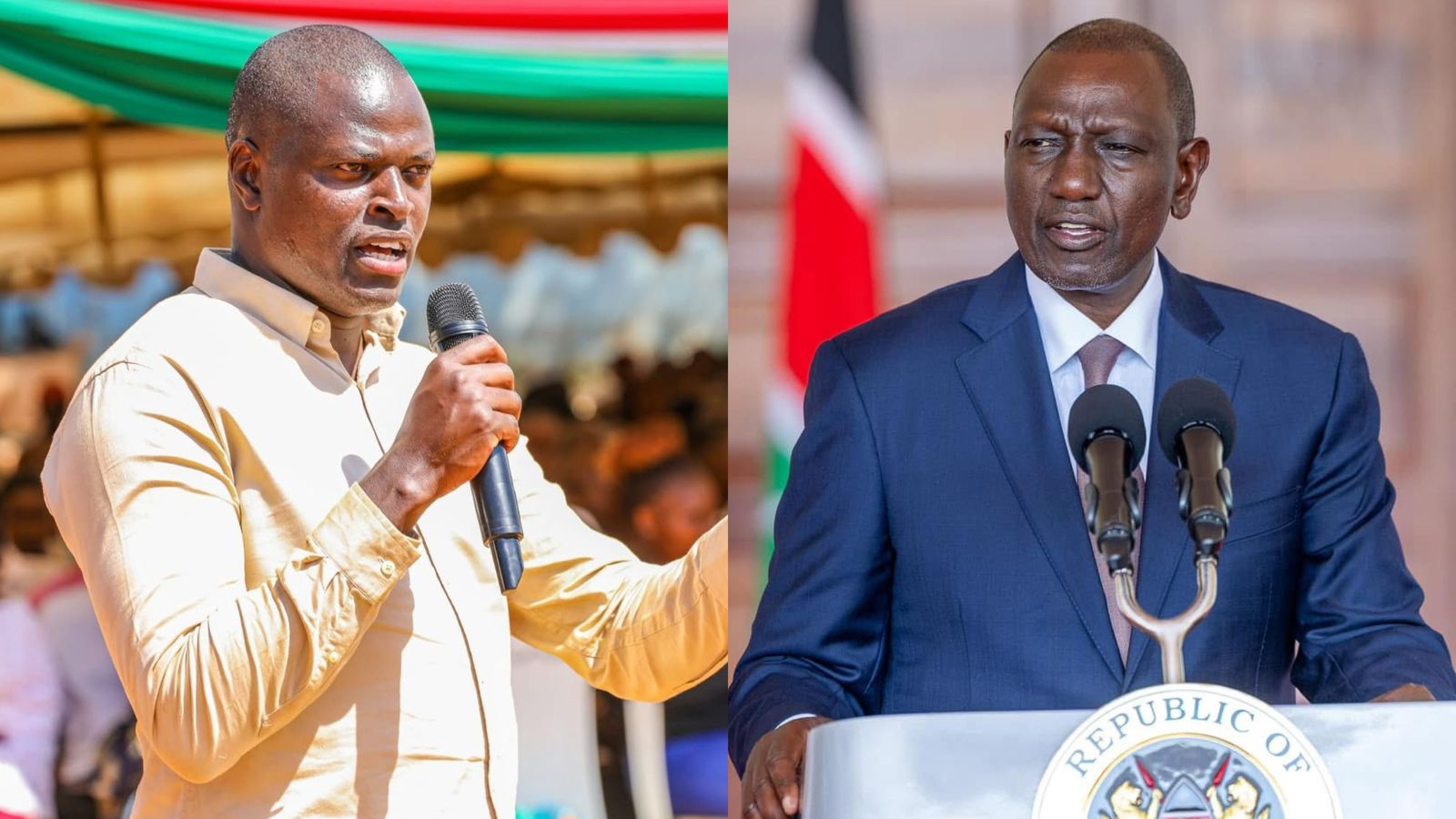
Kiharu Member of parliament castigates government over fuel price hikes
Ndindi Nyoro has intensified pressure on the government to urgently lower fuel prices, warning that the continued rise in diesel and petrol costs could trigger devastating inflationary shocks and drag Kenya’s economy into a deeper crisis.
Speaking during a charged press briefing, the Kiharu MP argued that Kenya risks losing hundreds of billions of shillings through economic disruption if immediate interventions are not taken to stabilise pump prices.
“The prices we are seeing today will hurt the economy of Kenya to the tune of hundreds of billions of shillings, yet the amount needed to bring down this fuel crisis is not even a fraction of that. It is too little compared to the economic destruction we are risking.”
Nyoro said the government cannot afford to sit back as fuel costs continue to pile pressure on households, businesses, transport and food prices across the country.
“We must move with speed and see how to reduce fuel prices now so that we arrest the inflationary pressures that are already becoming inevitable across the economy.”
The MP unveiled what he described as a simple but effective three-point proposal that could immediately reduce fuel prices to below Sh190 per litre for both diesel and super petrol.
According to Nyoro, the first intervention involves reducing distribution costs and profit margins earned by fuel importers, wholesalers and retailers.
“Kenyans are currently paying about 22 shillings in distribution costs and margins for importers, wholesalers and retailers. I am proposing that we reduce that amount by at least four shillings.”
His second proposal seeks the complete removal of VAT on petroleum products by reducing the current 8 per cent tax rate to zero as a temporary emergency measure.
“We must reduce VAT further from the current 8 percent to zero. In the short term, fuel products should be made VAT exempt.”
Nyoro also demanded the immediate removal of the Sh7 Road Maintenance Levy increase introduced in 2024, arguing that the levy has worsened the burden on ordinary Kenyans.
“We must abolish the seven shillings added through the Road Maintenance Levy in 2024 because it has unnecessarily increased the pain on consumers.”
The legislator said calculations conducted by his office indicate that implementing the proposed interventions would significantly lower fuel prices and cushion Kenyans from further economic hardship.
“If we implement these measures immediately, pump prices for both petrol and diesel will fall below 190 shillings.”
Nyoro projected that super petrol could retail at around Sh186 per litre while diesel could drop to approximately Sh189 per litre under the proposed framework.
The MP further disclosed that he has already written to the Clerk of the National Assembly seeking amendments to the VAT Act to classify petrol, diesel and kerosene as VAT-exempt products.
“I have formally written to the Clerk of the National Assembly of my intention to amend the VAT Act so that super petrol, diesel and kerosene are exempted from VAT and moved to the First Schedule.”
He also confirmed that he had separately initiated amendments aimed at reversing the controversial Road Maintenance Levy increase introduced in 2024.
“I have also written to Parliament seeking amendments to abolish the additional seven shillings imposed through the Road Maintenance Levy.”
Nyoro argued that diesel requires urgent intervention because it remains one of the most critical inputs in transport, manufacturing, agriculture and power generation.
To further cushion consumers, the Kiharu MP proposed allocating Sh5 billion from the Fuel Stabilisation Fund in order to subsidise diesel prices.
“We must provide five billion shillings from the Fuel Stabilisation Fund so that diesel prices can reduce by around 24 shillings per litre.”
He warned that failure to intervene immediately could expose Kenya to dangerous inflationary shocks and prolonged economic instability.
“Failure to act now will make the cost too high for our economy to bear.”
Nyoro also raised alarm over reports of fuel adulteration, saying many Kenyans had complained about poor quality diesel allegedly mixed with paraffin.
“Kenyans are already complaining that some of the fuel products in the market appear to be adulterated, especially diesel mixed with paraffin.”
The MP accused individuals within the fuel sector of exploiting struggling consumers for profit.
“Clearly, somebody is making huge profits out of adulterating fuel products while Kenyans continue to suffer.”
Nyoro then launched a scathing attack on the Government-to-Government fuel importation arrangement, commonly referred to as G2G, describing it as a corrupt system benefiting politically connected individuals.
“Kenyans can now clearly see that the G2G arrangement is a scam at best.”
He alleged that powerful individuals within government are directly benefiting from fuel importation deals while pretending to champion lower fuel prices publicly.
“The same people claiming to reduce fuel prices are the same people who own and benefit from the G2G arrangement.”
According to Nyoro, politically connected individuals are allegedly benefiting from the majority of fuel imports entering the country.
“Nearly 75 percent of fuel importation benefits leaders and politically connected individuals directly.”
The Kiharu MP appealed to leaders to stop prioritising personal profit at a time when millions of Kenyans are struggling with the rising cost of living.
“This is not the time to make money out of the misery of Kenyans. Leaders must tame their greed.”
Nyoro maintained that global oil prices are currently lower than they were in 2022, yet Kenyans are paying record-high pump prices despite promises that the G2G arrangement would stabilise the market.
“Global oil prices are cheaper today than they were in 2022, yet fuel prices in Kenya are now unprecedented.”
He challenged the media and independent analysts to compare Kenya’s fuel prices with neighbouring countries across the region.
“Uganda, which depends on our port, is selling both super petrol and diesel cheaper than Kenya. Tanzania is also cheaper than us.”
Nyoro additionally pointed to Ethiopia and Rwanda as examples of countries with lower fuel prices despite geographical and logistical disadvantages.
“Ethiopia is selling both petrol and diesel below 150 shillings, and Rwanda is still cheaper than Kenya.”
The MP dismissed repeated government explanations blaming global market disruptions, insisting that the real burden facing Kenyans comes from excessive taxes, levies and inflated margins.
“The government cannot continue hiding behind global prices. We are talking about nearly 100 shillings in taxes, levies and margins.”
According to Nyoro, taxes and levies account for approximately Sh75 per litre while distribution margins contribute another Sh25 per litre to pump prices.
“Close to 100 shillings per litre of fuel is made up of taxes, levies and distribution margins.”
He warned fellow lawmakers against frustrating his proposed amendments, saying Kenyans are closely monitoring which leaders stand with citizens during the current crisis.
“Kenyans will be watching who stands with them and who stands against them.”
Nyoro revealed plans to publicly identify Members of Parliament who support the proposed fuel relief measures and those who oppose them.
“I will initiate a process where MPs sign publicly whether they support these amendments or not so that Kenyans can know who truly stands with them.”
The legislator also hinted at broader public mobilisation if the government fails to urgently act on the fuel crisis.
“We are giving them a chance to act, but if they fail, we will communicate the next course of action to Kenyans.”
Nyoro accused the administration of incompetence and warned leaders against delaying necessary interventions until public frustration escalates further.
“Whether the government reduces fuel prices or not is no longer a debate. Fuel prices must come down. The only question is when.”
He concluded by warning that continued delays would only worsen both the economic and political consequences facing the country.
“Do not buy time. Act before Kenyans push you into a corner.”
Tags: Article Edit Editor's Pick Editors choice Epra EPRA Epra New Fuel Prices EPRA Fuel Fuel Prices Iran Iran Israel Ndindi Nyoro News Article Signs Signs Media Kenya Limited Signsmedia Signstv Signstvkenya The Strait of Hormuz United States Israel VS Iran war


Share this article

FELIX MAKONA
FACT FINDER AND DATA DRIVEN JOURNALIST. DATA MINING AT IT'S BEST. GET FACTS RANGING FROM MATTERS DISABILITY AND INCLUSION, POLITICS, ECONOMY, SPORTS AND GENERAL NEWS AROUND THE WORLD