

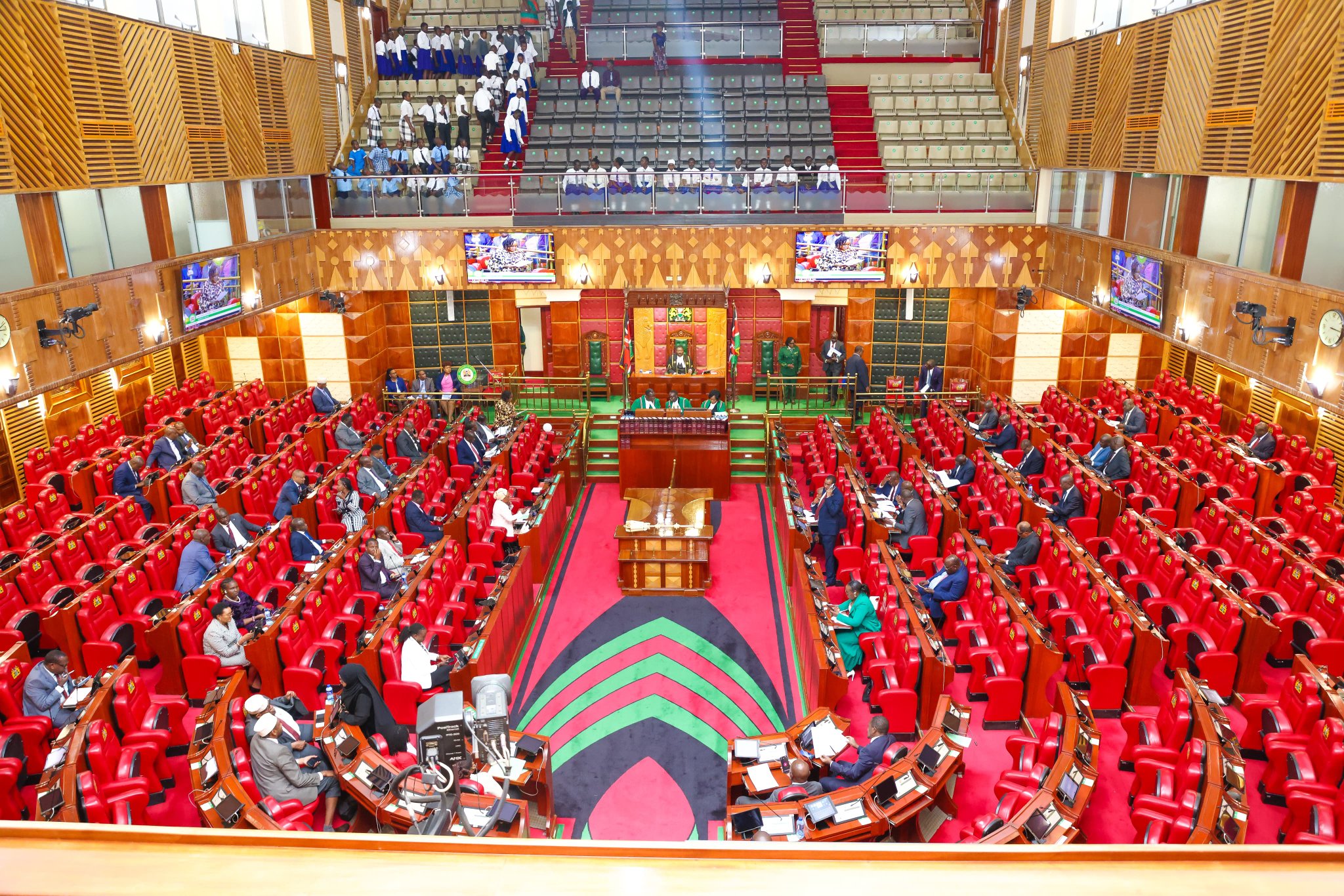
Kenya’s National Assembly has passed the Finance Bill 2026 following a decisive vote that saw 122 Members of Parliament support the proposed legislation while 40 voted against it, paving the way for the Bill to proceed to President William Ruto for consideration and assent.
The approval came after lawmakers concluded debate during the Third Reading stage, bringing to an end weeks of parliamentary deliberations, committee review and public submissions on the proposed fiscal measures.
The Finance Bill 2026 is expected to provide the legal framework for implementing revenue and tax measures tied to the government’s 2026/27 budget and broader economic agenda.
Throughout the debate, government legislators defended the Bill as necessary to strengthen revenue collection, support development spending and reduce dependence on borrowing to finance public programmes.
Supporters maintained that the final version reflected adjustments made after stakeholder engagement and public participation, arguing that the measures were structured to minimise pressure on households and businesses.
Opposition MPs opposed the Bill, warning that some of the proposed measures could still increase the cost burden on Kenyans and affect economic activity despite revisions introduced during committee consideration.
The parliamentary vote followed sustained political mobilisation inside and outside the House, with both supporters and critics treating the legislation as one of the year’s most significant economic policy decisions.
During the committee stage, lawmakers reviewed multiple proposals affecting tax administration and fiscal management before recommending amendments ahead of the final vote.
The division vote formally recorded individual positions and confirmed government-backed support for the legislation in Parliament.
The passage of the Bill marks a major milestone for the administration’s fiscal plans ahead of the next financial year and signals continued focus on expanding domestic revenue.
Attention now shifts to State House, where the President is expected to review the Bill before deciding whether to sign it into law or return it to Parliament with recommendations.
If assented to, the Finance Bill 2026 will become part of the legal framework governing tax implementation and public revenue measures for the coming financial year.
The outcome places renewed focus on implementation and the wider economic impact the approved measures may have on businesses, consumers and Kenya’s fiscal outlook.
Tags: Boris Johnson Resigns Edit Editor's Pick Signs Signs Media Kenya Limited Signsmedia Signstv Signstvkenya Article Caritas Microfinance Bank CS MBADI Finance Finance Bill John Mbadi Member Of Parliament Ministry Of Finance National Assembly Committee News Article Parliament Leadership


Share this article

FELIX MAKONA
FACT FINDER AND DATA DRIVEN JOURNALIST. DATA MINING AT IT'S BEST. GET FACTS RANGING FROM MATTERS DISABILITY AND INCLUSION, POLITICS, ECONOMY, SPORTS AND GENERAL NEWS AROUND THE WORLD