

Mbadi Defends Finance Bill at Lengthy Jevanjee Gardens Public Forum
News Updated: 26 May 2026 18:02 EAT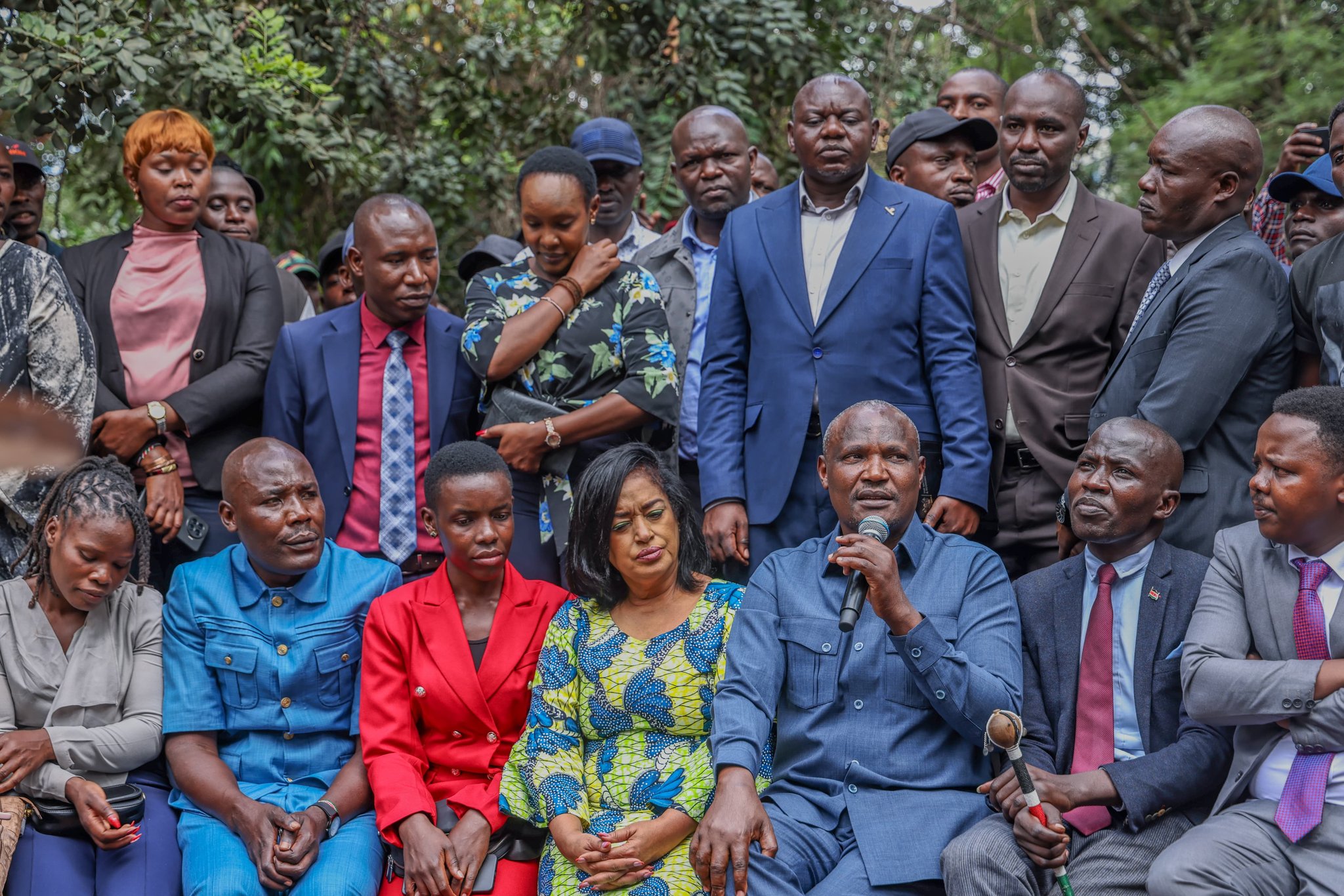
Treasury Cabinet Secretary John mbadi alongside Nairobi Woman Representative Esther Passaris addressing Bunge La Mwananchi at the Jevanjee gardens
Treasury Cabinet Secretary John Mbadi on Tuesday mounted a spirited defense of the proposed Finance Bill 2026 during a charged public engagement forum at Jevanjee Gardens in Nairobi, where members of the public raised concerns over taxation, cost of living, public spending, and government priorities. The meeting, which also featured Nairobi Woman Representative Esther Passaris and members of Bunge la Mwananchi, turned into an open debate on economic policy, welfare programs, and accountability in government spending.
“Leo nimekuja hapa ni mara ya pili tena kutimiza ahadi yangu nilitoa mwaka uliopita wakati nilikuwa na engagement na wananchi juu ya 2025 Finance Bill. Niliwaambia na nikawaahidi ya kwamba nitarudi tena mwaka huu tuendelee kujadiliana Finance Bill ya 2026 itakayokuja, because we need public participation—constitutional requirement. A lot of things have been said and that has made me understand that many people have issues with this Finance Bill. However, there are also a lot of misconceptions and propaganda flying around the Finance Bill. This finance has so many good provisions.”
Mbadi used the forum to call for formal recognition of Bunge la Mwananchi structures as part of strengthening civic education and public participation in legislative processes. He argued that Parliament should create a legal framework that ensures ordinary citizens participate in discussions before laws are passed, saying civic engagement structures should not remain informal if democracy is to deepen in the country.
“On civic education challenges, I agree with you. Probably we need to put some budget to support it, but I wish we had enough money. We should recognize Bunge la Mwananchi. We may need to recognize Bunge la Mwananchi—wabunge, naongea na wabunge—this is something we have some structure for, like you know we had this youth council. It is recognized in law and the elections were recognized. Probably now we need to recognize Bunge la Mwananchi and make it a condition before Bunge apitishe any legislation.”
The Treasury CS further defended proposals seeking to expand Kenya Revenue Authority powers to access financial transaction information, insisting the measures are targeting tax evasion and unexplained wealth rather than invading personal privacy. Mbadi argued that wealthy individuals had hidden behind data protection debates to avoid paying taxes while ordinary traders continued carrying a heavier tax burden.
“What we are saying is KRA should have authority to look and check our financial transactions. If I have 50 million in my account and I cannot explain it, KRA should surrender part of it, as we should not protect these people. These people are what we call money launderers. They are the ones who want money to be in the bank. They are buying things, they are buying houses, and no one is asking them to pay tax. Na wewe ukiuza tu moka kidogo, mtu amekuja kwa mlango yako anataka ushuru.”
Mbadi maintained that the principle guiding taxation policy should be equity, arguing that wealthy individuals benefiting most from the economy should contribute more in taxes compared to low-income earners. He insisted that wealth taxation should come before heavy taxation on trade and small businesses.
“Listen to me: taxation rule, succession law calls for what we call equity. Equity is not equal. It means those who have more money should pay more taxes. Because for you to have money, you must be benefiting a lot more from the economy than someone who does not have money. For me to have that ‘big plug,’ it means that there is somewhere I am gaining from the economy. You start with wealth. Before you go to trade—trade should not be taxed. You tax wealth, then you go to income, then finally trade.”
The CS also dismissed criticism surrounding proposals touching on financial data access, saying financial information cannot remain entirely secret when governments are fighting corruption, tax evasion and money laundering. According to Mbadi, the Finance Bill proposals had been deliberately misrepresented by critics opposed to reforms targeting hidden wealth.
“I know it will be fought because these people have the muscle, they even have the money. They will come to you and tell you, ‘Oh, data protection.’ Which data? Financial data can never be secret. Financial data should be known by KRA. If your data is known by KRA, every year you are filling a form. Unajaza form unasema, ‘Nimepata hii pesa, nimelipa hii shule.’ Why is someone somewhere making money in millions, sometimes millions, na hiyo ni secret yake?”
During the forum, members of Bunge la Mwananchi questioned the government’s economic priorities, arguing that despite reports of economic growth, millions of Kenyans were surviving on debt while struggling to afford basic necessities. Participants challenged the Treasury to explain why GDP growth figures were not translating into improved living standards for ordinary citizens.
“The greatest problem hiyo ni priority. Mismatch na priority. Inatokea hii kwamba report imetokea kutoka kwa government kwamba our GDP is growing. For now kuna report yenye ilitokea kwamba 17 million Kenyans wamekopa 1.4 trillion shillings, precisely 4 billion shillings per day, na si kukopa kufanya investment—kukopa kusurvive, wananunua basic needs. Hapo ndio problem inatokea. Wakati unasema GDP inagrow, hiyo kitu haireflecti kwa mwananchi wa chini.”
Questions were also raised regarding allocations to education and State House renovations, with some participants arguing that public spending priorities were misplaced at a time when schools faced delayed capitation and examination funding challenges.
“Swali la pili in terms of priority ni kwamba allocation ya funds inaenda sana kwa wastage. Ume-allocate 700 billion kwa education but capitation ina-delay ama unatuambia inapunguzwa. Kuna wakati ulisema kwamba wazazi wajigharamie kulipa examination. Nilikuwa inacost only 6 billion shillings, but surprisingly allocation ya renovation ya State House ni 10 billion shillings. Where is priority between the two? So problem ndio inatokea hapa.”
Mbadi defended expenditure on State House and presidential travel, arguing that State House is a national institution that must be maintained properly and that leaders need resources to inspect projects and understand realities facing citizens across the country.
“You may not like the occupant of State House, but that is an institution. You cannot have a State House that looks like a ghost place. Look at even the White House in America; it is being taken care of. The President of Kenya must be supported to deliver and talk to the people. I don't think it is right for a president to stay at State House for five years. We need a president who goes to see.”
The Treasury CS narrated a recent visit to Tana River where he said he personally witnessed the suffering of school children forced to cross dangerous rivers due to lack of bridges, arguing that direct visits by leaders help shape policy and budget priorities more effectively.
“Recently mimi mwenyewe nilienda sehemu inaitwa Tana River. Nilipelekwa to a place where a bridge was supposed to be constructed. For so many years the children who are crossing that river to go to school wamekuwa wakikuliwa na mamba because someone has not seen the necessity of allocating 100 million to do a bridge. When I saw it with my eyes, I felt very bad. If I did not go there, I would not have allocated.”
Mbadi further argued that leaders cannot formulate effective policy while confined to offices in Nairobi, insisting that engagement with citizens remains essential for responsive governance and effective resource allocation.
“Mimi as a policymaker, you cannot make policy by sitting hapa. Lazima uzungumze na wananchi ndio ujue policy effect. The President of Kenya should move out. The President of Kenya should go to Mombasa, should go to Wajir, should go everywhere to see the way things are moving and that requires some money.”
At the same forum, Passaris pushed for increased budgetary allocation toward social protection programs, including support for victims of gender-based violence, mental health services, flood response, slum fire emergencies and drug rehabilitation programs.
“Kuhusu GBV, the president had a task force. He had a task force he put some money in. They went around the whole country. Even if you're not going to give us 50 billion, can we have some money to deal with GBV and femicide? Mental health is a crisis, drug rehabilitation is a crisis. We need to have money to support the needs of our people not just when they are old but also when they are young.”
Passaris further proposed creation of a dedicated national social welfare fund financed through a fixed percentage allocation from the national budget to help communities respond to emergencies and social crises.
“So if we have money for social good, can we put it to the national cake? Tuseme kama tutaweka 1% for dealing with social issues. Kila saa hii Nairobi kuna shida ya slum fires, we don't have money. Napewa milioni moja kudili na slum fires zote mwaka. So can we have a fund that is tied to helping the welfare of our people?”
Mbadi defended the government’s welfare-oriented economic approach, describing cash transfers and social support as “social investment” rather than wasteful expenditure. He argued that vulnerable citizens who receive support eventually stimulate economic growth through spending and business activity.
“We cannot be a welfare nation because we don't have the economic muscle like the US and others. But we can support the vulnerable society. It will again help because it is what we call social investment. It's not supposed to be considered as expenditure. When you give an elderly person some money, they will spend that money on the economy.”
The Treasury CS also revisited the debate around universal examination fee subsidies and higher education loans, arguing that wealthier Kenyans should shoulder more responsibility for educating their children to allow public resources to target poor households.
“My only concern was, as we struggle looking for money for capitations to educate our children, why should we pay examination fees for everybody including mtoto wa Mbadi? Why should my child go for a HELB loan? Why can't I educate my child? Hiyo HELB ikuwe for the children of my brother. But I'm not saying that we should stop paying examination fees; there are people who cannot afford it.”
Mbadi also attempted to counter claims circulating online about the Finance Bill, saying several allegations about new taxes had been exaggerated or fabricated to create fear and political hostility toward the government.
“There is much propaganda about taxing land. There is nothing in the Finance Bill of taxing land. There is no rental income tax in the bill being increased to 10%. That is another propaganda. There are a number of propaganda on monetization that we are going to digital monetization.”
On mobile phone taxation, Mbadi explained that the Finance Bill seeks to simplify taxation by replacing multiple taxes charged during importation with a single excise duty payable only after phones are sold to consumers.
“When you import a phone into the country, there are a number of taxes that you pay: VAT at 16%, excise duty at 10%, custom duty at 25%, import declaration fee at 2.5%, and railway development levy at 2%. All that is 55.5%. Now what we are saying is we don't tax any phone until the time it is sold. When it is sold, now you pay one tax.”
The CS concluded by urging politicians and critics of the Finance Bill to focus on constructive criticism instead of mobilizing street protests, saying Kenya’s economic challenges require policy solutions rather than confrontation.
“If you are a serious politician and opposition leader, look at that bill and point out the flaws in the bill. Don't just tell Kenyans reject. That is not the way to legislate. I want to appeal to politicians who are trying to incite people to go to the street—that is not the answer. These young people are suffering, I know, but the answer is to look for solutions through deliberate policy.”
Tags: CS MBADI Edit Editor's Pick Editors choice Esther Passaris Finance Act Finance Bill Finance Committee News Article Signs Signs Media Signs Media Kenya Limited Signs Tv Signsmedia Signst Signstv SignsTV Signstvfao Signstvkenya Signsv Ssignstv Treasury

Share this article

FELIX MAKONA
FACT FINDER AND DATA DRIVEN JOURNALIST. DATA MINING AT IT'S BEST. GET FACTS RANGING FROM MATTERS DISABILITY AND INCLUSION, POLITICS, ECONOMY, SPORTS AND GENERAL NEWS AROUND THE WORLD