

Mbadi Defends Finance Bill 2026 as Treasury Pushes Tax Simplicity and Fairness
News Updated: 25 May 2026 20:53 EAT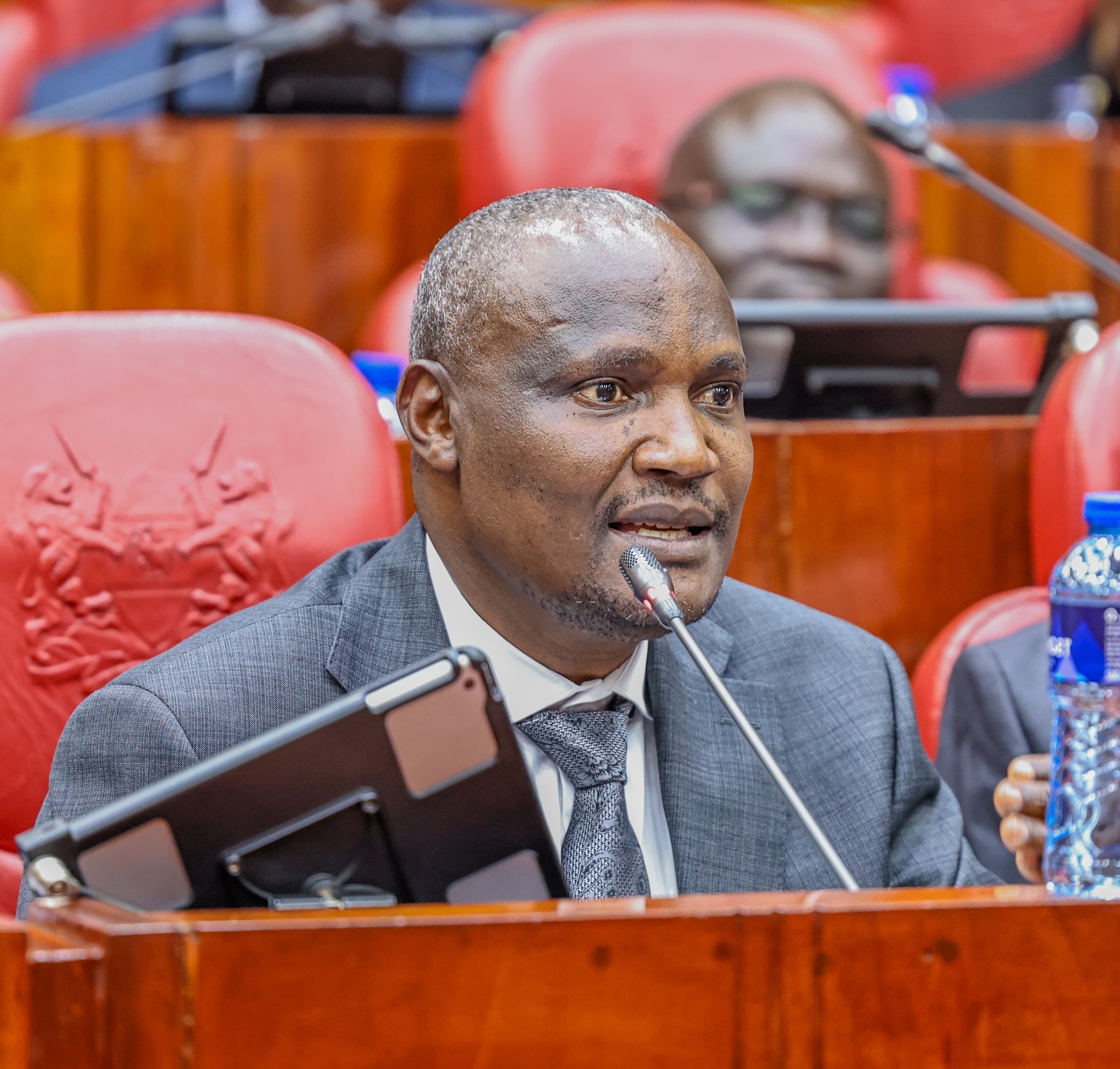
Treasury Cabinet Secretary John Mbadi during a Media briefing on the Financial Year 2026/27 Budget and Economic measures to support Kenyans, National Treasury Building.
Treasury Cabinet Secretary John Mbadi has defended the proposed Finance Bill 2026, saying the government’s objective is to simplify the tax system, expand fairness, and ensure all Kenyans with the ability to pay taxes contribute equally to national revenue collection.
“...and ensure simplicity. Therefore, the proposals in this bill are going to enhance simplicity to help us in tax administration. Fairness. Let everyone who is supposed to pay tax pay their fair share of tax and pay it fairly. Equity. Let us treat people equally. If you’re making money and you’re paying tax, another person who is making money should also pay his fair share or have a fair share of tax. That is what is in this bill and that is what we are pushing forward, and that is what we are asking Kenyans to support. Don’t accept to pay tax while your neighbor is not paying tax and they have the capacity, they have the ability, and they’re making income.”
Mbadi said public debate around the proposed 25 percent excise duty on mobile phones had been misunderstood, insisting the Treasury is not introducing a completely new tax on phones.
“Number one is the 25% excise duty on mobile phones. I want to address this issue because it keeps recurring and coming back in the debate in the social media—not alternative media, every media has been mentioning this. So this is my response: Public discussion has particularly focused on the proposed 25% excise duty on mobile phones with some commentary framing the proposal as taxation targeting the youth, digital access, and online livelihoods. The National Treasury, however, wishes to clarify that the proposal does not introduce a new tax on mobile phones.”
The Treasury CS explained that mobile phones are already subject to several taxes and levies at importation and throughout the supply chain, resulting in a much higher cumulative tax burden than currently understood by the public.
“Mobile phones are currently subject to multiple domestic taxes and levies during their importation and along the supply chain which include the following: There is 16% VAT on all mobile phones. There is 10% excise duty as we speak. So excise duty is not new; there is already 10%. There is 25% import duty on mobile phones. There is a 2.5% import declaration fee. And finally, there is a 2% railway development levy. These taxes and levies cumulatively create an aggregate tax burden of approximately 55.5% within the current mobile phone taxation framework.”
According to Mbadi, the Finance Bill 2026 seeks to replace the current fragmented taxation structure with a single tax collected only when the phone is activated by the consumer.
“On the contrary, the proposal under the Finance Bill 2026 seeks to simplify. The simplicity that I talked about seeks to simplify the existing structure by replacing the current fragmented framework with a single 25% excise duty collected upon activation of the phone. And I have explained this before: that at the moment, when the phone arrives at the point of entry, all these levies and taxes are charged… Now, immediately the phone leaves the port of entry, there are other taxes because it is followed along the supply chain until it reaches the consumer or the customer.”
He argued that the current tax system negatively affects traders by forcing them to pay taxes on inventory before products are sold, reducing liquidity in the sector.
“And you see the danger with that—and we have explained—is that funds that are brought and put in the store which have not been sold, the person (the vendor) has already paid taxes, reducing their liquidity. We are saying we are replacing that whole complicated system with a simple one where you bring the phone, there is no tax, there are no charges, there's no levy—but the time the phone is bought and is being activated is when [you pay] one single tax that is excise duty at 25%.”
Mbadi further stated that under the proposed system, several existing taxes would be eliminated entirely once the new framework takes effect.
“So, if enacted, mobile phones will no longer be subject to 16% VAT, 2.5% import declaration fee, and 2% railway development levy under the proposed framework. The 25% import duty will also be removed upon implementation of the new tax regime, thereby simplifying the tax structure and lowering the overall domestic tax burden applicable to mobile phones.”
The Treasury CS acknowledged the central role mobile phones now play in Kenya’s economy, particularly among young people and digital entrepreneurs.
“The proposal was therefore primarily conceived as a simplification and rationalization measure rather than the introduction of a new tax on digital access. The National Treasury recognizes that mobile phones increasingly serve as essential tools for communication, education, finance, financial access, online businesses, digital work, and youth economic participation, which explains the heightened public interest surrounding the proposal.”
Mbadi also addressed proposed reporting requirements for virtual asset service providers, saying the digital asset sector must be incorporated into the country’s taxation and reporting framework.
“The second one, and this one is also addressing the issue of equity and fairness, is reporting requirements for virtual asset service providers. The Finance Bill of 2026 proposes the introduction of a reporting framework for virtual asset transactions through amendments to the Tax Procedures Act. Before I even proceed, it should be noted that virtual assets are a new phenomenon, a new concept in town, and anything new that is producing revenue and producing income must also be subjected to tax in the spirit of fairness and equity because there are other traditional businesses which are paying taxes.”
He argued that traditional businesses already operate under clear reporting systems and that similar standards should now apply to emerging digital financial sectors.
“Traditional businesses and financial transactions already operate within established accounting, record-keeping, and reporting systems which make it possible to determine ownership, identify transactions, and facilitate administration of the tax system. The rapid growth of the digital and virtual asset transactions has, however, created a gap within the existing legal framework due to the absence of clear reporting obligations governing such transactions.”
Mbadi said the proposed changes are intended to align Kenya’s tax laws with evolving digital and financial technologies while improving compliance.
“So the proposal therefore seeks to apply reporting and record-keeping principles that are already common within traditional financial and commercial activities to the emerging virtual asset sector. We are just recognizing that there is a new kid on the block, a new sector coming in—virtual assets—and they should be brought into the reporting system and reporting framework so that they also pay their fair share of taxes like other traditional financial and commercial activities.”
The Treasury CS also addressed controversy surrounding card payment taxation and digital transaction fees, saying the government is attempting to close legal gaps exposed by recent court decisions.
“The Finance Bill of 2026 seeks to clarify the tax treatment of fees charged on digital payment and card transaction services. Over time, digital payment systems have grown rapidly through the use of mobile applications, payment platforms, software systems, and card payment networks. This has created uncertainty on whether some of these technology-based services should be treated as exempt financial services or ordinary commercial services for tax purposes.”
Mbadi defended proposals affecting Visa and Mastercard-related interchange fees, arguing that companies earning income through financial platforms should contribute taxes like other businesses operating in Kenya.
“You see, for example, the Visa card and the Mastercard. There are these people who provide these platforms to the banks, and banks charge interchange fees. Now when these people are paid by the banks, are they supposed to just enjoy that income without paying tax? That’s a question we should ask ourselves… Yet someone is seated somewhere—most of them are not even citizens of this country—and they give a service and they are paid by the banks. And you are saying we should not ask for any tax from them? Is there fairness there? Is there equity?”
At the same time, Mbadi clarified that telecommunications firms such as Safaricom and Airtel are not among the entities targeted under the proposed provisions.
“Now there has been the question that has come up about Safaricom. We have made it very clear to Safaricom and even Airtel that they are not falling here because what they provide—both are payment service providers and own the platform, so they don’t fall among the people who are trading [where] you have a platform and you're trading with another.”
The Treasury CS also dismissed reports that the Finance Bill 2026 introduces a 5 percent withholding tax on digital content monetization.
“Withholding tax on digital content monetization has also been talked about. This is my response: I wish to clarify that the Finance Bill of 2026 does not contain a proposal introducing a 5% withholding tax on digital monetization, contrary to some media reports and commentary. I think they have gone back to the Finance Bill of 2024. Let them check the title, the heading, the headline—we are on the 2026 Finance Bill.”
Tags: CS MBADI Edit Editor's Pick Editors choice Finance Bill Ministry Of Finance News Article Political tensions Signs Signs Media Signs Media Kenya Limited Signs Tv Signsmedia Signst Signstv Signstvkenya Signsv


Share this article

FELIX MAKONA
FACT FINDER AND DATA DRIVEN JOURNALIST. DATA MINING AT IT'S BEST. GET FACTS RANGING FROM MATTERS DISABILITY AND INCLUSION, POLITICS, ECONOMY, SPORTS AND GENERAL NEWS AROUND THE WORLD