

Kindiki Opens Global Sugar Summit in Diani, Outlines Sweeping Sector Reforms
News Updated: 26 May 2026 22:34 EAT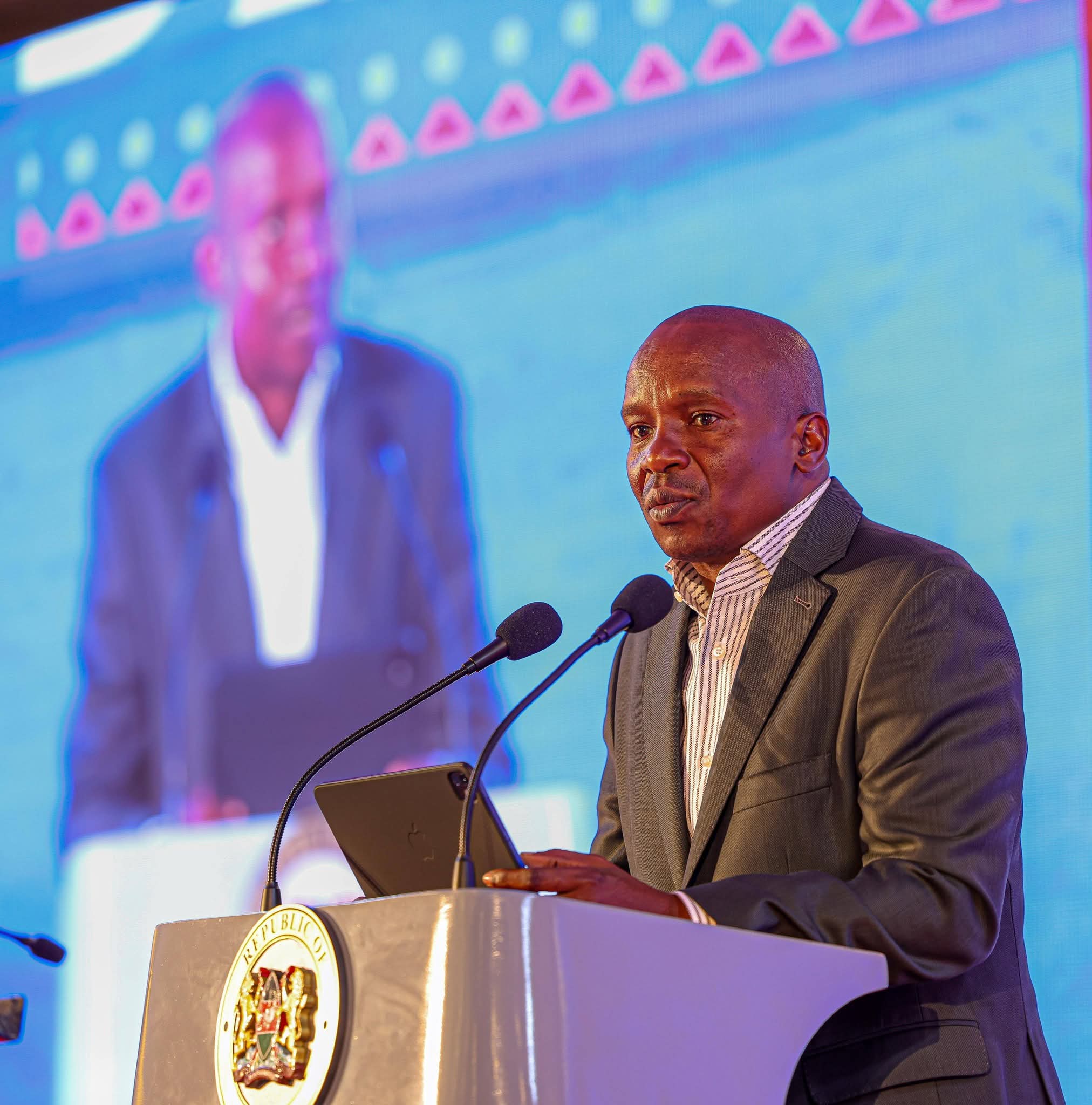
Deputy President Professor Kithure Kindiki speaking during the Kwale Sugar reforms meeting with stakeholders
Deputy President Professor Kithure Kindiki on Tuesday officially opened the 68th International Sugar Organization Conference in Diani, Kwale County, where he outlined Kenya’s ongoing reforms in the sugar industry and its broader economic significance. The high-level meeting brought together delegates from producing and consuming countries to discuss global sugar trade, value addition, and sustainability.
Africa has been described as the youngest continent on earth, and the Deputy President opened his address by emphasizing the central role of young people in shaping the continent’s agricultural future. He said that transforming agriculture into a modern, innovative, and profitable sector is the only way to attract youth participation and unlock Africa’s economic potential.
“Africa has been described as the youngest continent on earth. Our greatest asset is our people, and specifically our young people. But we will not attract young Africans into agriculture with sentiment alone. Young people are pragmatic. They follow opportunity. They go where innovation lives and where enterprise thrives. Our task as governments, industry leaders, and investors is to transform agriculture into the kind of sector that ambitious young people want to be part of. That means embracing digital tools and precision farming, creating agribusiness ecosystems that generate real wealth, and building the infrastructure, the logistics, and the financing systems that allow agricultural enterprise to flourish at scale.”
The Deputy President noted that the sugar industry has historically faced deep structural challenges, including inefficiency, weak institutions, high production costs, and lack of investor confidence. He said these issues have hindered productivity and discouraged meaningful investment into the sector.
“The sugar industry, properly transformed, can be a powerful vehicle for exactly this kind of economic inclusion for African youth. Here in Kenya, the sugar sector has suffered several challenges in the past, and I’m sure the same is the case in your own countries—at least some of your countries. The industry was weighed down by inefficiency, institutional lethargy, high production costs, and a regulatory environment that did not inspire confidence. Farmers were underpaid, mills were underperforming. Investors were understandably cautious.”
He explained that the government of Kenya deliberately embarked on a reform agenda beginning in 2022, aimed at restructuring the sector, improving governance, and restoring efficiency in sugar production and management.
“The government of Kenya, in this administration of William Ruto, President of Kenya, made a deliberate choice to transform the sub-sector in several ways: restructuring the sugar board to make it leaner, more transparent, and more effective; engaging with millers on clear performance standards; bringing in the private sector to provide investments to run our sugar mills. We have also initiated the revival of state-owned factories through leasing these factories to the private sector, which has attracted serious private investments.”
The Deputy President reported that the reforms are already showing tangible results, including increased acreage under sugarcane cultivation, improved productivity, and renewed confidence among farmers and investors.
“I am proud to report to you delegates that these efforts are beginning to bear fruit. Farmers are gradually gaining confidence in sugarcane farming. Investment interest is growing from our private sector. Output is improving. The planted acreage is increasing and our national production is steadily on an upward trajectory.”
He warned, however, that climate change remains a major threat to agricultural productivity, with unpredictable rainfall patterns, floods, and droughts already affecting farming systems across the region.
“We are witnessing the effects of a changing climate in real-time. Rain patterns and volumes are often inconsistent, while droughts and floods are becoming more frequent. This unpredictable weather pattern is not a future challenge; it is a present reality demanding urgent response. Climate adaptation must be embedded at every level: in crop varieties, water management systems, farming practices, and supply chains. The sugar sector can be part of the climate solution through biofuels, renewable energy from bagasse, and circular bio-economy models.”
He stressed that the global sugar industry must evolve beyond raw sugar production, embracing diversification into energy, chemicals, and other high-value industrial products.
“The sugar industry of tomorrow must be integrated and diversified. One that produces sugar, yes, but also sustainable aviation fuel, renewable energy, bio-based chemicals, and other high-value industrial outputs. One where nothing is wasted and everything has value. The world is changing. Energy systems are transforming. Consumer preferences are shifting. Climate pressures are intensifying. And the global movement towards sustainable circular economies is no longer a distant ambition; it is an accelerating reality.”
The Deputy President emphasized Kenya’s ongoing shift toward co-generation, ethanol production, and research-driven innovation to strengthen competitiveness and sustainability in the sugar sector.
“We are encouraging co-generation projects that allow sugar factories to generate and sell electricity. We are exploring the expansion of ethanol production as a blending component for cleaner transport fuels. And we are investing in research and development necessary to make our industry more competitive and more sustainable over the long term. In Africa we have vast unutilized sugar potential, and what we need is knowledge, partnerships, and investment to unlock it.”
He also highlighted the importance of private sector participation, stating that efficiency and innovation are critical to the success of the sugar industry.
“We have discovered that the private sector is a much stronger player, a much more efficient player in the sugar sector than the government sector. I want to thank private sector players who have invested in our nation and reaped benefits. There are investment opportunities here, including along the coast. If you want to invest in sugar and live nicely on the beach even as you work, this is a place to think about investment.”
The Deputy President further emphasized the central role of farmers and workers, noting that they are the backbone of the entire sugar value chain and must be protected and prioritized in all reforms.
“We have also focused completely on the farmer. The farmer is the most important person in the sugar sector. These are the people who wake up in the morning, the sugarcane cutters, the workers in the fields. There is a tendency globally to focus on the sweetness of sugar and forget the people behind it. If we do not address their plight, the industry can be threatened not from outside, but from within.”
He concluded by calling for accountability, inclusion, and urgent implementation of reforms, stating that success must be measured by real impact on citizens’ lives.
“The smallholder farmer must be the measure of every single reform. If it does not reach her hands, it has not worked. Investment in research, modern varieties, and irrigation infrastructure must move from proposal to implementation without delay. Sugar is not a commodity at the margins of Kenya’s economy; it is a pillar supporting over six million Kenyans. Every reform must be measured against their lives. If it does not change their reality, it is noise.”
Tags: Edit Editor's Pick Editors choice Government Of Kenya KBB KBB Kumi Bila Break Kindiki Kithure Kithure Kindiki Kwale County News Article Signs Signs Media Signs Media Kenya Limited Signs Tv Signsmedia Signst Signstv Signstvkenya Sugar Millers Sugarcane Tutam Two Term



Share this article

FELIX MAKONA
FACT FINDER AND DATA DRIVEN JOURNALIST. DATA MINING AT IT'S BEST. GET FACTS RANGING FROM MATTERS DISABILITY AND INCLUSION, POLITICS, ECONOMY, SPORTS AND GENERAL NEWS AROUND THE WORLD