

“From Bagata to the World Stage: The Legendary Journey of Tabu Ley Rochereau”
Entertainment Updated: 05 February 2026 23:13 EAT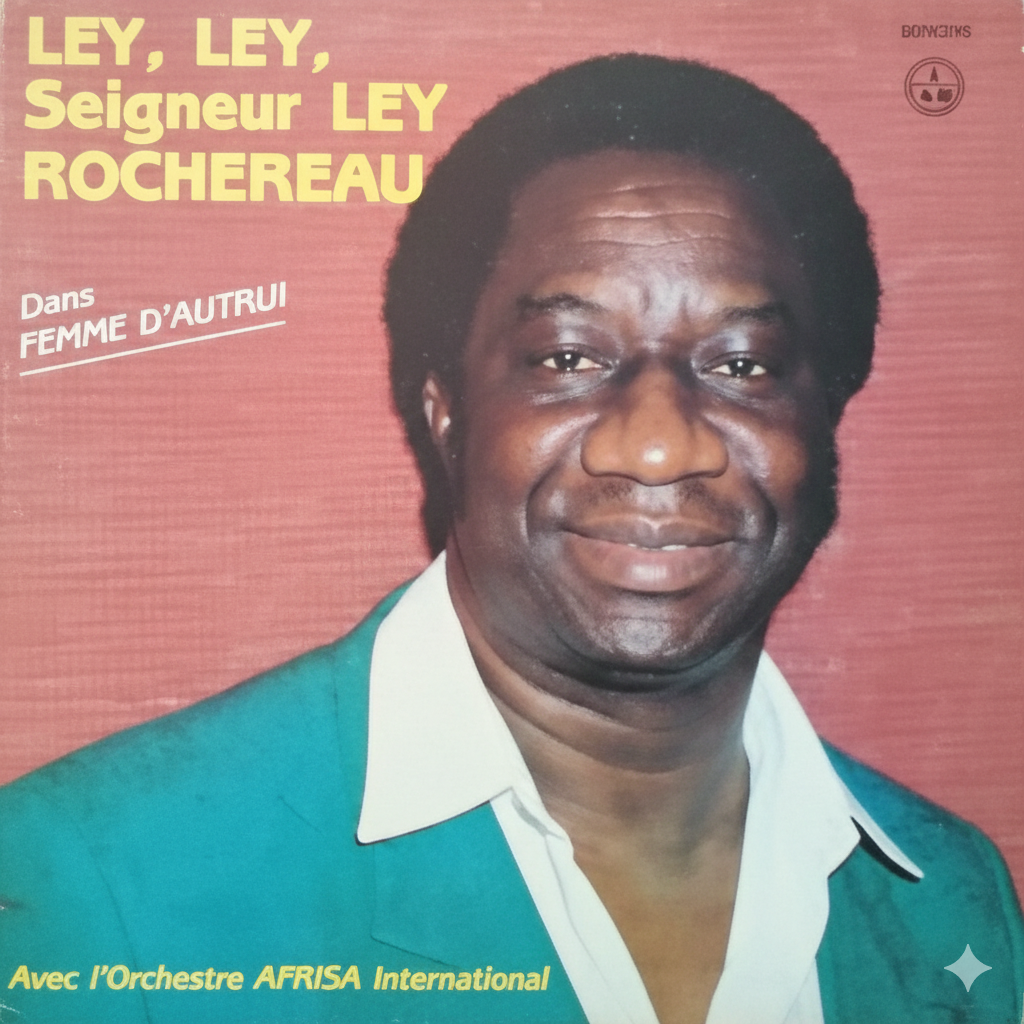
Pascal‑Emmanuel Sinamoyi Tabu popularly known as Tabuley
Tabu Ley Rochereau, born Pascal‑Emmanuel Sinamoyi Tabu on 13 November 1940 in Bagata, Belgian Congo (now the Democratic Republic of Congo), emerged as one of the most influential figures in African music. His career spanned more than five decades, during which he helped shape the sound of modern Congolese rumba and soukous.
He grew up in a musical household and developed his talent through participation in church choirs and school performances. These early experiences nurtured his exceptional vocal abilities and sparked a lifelong passion for composition and performance.
In 1956, Tabu Ley began his professional career by joining African Jazz, the leading Congolese rumba band led by Joseph “Le Grand Kallé” Kabasele. This opportunity allowed him to develop his stage presence and gain recognition as a gifted vocalist and songwriter.
During his time with African Jazz, he contributed to songs that became iconic in the Congo, including participation in the recording of “Indépendance Cha Cha” in 1960, which became an anthem of African independence movements and a symbol of hope for the continent.
In 1963, he co-founded African Fiesta alongside guitarist Dr. Nico Kasanda, pioneering a smoother, melodic style of rumba that would eventually evolve into the fast-paced, danceable soukous that became popular across Africa.
After the split of African Fiesta, Tabu Ley formed African Fiesta National, establishing himself as a bandleader capable of innovating and setting trends in African popular music. Under his leadership, the band gained a reputation for its intricate harmonies and dynamic performances.
In 1970, he created Orchestre Afrisa International, a band that would become central to his artistic career and one of Africa’s most celebrated musical ensembles. The name “Afrisa” combined “Africa” and his record label Éditions Isa, reflecting both his vision and entrepreneurial spirit.
Afrisa International rivaled TPOK Jazz, led by Franco Luambo Makiadi, in popularity and influence, becoming a defining force in Congolese music during the 1970s and 1980s. The band toured internationally, spreading Congolese rhythms across Europe, the Americas, and Asia.
The group recorded numerous hits that became classics, including “Sorozo,” “Kaful Mayay,” “Aon Aon,” and “Mose Konzo.” These songs showcased Tabu Ley’s signature combination of romantic lyrics, intricate rhythms, and compelling melodies.
In 1982, the release of the song “Maze” highlighted his innovative use of the sebene, a guitar-driven instrumental passage that became a hallmark of soukous and a favorite on dance floors across Africa.
Tabu Ley’s music masterfully fused traditional Congolese rhythms with Cuban, Caribbean, and Afro-Latin influences, giving it an international appeal while maintaining its distinctly African identity.
Throughout his career, he composed approximately 3,000 songs and released around 250 albums, earning him recognition as one of the most prolific African musicians of the 20th century.
Among his most acclaimed albums was “Babeti Soukous” (1989), recorded at Peter Gabriel’s Real World Studios. The album received international acclaim for blending authentic Congolese rhythms with modern production values.
Other important albums include “Muzina,” “Exil Ley,” “Africa Worldwide,” and “Man from Kinshasa,” each representing different stages of his evolving artistic vision and international reach.
The 1991 compilation “Man from Kinshasa” featured many late-career hits and helped solidify his presence in North America, where he toured extensively to growing audiences.
Tabu Ley also collaborated with Franco on the mid-1980s album “Omona Wapi,” a landmark project uniting two of Congo’s musical giants in a rare artistic partnership.
He was instrumental in discovering and promoting female talent, most notably M’Bilia Bel, who became one of the continent’s first female soukous stars and a key vocalist in Afrisa International.
Tabu Ley and M’Bilia Bel eventually married and had a daughter, Melody, intertwining their personal lives with their shared musical legacy.
His magnetic stage presence and smooth tenor voice earned him the nickname “the African Elvis,” reflecting his status as a beloved and charismatic figure both on and off stage.
Political instability and tensions under Mobutu Sese Seko’s regime led Tabu Ley to spend time in exile in France and the United States during the late 1980s, where he continued recording and performing while maintaining his cultural influence.
During this period, he adapted some of his music for international audiences, incorporating English lyrics and broader dance styles while remaining rooted in Congolese rhythms.
He played a major role in popularizing Lingala as a pan-African musical language, helping unite audiences from diverse ethnic and linguistic backgrounds across the continent.
Following the fall of Mobutu’s regime in 1997, Tabu Ley returned to the DRC and engaged in politics, serving as a cabinet minister and later as Vice-Governor of Kinshasa, extending his influence beyond music into civic leadership.
Tabu Ley Rochereau passed away on 30 November 2013 in Brussels, Belgium, at the age of 73, leaving behind a monumental legacy of music, mentorship, and cultural impact.
His extensive catalog of recordings, mentorship of rising stars, and innovative musical contributions continue to inspire African musicians, dancers, and global audiences, cementing his place as one of the most important cultural figures of modern Africa.
Tags: Dr Congo Editor's Pick Entertainment Signs Media Kenya Limited Signsmedia



Share this article

FELIX MAKONA
FACT FINDER AND DATA DRIVEN JOURNALIST. DATA MINING AT IT'S BEST. GET FACTS RANGING FROM MATTERS DISABILITY AND INCLUSION, POLITICS, ECONOMY, SPORTS AND GENERAL NEWS AROUND THE WORLD