

Franco Luambo: The Sorcerer of African Music
Entertainment Updated: 01 February 2026 00:12 EAT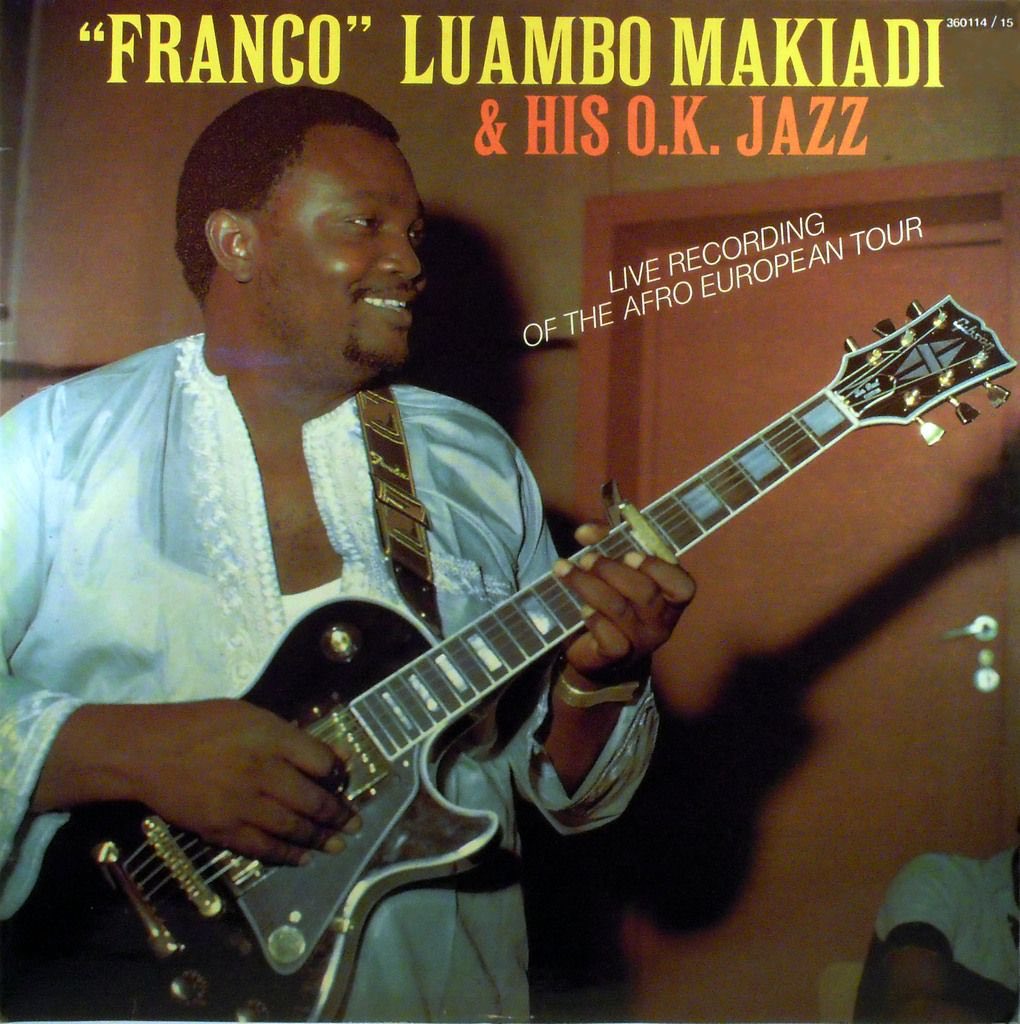
The late Rhumba legendary artist Franco Luambo Luanzo Makiadi
François Luambo Luanzo Makiadi, widely known as Franco Luambo, passed away decades ago, but his music continues to shape African culture. Born on 6 July 1938 in Sona-Bata, Bas-Congo, Franco became a legendary singer, guitarist, composer, and bandleader.
Franco was born into an inter-ethnic family. His father, Joseph Emongo, worked on the railway, while his mother, Hélène Mbongo Makiese, had Kongo and Ngombé heritage. He lost his father at an early age, leaving his mother to care for Franco and his siblings.
Growing up in Léopoldville (now Kinshasa), Franco developed an early interest in music. By age seven, he had fashioned his first homemade guitar, performing at his mother’s market stall to attract customers.
At just 12, Franco joined his first professional band, Watam, under the guidance of guitarist Paul Ebengo “Dewayon,” who recognized his prodigious talent. This mentorship laid the foundation for his future career.
Franco released his first solo record as a young teen, reportedly titled “Bolingo na ngai na Beatrice”, demonstrating his extraordinary musical abilities at an early age.
In 1956, he co-founded the band O.K. Jazz with Jean Serge Essous. The group later became T.P.O.K. Jazz, which Franco led for more than three decades, earning international acclaim.
Under Franco’s leadership, T.P.O.K. Jazz grew to include over 50 musicians at its peak, becoming one of Africa’s most prolific and influential bands.
Franco pioneered a unique style blending Congolese rumba and soukous, fusing Cuban rhythms with African melodies to create intricate guitar patterns and danceable beats.
His mastery of the guitar earned him nicknames such as the “Sorcerer of the Guitar”, Grand Maître, and Franco de Mi Amor, reflecting his legendary status across Africa.
Over his career, Franco composed around 1,000 songs and released more than 150 albums, making him one of the most prolific African musicians in history.
His lyrics ranged from love and marriage to social issues and politics, often providing sharp commentary on daily life in the Congo.
Some of his songs sparked controversy. In 1978, tracks like “Jackie” and “Hélène” faced temporary bans and even legal scrutiny, reflecting the boldness of his social commentary.
Franco’s 1985 hit “Mario” told a story of societal change and sold over 200,000 copies, cementing his influence on Congolese music and culture.
He toured internationally, including performances in the United States in 1983, spreading Congolese rumba to global audiences.
Franco collaborated with other African music icons, such as Tabu Ley Rochereau, while continuing to lead T.P.O.K. Jazz at the forefront of the music scene.
His career intersected with politics. Franco both criticized and courted President Mobutu Sese Seko’s regime, receiving titles like Grand Maître of Zairean Music and Officer of the National Order of the Leopard.
Franco’s music influenced generations across Central and East Africa, shaping contemporary styles and inspiring countless musicians. His influence remains particularly strong in countries like Kenya.
In his personal life, Franco had an extensive family, reportedly fathering up to 18 children through multiple marriages.
By the late 1980s, Franco faced serious health challenges, including kidney failure, yet he continued to perform and record music reflecting on life and mortality.
He passed away on 12 October 1989 in Mont-Godinne, Belgium, at the age of 51, prompting four days of national mourning in Zaire.
Franco’s legacy endures. His music is still widely played, studied, and celebrated across Africa, solidifying his role as a pillar of African culture.
Scholars and musicians alike hail him as the father of modern Congolese rumba and soukous, a true innovator in African music history.
Monuments, tributes, and continued international recognition attest to his lasting impact, ensuring Franco’s influence extends far beyond his lifetime.
Today, Franco Luambo Luanzo Makiadi remains a symbol of creativity, cultural pride, and the transformative power of music in Africa.
Tags: Signs Signs Media Kenya Limited Signsmedia Dr Congo Entertainment Editor's Pick


Share this article

FELIX MAKONA
FACT FINDER AND DATA DRIVEN JOURNALIST. DATA MINING AT IT'S BEST. GET FACTS RANGING FROM MATTERS DISABILITY AND INCLUSION, POLITICS, ECONOMY, SPORTS AND GENERAL NEWS AROUND THE WORLD