

Youlou Mabiala: Congo’s Rumba Legend and Musical Icon
Entertainment Updated: 27 March 2026 22:43 EAT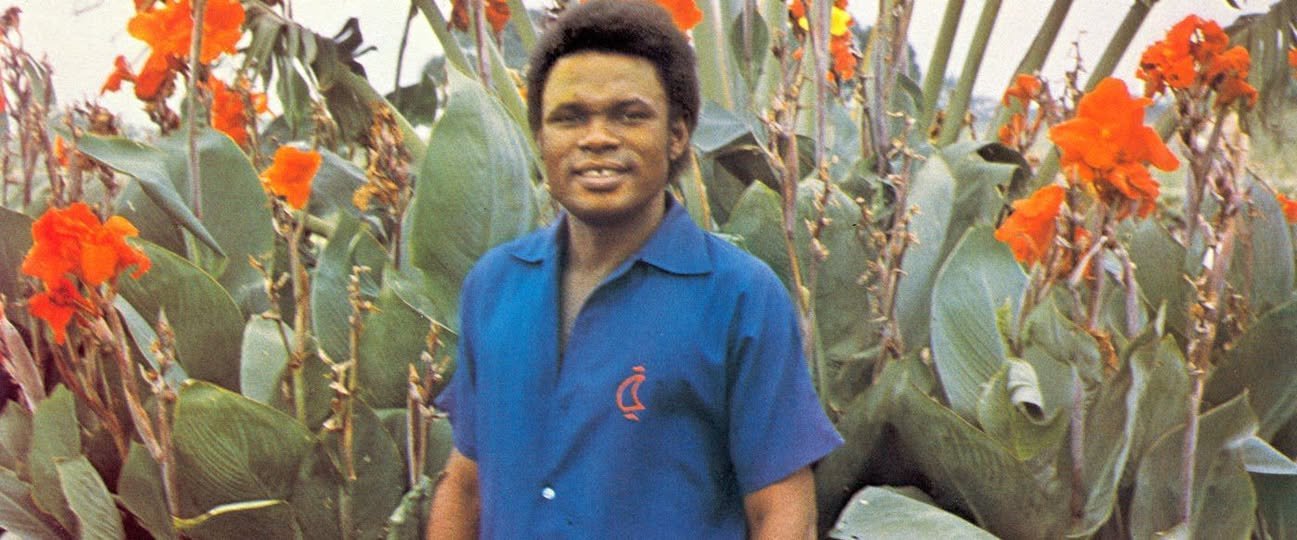
Prince Youlou Mabiala married Marie Hélène Luambo, the daughter of the legendary Congolese musician Franco Luambo Makiadi.
Gilbert Youlou Mabiala, widely known as Youlou Mabiala and affectionately called “Le Prince,” was born on March 6, 1947, in Linzolo, Brazzaville, Republic of the Congo. He is celebrated as one of the most influential figures in Congolese rumba and African music.
Mabiala began his musical journey as a teenager in Brazzaville, performing with local vocal groups Les Griots and Les Mains Blanches, where he honed his singing and performance skills.
His breakthrough came in 1966 when he joined the legendary TPOK Jazz, led by Franco Luambo Makiadi. Mabiala’s distinctive high-pitched voice and songwriting talent quickly made him a central figure in the band.
During his early years with TPOK Jazz, Mabiala wrote and recorded several hit songs, including “Numéro Ya Kinshasa,” “Dodo Tuna Motema,” “Nakopesa Yo Motema,” and “Billy Ya Ba Fiancées,” which became staples of Congolese rumba.
In 1972, he left TPOK Jazz to join Lovy du Zaïre and later co-founded Somo Somo in 1974, expanding his influence in Central African music.
Mabiala returned to TPOK Jazz in 1976 and composed “Kamikaze,” one of his most enduring songs, for the band’s twentieth-anniversary album. His contributions continued to shape rumba music across the region.
In 1977, he co-created Orchestre Les Trois Frères, achieving rapid success with hits like “Petit Chéri,” “Saley,” and “Nenette,” establishing himself as a bandleader in addition to being a vocalist and composer.
By 1980, Mabiala founded Kamikaze Loningisa, producing numerous hits including “Je suis encore jeune,” “Satan,” “Seli Go,” “Le corps refuse,” “Lili,” “Nsona,” and “Maka,” solidifying his place in African popular music.
Throughout the 1980s and 1990s, he released a series of albums blending traditional rumba rhythms with modern influences, maintaining his prominence in the music scene.
Following Franco’s death in 1994, Mabiala helped revive TPOK Jazz, overseeing new recordings and leading the band through a creative resurgence.
In 2004, Mabiala suffered a stroke during a performance in Pointe-Noire, forcing him to withdraw from active music for many years.
He was treated in Brazzaville and later in France, where he lived for nearly two decades undergoing rehabilitation.
Despite his absence from the stage, Mabiala’s legacy endures through his recordings, compositions, and the influence he had on generations of musicians across Africa.
Fans and fellow artists continue to celebrate his contributions during return visits to Brazzaville, honoring his role in shaping Congolese music.
Mabiala is regarded as a cultural ambassador who helped bring Congolese rumba to international audiences.
Over a career spanning more than four decades, he earned recognition as a songwriter, bandleader, vocalist, and cultural icon.
His work with multiple bands and solo projects left an indelible mark on the history of African music.
Mabiala’s songs remain celebrated for their melody, rhythm, and lyrical depth, inspiring contemporary Congolese artists.
Even in retirement, his influence continues to resonate in the development of modern rumba and the preservation of Congo’s musical heritage.
Tags: Entertainment Signs Media Kenya Limited Signsmedia Signstv Signstvkenya Mziki wa rumba Rumba and Entertainment Rumba for entertainment Rumba in African Culture and heritage Rumba memories



Share this article

FELIX MAKONA
FACT FINDER AND DATA DRIVEN JOURNALIST. DATA MINING AT IT'S BEST. GET FACTS RANGING FROM MATTERS DISABILITY AND INCLUSION, POLITICS, ECONOMY, SPORTS AND GENERAL NEWS AROUND THE WORLD