

Uhuru Warns Against Ethnic Politics As Jubilee Intensifies Reorganization Drive
Politics Updated: 25 May 2026 15:23 EAT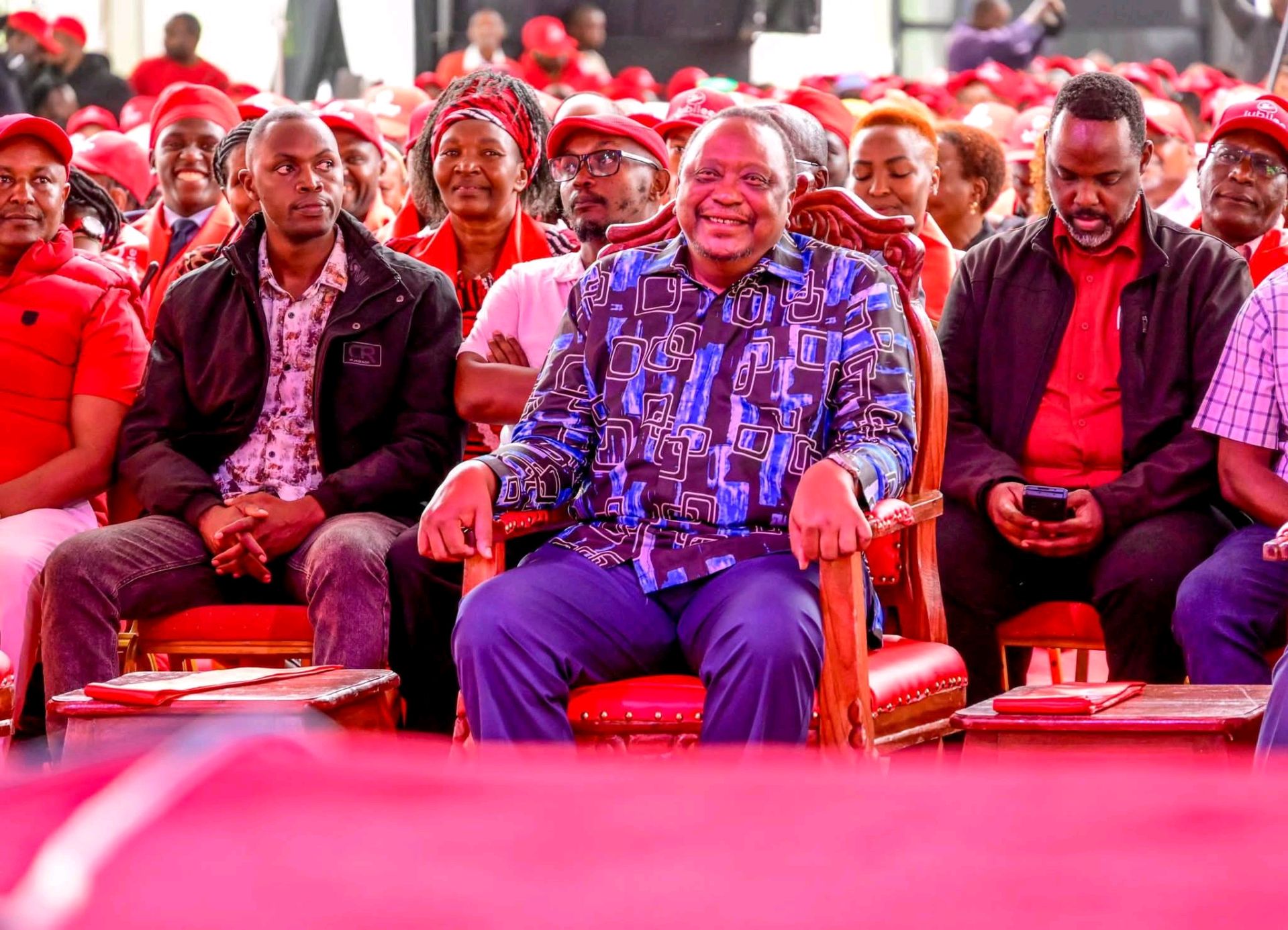
Former President honourable Uhuru Kenyatta at the Jubilee Party meeting in Kiambu County
Former President Uhuru Kenyatta has launched a scathing attack on divisive politics and ethnic incitement, warning that Kenya risks repeating painful historical mistakes if leaders continue promoting hatred and political intolerance.
Speaking during a major Jubilee Party grassroots meeting in Kiambu County, Uhuru urged Kenyans to reject tribal politics and instead focus on economic recovery, national unity, and leadership grounded in service delivery.
The former Head of State received a warm reception from hundreds of Jubilee supporters and aspiring party leaders who gathered to discuss the future of the party and preparations for nationwide grassroots elections.
Uhuru began his address by thanking residents from across Kiambu for attending the event despite an earlier postponed meeting, saying their commitment reflected loyalty to the party and belief in democratic participation.
“Ningependa kwanza kutoa shukrani nyingi kwa kila mmoja wenu ambaye ametoka sehemu mbalimbali za kaunti hii yetu ya Kiambu kuja tuwe pamoja hapa siku ya leo. Na nikisema hivyo nasema hivyo nikijua ya kwamba hata wiki iliyopita tulikuwa na shughuli ingine ambayo kwa sababu ya vile mambo yalikuwa hatukuweza kufika lakini mkakubali ya kwamba tutakutana na mtarudi tena. Asanteni sana wenzangu wa Kiambu, nashukuru sana.”
The former president explained that his main objective at the meeting was to discuss the current state of Jubilee Party and outline its future political direction following years of internal disputes and legal battles.
Uhuru said the reorganization process began immediately after he peacefully handed over power after the 2022 General Election, insisting that his intention had always been to facilitate a smooth transition to a new crop of party leaders.
“Kazi yangu kutoka hapo ilikuwa nianze mpango wa kupatia chama chetu cha Jubilee viongozi wapya wa kuipeleka mbele na tukaanza hiyo shughuli kwa njia ya utaratibu ambao ulikuwa unatakiwa kisheria, kikatiba ya taifa na kikatiba ya chama chetu. Lakini wengine wakaona hii ni nafasi yao ya kuchafua chama chetu wakatufungia na kutupeleka mahakamani kwa muda wa miaka miwili mitatu.”
According to Uhuru, political opponents deliberately frustrated Jubilee’s internal transition process through prolonged court cases and interference aimed at weakening the party from within.
He defended his continued participation in Jubilee affairs, dismissing claims by critics that he was interfering in active politics despite retiring from office.
“Sasa leo mimi bado niko katika hiyo harakati ya ku-handover na wengine wanasema ati naingilia siasa. Kama wangeingia ule wakati wa mbele hii kazi ningekuwa nimemaliza zamani lakini nimeamua tutaendelea mpaka tutimize hiyo shughuli kulingana na mapenzi ya chama chetu na kulingana na sheria na mwongozo wa katiba yetu.”
The former president announced that Jubilee had finalized constitutional changes within the party and officially confirmed former Interior Cabinet Secretary Fred Matiang'i as deputy party leader.
He also confirmed changes involving other senior officials, including party secretary general leadership positions, saying the party was now focused on grassroots mobilization and member registration ahead of internal elections.
“Safari tumeanza. Tumeona sasa ya kwamba yale mabadiliko ambayo tuliweka sasa yamekubalika. Na Dr. Matiang’i amekuwa confirmed kama naibu wa kiongozi wa chama chetu. Na sasa mwelekeo wetu ni tuanze kule mashinani mambo ya mobilization na kuandikisha wananchi ndio tuwe na uchaguzi wa chama wa mashinani mpaka juu.”
Uhuru promised Jubilee members that the upcoming grassroots elections would be conducted fairly and democratically without favoritism or manipulation by powerful individuals.
He warned aspirants against assuming that political connections or friendships with influential leaders would guarantee them party positions.
“Yangu ni kuhakikisha ya kwamba uchaguzi ambao utafanyika ndani ya chama chetu utakuwa uchaguzi wa haki bila mapendeleo. Wananchi wenyewe waamulie viongozi ambao watataka. Kama kuna yule ambaye anafikiria utachaguliwa kwa sababu wewe ni rafiki ya mtu fulani, hiyo sio njia. Tunataka viongozi waliochaguliwa na wananchi lakini sio viongozi wa kuwekelea.”
The former president repeatedly emphasized that Jubilee remains a national party committed to serving all Kenyans equally regardless of tribe, religion, or region.
Uhuru said the party would never embrace discrimination or ethnic exclusivity, arguing that Kenya’s strength lies in national unity and equal opportunity for all communities.
“Chama chetu sio chama ya sehemu fulani. Chama chetu ni chama cha kitaifa. We are a national party. Tunazingatia maslahi ya wananchi kutoka kila kona la taifa letu la Kenya. Sisi sio chama ya kubagua. Sio chama ya mapendeleo. Sisi ni chama cha kitaifa.”
Referring to Fred Matiang’i and other Jubilee officials, Uhuru insisted that leadership should be defined by service to citizens and not by ethnic identity.
He praised leaders who work across ethnic lines and serve all communities equally without discrimination.
“Nikiwa naangalia ndugu yangu Matiang'i hapa sisemi ati kwa sababu yeye ni mkikuyu. Nasema ukitaka kuwa kiongozi wa chama cha Jubilee kwa kuunganisha na kufanyia wananchi kazi kila pahali popote wametoka, you go everywhere in this country na usimamie haki zao.”
Uhuru further praised leaders who have historically served diverse communities, saying Kenya requires leaders capable of uniting people from different ethnic backgrounds.
The former president said no Kenyan should intimidate or threaten another community for political gain.
“Hakuna mtu ambaye anastahili kutisha mwenzake. Hakuna mtu ambaye anastahili kutisha kabila tofauti. Sisi sote ni Wakenya na Mwenyezi Mungu anajua ni kwa sababu gani alituweka pamoja kwa nchi ambayo inaitwa Kenya. Sio kuja hapa kutugawanya na kutupiganisha.”
Uhuru accused some politicians of openly promoting divisive politics and inflammatory rhetoric in the presence of senior government leaders without facing consequences.
He warned that silence from authorities against such statements could encourage dangerous political intolerance across the country.
“Tumeanza kuona wengine wakianza siasa ya mgawanyiko na hawana haya wakiongea mambo ya kuchochea, mambo ya kuleta vita, mambo ya kugonganisha Wakenya. Na hakuna mtu ambaye anasimama hapo kusema msiongee vile.”
The former president drew parallels between the current political climate and events leading up to the 2007 post-election violence, warning Kenyans not to ignore early warning signs.
Uhuru said the 2007 crisis began gradually through inflammatory political language before eventually escalating into nationwide violence.
“Hii sio mara yetu ya kwanza kuona viongozi wakiongea mambo machafu ya kuleta vurugu. Ya mwisho tuliyaona mwaka wa 2007. Tusifikirie ya kwamba hiyo mambo ilianzia hapo hapo. Ilianzia kwa maneno kama haya ambayo watu wanaongea.”
He called on security agencies and government officials to take firm action against politicians spreading hate speech and ethnic hostility.
Uhuru insisted that patriotic leaders must prioritize peace and stability above political interests.
“Nawaomba viongozi wa serikali. Nawaomba viongozi wa usalama wa nchi hii yetu ya Kenya. Kama kwa ukweli mnapenda nchi yetu msiruhusu mambo haya yaendelee.”
The former president challenged politicians to focus on policies and practical solutions rather than blame games and ethnic mobilization.
He said Kenya’s biggest challenge today is the rising cost of living that continues to burden ordinary citizens struggling to survive economically.
“Mkitaka wema na amani ya nchi viongozi wauze sera. Uza sera. Tuuze yale ambayo tunataka kutendea wananchi na tusibague wananchi. Tuuze sera zetu kazi yetu.”
Uhuru used the example of low-income earners to demonstrate how fuel prices, rent, and transport costs are consuming household incomes and leaving families unable to meet basic needs.
He said the government and political leaders should focus on solving those economic problems instead of promoting ethnic narratives.
“Issue ni simple watu wanapiga kelele kwa sababu wanasema mimi ni mtu ambaye mshahara wangu kwa mwezi ni shilingi 20,000. Hiyo inaenda kwa petrol pekee yake kwa matatu kwenda na kurudi nyumbani. 12,000 inaenda kwa nyumba ambayo nimekodesha, nimebaki na 2,000 ya kulisha watoto wangu na kuwapeleka shule.”
The former president criticized leaders who continue blaming previous administrations instead of addressing current national problems affecting Kenyans.
He argued that every administration has a responsibility to deal with challenges during its time in office.
“Kila wakati kusema ati watu wakiwa na hii kwa nini hawakufanya. Hapana. Kila wakati na wakati yake. Sisi tulijaribu kwa vile tuliweza. Nyinyi ndio mpo sasa, deal with the issue.”
Uhuru questioned how ethnic blame games could help move Kenya forward economically or politically.
He urged leaders to openly discuss national problems and collectively seek solutions that benefit all citizens.
“Na jameni hakuna mtu ambaye haoni shida iko wapi si tuiweke kwa meza tuitatue. Kama kweli sisi ni Wakenya na tunapenda nchi yetu kwenda kutugawanya huko oh shida ni kwa sababu ya yule yule yule. How does that help move this country forward?”
The former president declared that hungry citizens cannot survive on political rhetoric and promises alone, insisting that Kenyans need practical development and improved public services.
He highlighted the need for better schools, hospitals, roads, and economic opportunities for ordinary wananchi.
“Wakenya hawatakula maneno wakiwa na njaa watakula chakula. Mtoto hatasomeshwa na maneno ni turekebishe mashule. Mgonjwa hatarekebishwa kwa maneno ni tutengeneze mahospitali yetu. Barabara hazijengwi na maneno ni tujenge barabara.”
Uhuru urged Jubilee supporters not to engage in insults or confrontational politics even when provoked by opponents.
Instead, he told party members to remain focused on selling their policies and vision for the country.
“Wacha waseme na watusiane vile wanataka kama hiyo ndio wanajua. Nyinyi nyamazeni uzeni sera. Muuze sera na mseme sisi hatuna haja na ya walioshindwa sisi tuna haja na Kenya ya kesho.”
The former president said he personally had no interest in responding to attacks from political rivals, insisting that his focus remained on Kenya’s future and national stability.
He warned supporters against being dragged into unnecessary political confrontations.
“Ndio mimi nasema mimi sitawajibu. Nawajibu ndio nifaidike na nini? Our country and where our country needs to go.”
Uhuru encouraged Kenyans to seek leaders rather than politicians driven by popularity and empty slogans.
He said true leadership is measured by the ability to uplift communities and improve people’s lives.
“Msiwe watu ambao wanaongozwa na wanasiasa. Tutafute viongozi. Tafuteni viongozi. Don't decide that you can only be somebody by cheap popularity that takes you nowhere.”
The former president also criticized political labels such as “dynasty” and “hustler,” questioning whether such slogans had improved the lives of ordinary Kenyans.
He warned citizens against embracing another wave of ethnic politics disguised as political change.
“Hiyo mambo sijui dynasty, hustler imewaletea nini? Sasa mkuje muambiwe siasa ingine ya ukabila itawaletea nini isipokuwa shida? Msikubali.”
Uhuru urged young people seeking leadership positions to focus on transformative ideas, youth empowerment, employment opportunities, and improving living standards in their communities.
He said young leaders should inspire others through practical action and service.
“Nyinyi vijana ambao mnatafuta uongozi tafuteni uongozi kwa njia ya kueleza vijana wenzenu vile mtawabadilishia maisha vile mtawapatia kazi vile mtatengeneza mitaa yao.”
The former president further praised Kiambu residents for peacefully living and working alongside people from different communities and regions.
He said Kenya belongs equally to all citizens regardless of ethnicity or place of origin.
“Kenya ni ya wote na pahali unahisi hapo ndipo kwako ujifurahie ujivunie na ukatae kuletewa siasa ya ujinga siasa ambayo haikupeleki pahali popote.”
Uhuru concluded his speech by blessing Kenyans and urging citizens to continue working together peacefully for the sake of national unity and prosperity.
The meeting ended with prayers led by religious leaders as Jubilee supporters cheered the former president and pledged support for the party’s grassroots reorganization campaign ahead of future political contests.
Tags: Edit Editor's Pick Editors choice Jubilee Jubilee Party Jubille News Article Political Parties Political Partys Political Science Political tensions Politics Signs Signs Media Signs Media Kenya Limited Signs Tv Signsmedia Signst Signstv SignsTV Signstvkenya Signsv Signtv Ssignstv President Uhuru President Uhuru Kenyatta Uhuru Uhuru Kenyata Kenyatta Uhuru Kenyatta Uhuru Kkenyatta

Share this article

FELIX MAKONA
FACT FINDER AND DATA DRIVEN JOURNALIST. DATA MINING AT IT'S BEST. GET FACTS RANGING FROM MATTERS DISABILITY AND INCLUSION, POLITICS, ECONOMY, SPORTS AND GENERAL NEWS AROUND THE WORLD