

Mayaula Mayoni: From Football Fields to Rumba Immortality
Entertainment Updated: 08 March 2026 21:58 EAT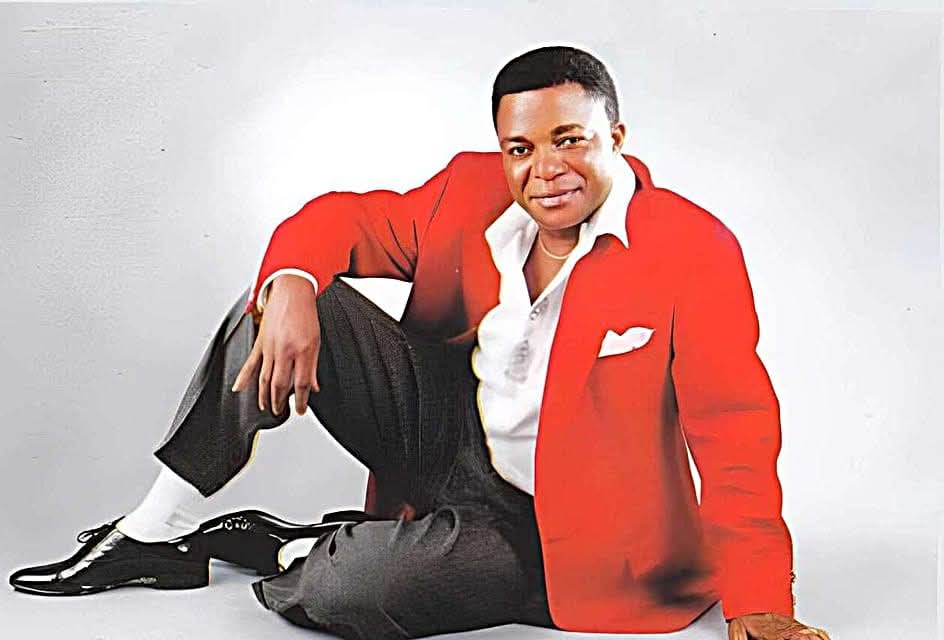
Congolese Rhumba Artist and icon Freddy Mayaula mayoni
Freddy Mayaula Mayoni was born on 6 November 1946 in Léopoldville, now Kinshasa, in what was then the Belgian Congo. He grew up in the vibrant musical and cultural environment of the Congolese capital, where both sports and art shaped his early ambitions.
Before he became a name in African music, Mayaula was a gifted athlete. He began his adult life as a professional footballer, playing as a left winger.
Between 1968 and 1971, Mayaula represented AS Vita Club, one of Kinshasa’s top football teams, where his speed and skill made him a standout performer on the pitch.
His football prowess earned him a call‑up to the national team of Zaire, featuring in the Leopards squad during an era when Congolese football was rising in prominence.
Mayaula’s path soon took an international turn when his father, serving as a diplomat, relocated the family to Tanzania. There, he briefly played for the Young Africans (Yanga) club in Dar es Salaam, further solidifying his reputation as a versatile athlete.
Seeking education and broader opportunities, he later moved to Belgium, where he continued both his studies and football career. In Belgium, Mayaula played for Royal Charleroi Sporting Club and Racing Club de Jette, and also had a stint with FC Fribourg in Switzerland.
While in Europe, his interest in music deepened. A Congolese friend introduced him to the guitar, and he began learning rhythm and melody, sowing the seeds of what would become an extraordinary musical journey.
Mayaula’s first significant musical engagement was with Africana, a band formed by Congolese students in Belgium, where he played rhythm guitar and started building his compositional skills.
In 1975, Mayaula returned to Kinshasa with a clear musical purpose. He approached legendary musician Franco Luambo Makiadi and joined the iconic TPOK Jazz ensemble, one of the most influential bands in Congolese music.
That same year, he released his debut track, “Chérie Bondowe,” a song that quickly gained public attention with its bold melody and storytelling. The track sparked controversy locally but established Mayaula as a creative force.
“Chérie Bondowe” was followed by a string of compositions that would define his early musical identity. His work with TPOK Jazz and other collaborators helped shape the Congolese rumba and soukous sound throughout the 1970s.
By 1977, Mayaula co‑founded Mamaki, a musical trio with Youlou Mabiala and Josky Kiambukuta, further demonstrating his versatility and collaborative spirit as an artist.
Among his most enduring songs from this period are “Nabali Misère,” “Momie,” and others that blended storytelling with the rhythmic sophistication of Congolese rumba.
In addition to his own recordings, Mayaula’s songwriting extended to other stars. He composed “Ndaya,” which became one of the signature hits of celebrated rumba singer M’Pongo Love, showcasing his ability to craft melodies for other voices.
Throughout the late 1970s and early 1980s, Mayaula cemented his reputation as one of the most prolific composers of his generation, frequently winning acclaim within Zaire’s music circles.
In 1985, he made a decisive shift to embark on a solo career, relocating to Europe and expanding his musical reach beyond the Congolese music scene.
During this period, he also contributed to the success of other artists, including writing “Baninga Nasi Nabali” for Tshala Muana, which became one of her breakout hits.
His solo albums throughout the 1980s and 1990s, notably L’Amour au Kilo and later Bikini, further showcased his lyrical depth and melodic mastery.
The song “Ousmane Bakayoko” from 1992 remains one of his most iconic works, celebrated for its narrative richness and musical arrangement that captures the emotional complexity of rumba.
Mayaula’s influence on the Congolese music landscape was profound. He was frequently recognised as “Composer of the Year” in Zaire for multiple songs across different decades, a testament to his lyrical and melodic gift.
In later years, he transitioned into a cultural role, including serving as a cultural officer at the DR Congo embassy in Dar es Salaam, blending his artistic legacy with diplomatic representation.
In January 2004, Mayaula suffered a stroke that left him partially paralysed, dramatically affecting his health and ability to perform.
He returned to Kinshasa in 2005, but his health continued to decline. Mayaula ultimately passed away on 26 May 2010 in Brussels, Belgium, at the age of 64, leaving behind a rich musical legacy that continues to resonate across Africa.
His life story — from the football pitches of Kinshasa and Dar es Salaam to the stages of soukous and rumba — reflects the cultural vibrancy of Central Africa and the enduring power of music to connect generations.
Tags: Article Entertainment Kenyan Sign Language Signsmedia Signstvkenya


Share this article

FELIX MAKONA
FACT FINDER AND DATA DRIVEN JOURNALIST. DATA MINING AT IT'S BEST. GET FACTS RANGING FROM MATTERS DISABILITY AND INCLUSION, POLITICS, ECONOMY, SPORTS AND GENERAL NEWS AROUND THE WORLD