

People’s Budget: Kalonzo Unveils Opposition’s Alternative To Finance Bill 2026
Politics Updated: 10 June 2026 21:35 EAT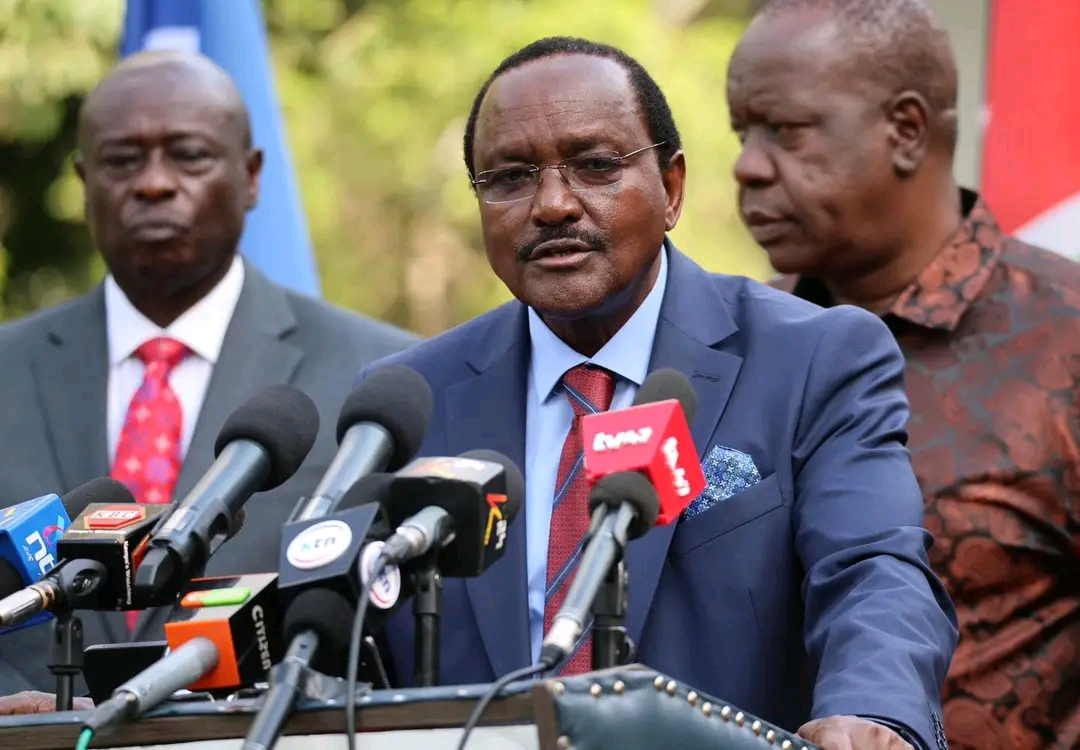
Photo Credit: Kalonzo Musyoka on Facebook
Wiper Patriotic Front party leader Stephen Kalonzo Musyoka on Wednesday joined the United Opposition leaders DCP Party Leader Rigathi Gachagua, Jubilee Party Deputy leader Dr Fred Matiang'i and DAP-K Leader Eugine Wamalwa to address issues facing the reigning government in what he framed as a competing governing philosophy ahead of the 2026/27 financial year. Speaking on behalf of the United Alternative Government coalition, he opened by declaring solidarity with Rigathi Gachagua following the recent court ruling touching on the impeachment petition and argued that the constitutional right to a fair hearing under Article 25 cannot be limited. He said the legal findings had political consequences and insisted interpretations barring Gachagua from future elective office were misplaced.
From there, Kalonzo shifted to the economy and introduced what he called a “People’s Budget,” saying the opposition would no longer remain in the space of criticism alone but would table an alternative fiscal roadmap. He described the exercise as a direct response to growing public pressure over taxation, debt, healthcare and education financing.
To humanize the figures, Kalonzo told the story of a woman he said he met in Madaraka who trades in second-hand clothes, pays statutory deductions and still struggles to educate her children. According to his account, despite constitutional guarantees on free basic education, she had received a school fee demand for infrastructure levies before her child could sit exams. Kalonzo used the example to argue that official policy and everyday reality had sharply diverged.
He then turned to the Treasury documents released for Financial Year 2026/2027 and said the numbers themselves showed a widening disconnect between expenditure and available revenue. He pointed to projected expenditure of KSh4.82 trillion against expected revenue collections of KSh3.63 trillion, arguing the resulting fiscal deficit represented future obligations being transferred to younger generations.
Kalonzo focused heavily on debt servicing, saying Kenya had reached a point where repayment obligations were competing directly with development spending. He argued that interest payments had grown large enough to overtake sectors that directly touch households and questioned whether current borrowing patterns remained sustainable.
Education emerged as one of the strongest themes in his remarks. Kalonzo accused the government of underfunding free education while maintaining that the constitutional promise remains intact on paper. He cited gaps in free day secondary education, primary education capitation and junior secondary funding and argued that parents had increasingly become financiers of public education.
He sharpened the criticism by contrasting classroom shortages with administrative expenditure. According to his presentation, too much money was concentrated in ministry operations while schools lacked books, desks and direct support. He described that imbalance as evidence of a system prioritizing management structures over learners.
Kalonzo then linked recent school unrest and fires to wider structural failures rather than isolated disciplinary incidents. Referring to the deaths of students and unrest incidents reported in recent weeks, he said the country should treat those developments as warning signs rather than one-off events.
His remarks expanded into school safety and student wellbeing. Kalonzo argued that dormitories, nutrition standards and student complaint systems require urgent review and said learners are increasingly communicating pressure, frustration and emotional strain through unrest. He criticised what he described as the absence of dedicated mental health investment in education policy.
Drawing from his period in government, Kalonzo reflected on school leadership models and cited experiences at Starehe Boys’ Centre to argue for open communication between administrators and students. He said institutions should encourage young people to speak without fear of punishment and insisted accountability should extend to anyone approving unsafe infrastructure.
Healthcare formed the second major pillar of the speech. Kalonzo attacked the transition to the Social Health Authority (SHA), claiming many Kenyans continued experiencing access barriers despite mandatory contributions. He described reports of system outages and patients being turned away as evidence that implementation had outpaced readiness.
He also questioned spending priorities inside the health sector and highlighted what he called a major financing gap during the transition. Kalonzo singled out the reported KSh104 billion technology arrangement linked to SHA and argued resources should instead be directed to frontline care, medicine supply and staffing.
On taxation, Kalonzo presented the Finance Bill 2026 as a shift toward indirect pressure on ordinary households. He claimed new proposals affecting digital payments and mobile services would disproportionately affect low-income earners who depend on mobile money for business, remittances and daily transactions.
The opposition leader further warned that tax administration reforms risked expanding state access to financial information without adequate protections. He portrayed the emerging framework as one that could increase compliance pressure while reducing room for citizens and small businesses to challenge administrative decisions.
Kalonzo also moved into strategic state assets, arguing that Kenya should not respond to fiscal pressure by disposing of high-value public investments. He referenced concerns around public stakes in commercially successful entities and called for stronger parliamentary oversight over any future transactions involving strategic national holdings.
He concluded by presenting the opposition’s alternative framework as a lower-deficit model centred on reduced borrowing, expanded spending on education and health, restoration of programmes such as Linda Mama and EduAfya, and reallocation of administrative expenditure into direct public services. His message throughout the briefing was that the contest over the budget is ultimately a contest over national priorities rather than accounting alone.
Tags: Article Edit Editor's Pick Editors choice Kalonzo Kalonzo Musyoka Political Parties Political Science Political tensions Politics Signs Signs Media Signs Media Kenya Limited Signs Tv Signsmedia Signst Signstv Signstvkenya Signsv United Opposition Wiper Party DCP DCP Leader Rigathi Gachagua Fred Matiangi Jubilee Jubilee Party

Share this article

FELIX MAKONA
FACT FINDER AND DATA DRIVEN JOURNALIST. DATA MINING AT IT'S BEST. GET FACTS RANGING FROM MATTERS DISABILITY AND INCLUSION, POLITICS, ECONOMY, SPORTS AND GENERAL NEWS AROUND THE WORLD