

Jicho Pevu Launches Fierce Attack on Ruto Government Over Fuel Prices, Tribal Politics and 2027 Race
Politics Updated: 23 May 2026 22:56 EAT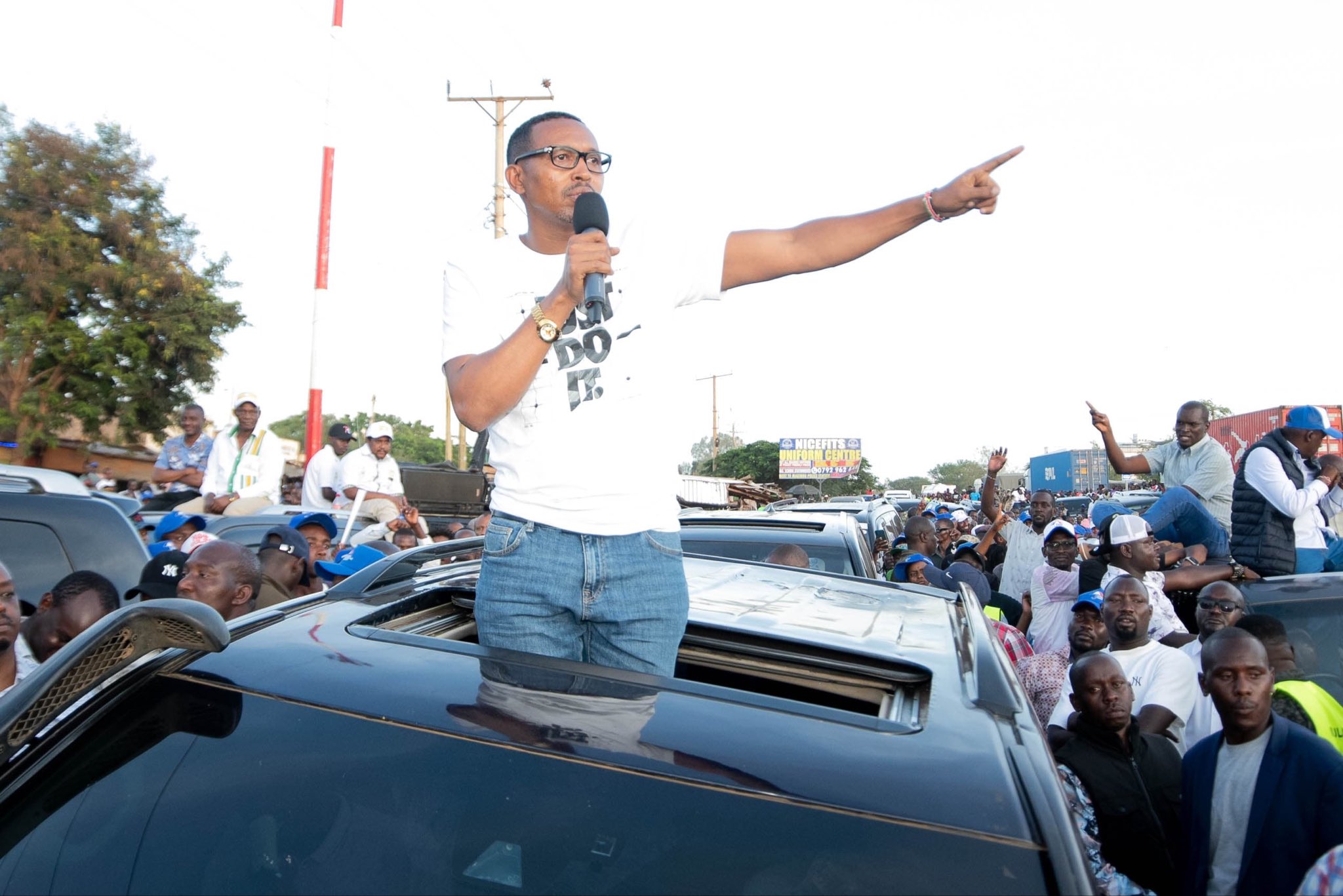
Former Mombasa gubernatorial seat aspirant Mohammed Ali popularly known as Jicho Pevu
Former Mombasa gubernatorial aspirant and activist Mohamed Ali delivered one of his strongest political speeches yet during a charged public rally where he sharply criticized President William Ruto, accusing the Kenya Kwanza administration of failing ordinary citizens and worsening the country’s economic hardships.
Jicho Pevu opened his address by attacking the government over the rising cost of fuel, claiming that some transport sector leaders had allegedly been influenced to abandon planned demonstrations against high petroleum prices. He argued that the government could not solve a national crisis by allegedly “flying a few leaders to Mombasa and giving them money” while millions of Kenyans continued to struggle with the high cost of living.
“Jambo la kwanza ni kuhusiana na bei ya mafuta. Hauwezi chukua viongozi wachache muende muwalipie ndege muwape pesa waende Mombasa wakubali kuchukua pesa ili gharama ya bei ya maisha ya mwanadamu izidi kuwa juu,” he declared as the crowd erupted into cheers.
The former journalist insisted that fuel prices directly affect every sector of the economy, saying ordinary wananchi suffer most whenever petroleum costs rise. According to him, the increase in fuel prices inevitably leads to increased transport fares, expensive food and higher living expenses across the country.
“Nataka kumwambia Rais wa Jamhuri ya Kenya ya kwamba bei ya mafuta ikipanda, bei ya kila kitu maishani inapanda. Bei ya chakula itapanda, nauli ya kwenda kazini itapanda. Kila kitu kitaanza kupanda bei,” he stated.
Jicho Pevu further criticized the cancellation of a threatened transport strike, arguing that demonstrations should have continued to pressure the government into lowering fuel prices. He claimed that a handful of transport leaders could not speak on behalf of all Kenyans affected by economic hardship.
“Sio wale viongozi 10 ambao mliwaita Mombasa mkawapatia kitu kidogo wakasema hakuna mgomo. Mgomo ulikuwa ufanyike ili serikali iheshimu kauli mbiu ya Wakenya,” he said.
He particularly questioned the sharp increase in diesel prices, describing it as unprecedented in Kenya’s post-independence history. According to him, diesel is heavily relied upon in agriculture, public transport and manufacturing, making the impact even more severe on ordinary households.
“Katika historia ya Kenya, hii ndio mara ya kwanza tangu Kenya kupata uhuru bei ya dieseli imekuwa ghali kushinda bei ya petroli,” he told supporters.
The activist also attacked the government’s Government-to-Government fuel import arrangement, dismissing official explanations as misleading and accusing unnamed private business interests of benefiting from the deal at the expense of citizens.
“Hii mambo mnasema ni G-to-G, Government to Government, hiyo ni porojo na hekaya za Abunuwasi,” he charged.
Jicho Pevu questioned why the imported fuel was allegedly being handled by a few private oil dealers instead of the state-owned National Oil Corporation of Kenya. He argued that if the arrangement genuinely served public interests, the fuel should have been distributed directly through National Oil.
“Ni kwa nini kama ni G2G hii mafuta isikuje katika National Oil yetu ya taifa?” he posed.
He vowed that anti-government protests over the high cost of living would continue regardless of any agreements allegedly reached between government officials and selected transport leaders.
“Hata hao watu 10 mkiwapa pesa sisi tutaendelea na hii kampeni. Tutasahau hawa watu 10; sisi binafsi tutaingia hiyo maandamano mpaka mshikishe bei ya mafuta wananchi wawe huru,” he declared.
The speech later shifted to national politics as Jicho Pevu criticized government officials for constantly blaming former President Uhuru Kenyatta for current problems facing the country.
“Uhuru Kenyatta sio Rais wa Jamhuri ya Kenya. Ni aliyekuwa Rais wa Jamhuri ya Kenya,” he said.
He questioned why leaders within government circles continued mentioning Uhuru Kenyatta daily despite him no longer holding any state office.
“Ni kwa nini kila siku mkiamka ni Uhuru Kenyatta? Mkiamka saa saba: Uhuru Kenyatta. Ukienda jioni: Uhuru Kenyatta. Ukienda kulala: Uhuru Kenyatta,” he remarked.
Jicho Pevu argued that if the current administration had failed to govern effectively, then leaders should admit defeat rather than continue blaming the former Head of State.
“Kama kazi imewashinda, fungeni virago muende nyumbani,” he stated bluntly.
The outspoken politician also condemned what he described as growing ethnic hostility targeting members of the Kikuyu community in the Coast region. He defended the constitutional right of all Kenyans to live and work in any part of the country.
“Nataka kukuambia, hakuna mbara atarudi kwao. Kenya ni yetu sote,” he declared.
In apparent reference to Hassan Omar, Jicho Pevu accused some Coast politicians of promoting dangerous tribal narratives against communities from other regions living in Mombasa.
“Wewe Hassan Omar, sisi kule Mombasa tunamuita ‘ugali sosa’. Ni wale wa kuja,” he said during the fiery address.
He maintained that Mombasa belongs to every Kenyan regardless of ethnicity and insisted that no tribe should be demonized for settling in the coastal city.
“Utazoea sura ya Wakikuyu Mombasa upende usipende. Utazoea sura ya Wakamba Mombasa upende usipende. Utazoea sura ya Waluhya Mombasa upende usipende,” he said.
Jicho Pevu further accused politicians of reviving tribal divisions similar to those witnessed during the 2007/2008 post-election violence period.
“Hiyo fitina mnataka… mlifanya wakati wa post-election violence ndio mlisababisha hiyo upumbavu mkafanya Wakenya wengi wauawe,” he claimed.
The former journalist also revisited the International Criminal Court cases involving President Ruto and Uhuru Kenyatta, accusing Hassan Omar of previously supporting the ICC process before later aligning himself politically with the current administration.
“Wewe ndio ulipeleka Uhuru Kenyatta na William Ruto katika mahakama ya jinai ya ICC,” he alleged.
In another explosive moment, Jicho Pevu admitted that he had campaigned for President Ruto during the 2022 General Election but now felt betrayed by the government’s direction.
“Sisi ndio tulitembea hii Kenya kukuombea wewe Ruto kura. Tulitembea kila kona katika hii Kenya kukuombea lakini leo mmeanguka, mmefeli,” he said.
He accused the administration of intimidating critics and mishandling young people protesting against government policies and taxation measures.
“Hatutawaogopa tena, hatuogopi na hatutauziwa uoga,” he declared defiantly.
Jicho Pevu also revisited the contentious Finance Bill protests, claiming many Kenyans had trusted campaign promises packaged through religious messaging during the 2022 elections.
“Watu walikuja na Biblia wakatukoroga akili wakasema ‘naoru gai’ mbele kumbe hakuna ‘ngai’ hapo safari hii,” he stated.
He urged Kenyans not to allow religion to dominate the 2027 political campaigns, saying leaders should instead be judged based on governance and economic performance.
“2027 Biblia itapewa wachungaji. Quran ikae na mashehe. Sisi na hawa wakora kiwanjani,” he declared.
The activist then rallied support behind opposition leaders including Stephen Kalonzo Musyoka, Eugene Wamalwa, Justin Bedan Muturi, Rigathi Gachagua, Martha Karua and Fred Matiang’i.
“Hakuna kitu inasonga na ndio maana unaona wengi wetu tumeanza kuondoka tunamfuata huyu ndugu yetu Mheshimiwa Stephen Kalonzo Musyoka,” he said.
He urged opposition parties to unite behind a single presidential candidate ahead of the 2027 elections in order to challenge President Ruto effectively.
“Haki ya Mungu ninyi msipotoa candidate mmoja, mambo haya yanatoka sasa,” he warned.
Jicho Pevu specifically endorsed Kalonzo Musyoka as a possible consensus opposition candidate, urging Kenyans to rally behind one united movement.
“Kenya nzima wakisema ni Stephen Kalonzo Musyoka, Kenya nzima muende mpige kura mfukuze wakora wote waende nyumbani,” he declared.
The former journalist also criticized leaders from Mombasa for allegedly prioritizing entertainment during presidential visits instead of pressing for development projects and solutions to social problems affecting residents.
“Mimi nimeona wale wabunge wa Mombasa juzi wako huko Mombasa na Rais, kazi yao ni kucheza densi,” he said.
He accused local leaders of failing to demand better roads, jobs, factories and anti-drug interventions from the national government despite increasing hardship among Coast residents.
“Badala wamwambie Rais barabara zetu ni mbovu, hakuna miundo misingi… dawa za kulevya zimeua watoto wetu,” he lamented.
Jicho Pevu ended his speech with a strong mobilization message ahead of the 2027 General Election, urging Kenyans to register as voters and remain vigilant against any attempts to manipulate election outcomes.
“Muhakikishe mmekata kura… Jaribu kuiba haki ya Wakenya sisi na wewe sako kwa bako mpaka tukomboe hii Kenya,” he declared.
As the rally came to a close, supporters repeatedly chanted opposition slogans while Jicho Pevu maintained that “there is no power like people’s power,” signaling what could become a sustained anti-government political campaign heading toward the 2027 elections.
Tags: Signs Signs Media Kenya Limited Signs Tv Signsmedia Signstvkenya Edit Editor's Pick Editors choice Jicho Pevu Mohammed Ali Mombasa Mombasa Governor Mombasa Politics

Share this article

FELIX MAKONA
FACT FINDER AND DATA DRIVEN JOURNALIST. DATA MINING AT IT'S BEST. GET FACTS RANGING FROM MATTERS DISABILITY AND INCLUSION, POLITICS, ECONOMY, SPORTS AND GENERAL NEWS AROUND THE WORLD