

Gachagua Launches Alternative Budget, Calls Finance Bill 2026 an Economic Burden
Politics Updated: 06 June 2026 08:44 EAT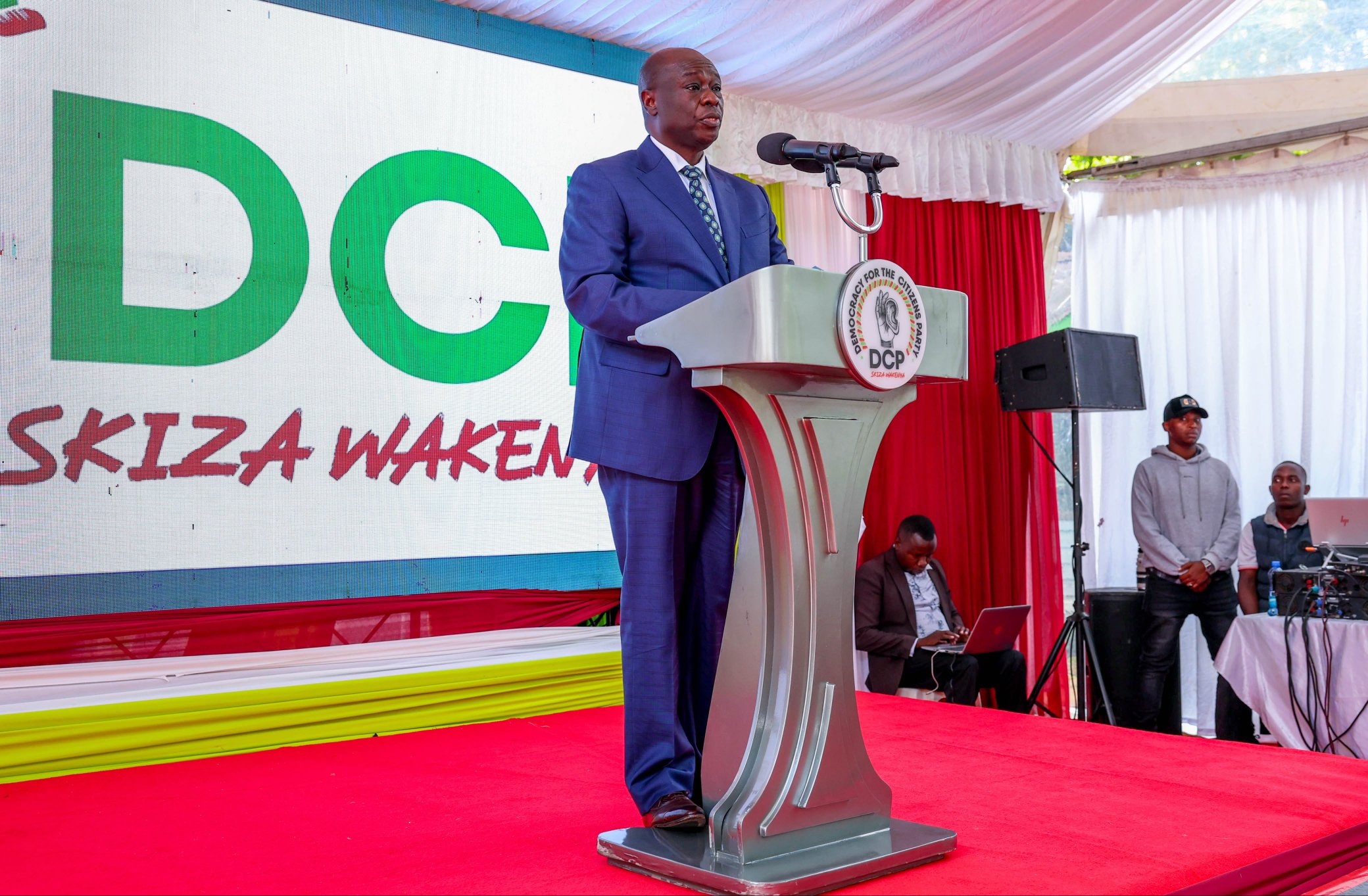
Democracy for the Citizens Party Leader Rigathi Gachagua during the
Former Deputy President Rigathi Gachagua on Friday unveiled what he termed an alternative budget proposal for the 2026/2027 financial year, positioning it as a direct response to the government’s planned budget estimates and Finance Bill.
“We, the Democracy for the Citizens Party (DCP), affirm that a national budget must be a plan for prosperity, a blueprint for opportunity, and a statement that gives priority to the people and not a cake for a few elites. We strongly hold that a people-centered budget must give priority to affordable food, access to education, affordable healthcare, affordable farm inputs and support household savings.”
Gachagua argued that Kenya’s economic direction should focus on production, institutional stability and industrial growth instead of increasing fiscal pressure on citizens and businesses.
“Great nations and great economies are built through strategic and visionary leadership, intentional production, ethical and disciplined leadership, institutional stability, industrialization and a collective national purpose. When these key factors lack in a nation, a country fails.”
He criticized the proposed national budget framework, saying projected expenditure levels and expected revenues create a large financing gap that could increase dependence on borrowing.
“The budget estimates before us at Kenya Shillings 4.82 trillion are completely out of touch with reality. The projected revenue is about Kenya Shillings 3.67 trillion leaving a deficit of Kenya Shillings 1.144 trillion. They are presenting to us a budget with an intention to borrow billions daily while ordinary citizens continue carrying the burden.”
The DCP leader questioned government borrowing trends and claimed public debt growth has not translated into sufficient development outcomes for citizens.
“Our country is trapped in a dangerous borrowing cycle. Today, as we speak, our public debt stands at Kenya Shillings 13 trillion. More troubling is the fact that interest on debt has become one of the largest consumers of public revenue. In practical terms, the government is working first for lenders then for the people.”
He further argued that debt-funded expenditure should be tied more directly to development and long-term economic productivity.
“Debt growth must be slowed and disciplined borrowing must be linked to high-impact development, not recurrent consumption. Kenya must move toward a more sustainable fiscal posture with a credible plan to reduce the deficit over time.”
Gachagua also questioned government revenue projections and argued that repeated tax measures risk weakening household spending and business activity.
“Despite persistent underperformance, the government continues projecting aggressive tax revenues. Kenyans should expect a worse tax regime midway and lots of failed promises as usual. Businesses and citizens are repeatedly asked to shoulder a heavier burden.”
On household welfare, he said rising deductions and living costs have reduced purchasing power across the country.
“The result is not prosperity. The result is economic fatigue, reduced consumer spending, shrinking margins for businesses and rising public anger. Kenyan households are no longer able to save or afford essential goods for their families.”
Education emerged as one of the central pillars of his alternative approach, with Gachagua arguing that public investment should prioritize schools and learners.
“Education funding has fallen while parents are increasingly forced to carry the cost. The gains made in free primary and free day secondary school education are being blown into oblivion. What is the future of our children?”
Agriculture was also identified as an area that requires greater budget protection to strengthen food security and rural livelihoods.
“Agriculture should be funded as the staging ground of food security, rural employment and lower inflation. This sector employs a majority of the population and remains the backbone of rural livelihoods.”
On healthcare, he argued that citizens should receive stronger public value from the taxes and deductions already being collected.
“Health should be funded as a core human right and an investment in productivity. What is more important to citizens of any nation if not healthcare? A healthy nation is a wealthy nation.”
The former Deputy President criticized what he described as expanding administrative expenditure while social sectors face pressure.
“State machinery must tighten its own belt before it demands sacrifice from the public. We would propose that government cuts wasteful and non-essential expenditure before increasing burdens on households.”
Turning to the Finance Bill 2026 proposals, Gachagua argued that the measures would increase costs across several sectors and discourage growth.
“The Finance Bill 2026 places additional pressure on households and businesses. Instead of stimulating production, encouraging investment and creating jobs, many proposals risk making Kenya a more expensive place to live, work and invest.”
He particularly raised concerns over tax changes affecting technology, digital services and financial transactions.
“Mobile phones are no longer luxury goods. They are essential tools for education, businesses, communication, financial services and job searching. Increasingly this will widen the digital divide.”
Gachagua also warned that additional costs on digital transactions could affect small businesses and financial inclusion.
“Taxing digital payment services will increase costs for traders, MSMEs, schools, hospitals and ordinary citizens who rely on mobile payments and the cost will ultimately be passed to consumers.”
As part of his alternative framework, he proposed broadening taxation while reducing pressure on existing taxpayers and improving public expenditure discipline.
“Taxation must be broadened fairly rather than imposed repeatedly on the same shrinking base. Compliance should be improved through modernization, transparency and trust.”
He also called for stronger parliamentary scrutiny of public spending and fiscal assumptions.
“Parliament must claim its oversight role. Budgets should be interrogated line by line and the legislature must insist on accountability, realistic revenue assumptions and protection of vulnerable sectors.”
The DCP leader said government should clear pending bills to stimulate economic activity and support businesses.
“The government should pay bills to businesses and suppliers to restore liquidity, support MSMEs and stimulate activity across the economy.”
He framed the debate as a broader contest over national priorities and economic philosophy.
“We reject the idea that national development is achieved by taxing people more while protecting inefficiency. We reject the idea that debt is an alternative to discipline.”
Closing his address, Gachagua urged elected leaders and citizens to scrutinize the budget process and remain engaged in public debate.
“The future of Kenya will not be built by a budget that feeds bureaucracy. It will be built by a budget that empowers production, protects the vulnerable, rewards honesty and places people before politics.”
Tags: DCP DCP Leader Rigathi Gachagua Dp Rigathi Gachagua Edit Editor's Pick Editors choice News Article One Term One term Rigath Gachagua Rigathi Gachagua Signs Signs Media Kenya Limited Signs Tv Signsmedia Signstv Signstvkenya Wantam Wantam

Share this article

FELIX MAKONA
FACT FINDER AND DATA DRIVEN JOURNALIST. DATA MINING AT IT'S BEST. GET FACTS RANGING FROM MATTERS DISABILITY AND INCLUSION, POLITICS, ECONOMY, SPORTS AND GENERAL NEWS AROUND THE WORLD