

Mudavadi Urges Gachagua To Drop Bitterness And Embrace National Unity Ahead Of Election Season
Politics Updated: 28 June 2026 21:08 EAT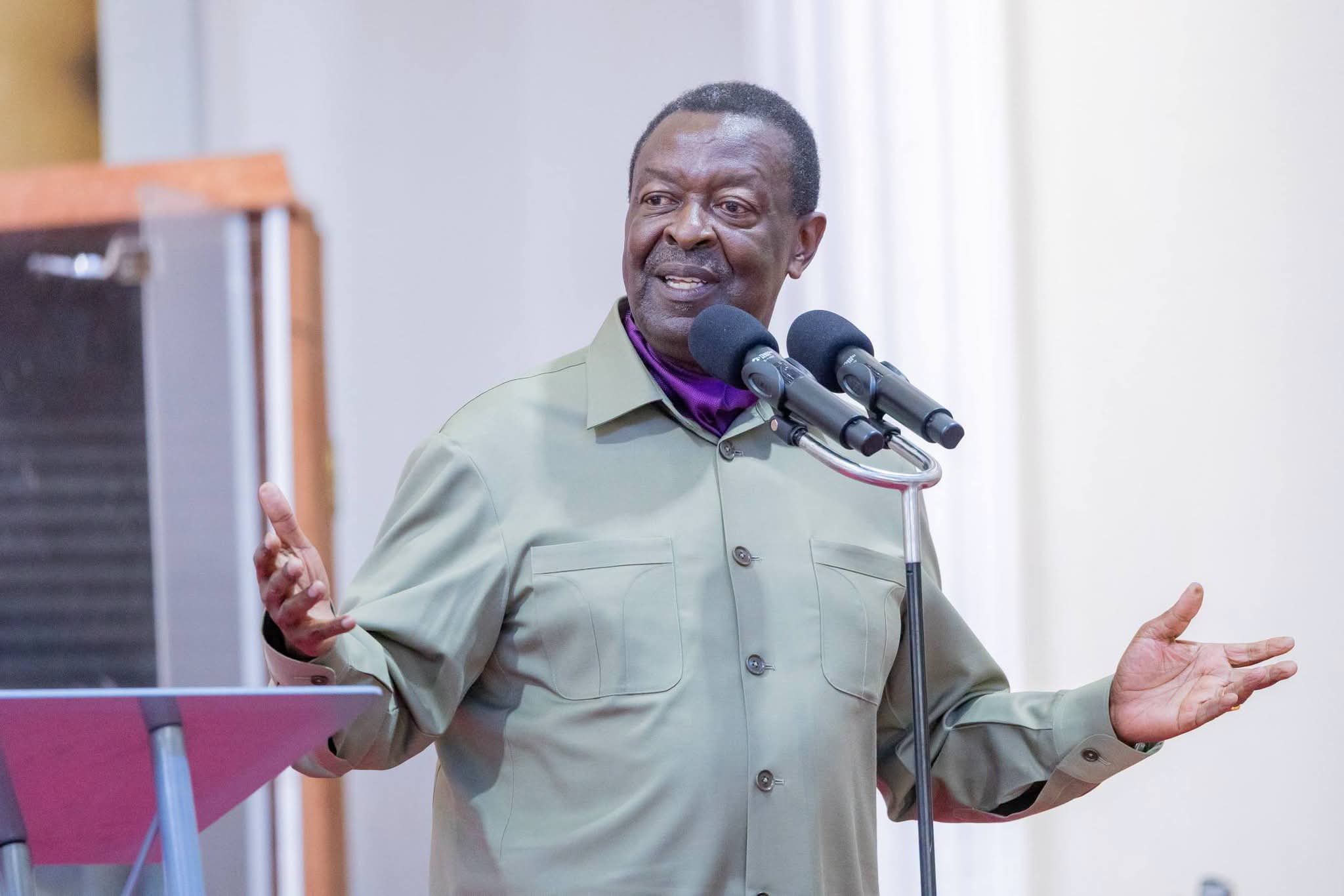
Prime Cabinet Secretary Hon. Musalia Mudavadi speaking during Sunday Church Service at Redeemed Church in Nairobi
Prime Cabinet Secretary Musalia Mudavadi has urged former Deputy President Rigathi Gachagua to stop what he termed as bitterness following his impeachment, warning that personal resentment risks destabilising national cohesion as the country moves closer to the 2027 election cycle. He emphasized that leadership requires emotional restraint and acceptance of constitutional outcomes.
Mudavadi said bitterness is self-inflicted and distinct from betrayal, stating: “Betrayal is external. Bitterness is internal. Betrayal is something that others do to you. Bitterness is something you do to yourself.” He added that many leaders are aware that disloyalty is often linked to personal attitudes, noting that “disloyalty is a product of an unthankful heart” and that betrayal is frequently driven by jealousy.
He pointed to everyday human experiences of pain and rejection, saying people often go through situations such as “an unfaithful mate, an employee who slanders you behind your back, a boss who fires you without explanation,” but insisted such experiences should not define leadership behavior or public response. According to him, national leaders must rise above personal grievances when engaging in public discourse.
Drawing from religious teachings, Mudavadi referenced the biblical account of Judas’ betrayal of Jesus at the Last Supper, citing Mark 14:18. He stated that despite betrayal, “Jesus refused to be bitter when others were disloyal or betrayed him,” using the example to emphasize forgiveness, restraint, and emotional discipline in leadership.
He further warned that bitterness is more dangerous than betrayal itself, arguing that unresolved anger can distort judgment and fuel divisions. He said national leaders and citizens must reflect on whether personal frustrations are being misdirected into public hostility, especially in politically charged environments.
Mudavadi also noted that Kenya is entering a sensitive political period where leaders will inevitably gain both supporters and critics. He cautioned that the electoral season often intensifies political rhetoric and stressed the need for responsibility, urging leaders to avoid statements that could inflame ethnic or political tensions.
On electoral preparedness, he expressed confidence in the country’s democratic systems while advocating for reduced post-election disputes. He suggested that Kenya should strive for a “petition-free presidential election,” arguing that repeated electoral petitions in past cycles have often contributed to political instability and slowed national progress.
He also underscored the importance of voter registration, stating that civic participation is key to shaping leadership outcomes. According to him, elections should be guided by ideas and policy choices rather than emotions, tribal affiliations, or revenge-driven politics.
Mudavadi criticized how some media narratives frame national incidents, arguing that reporting can influence public perception depending on emphasis. He noted that while some headlines focus on disruption, others could just as easily highlight that “businesses were saved from destruction,” stressing the importance of balanced communication.
He warned that online and public discourse is increasingly polarized, adding that bitterness can lead to misinformation and incitement. He said such trends, if unchecked, could escalate tensions and undermine national stability during the election period.
The PCS also highlighted the economic importance of peace, arguing that stability underpins sectors such as education, healthcare, trade, and transport. He warned that conflict disrupts global and local economies, noting that key international trade routes are already affected by geopolitical tensions.
He further observed that global economic shocks, including ongoing conflicts in key regions, continue to drive inflation and instability worldwide. He cautioned that such impacts do not end immediately even when conflicts subside, urging leaders to communicate economic realities honestly to the public.
Mudavadi concluded with a strong appeal for unity, warning against ethnic mobilisation and hate speech. He recalled Kenya’s 2007–2008 post-election violence, stressing that the country must never return to such a period. He urged leaders to focus on manifestos rather than division, insisting that safeguarding peace requires strengthening institutions and rejecting rhetoric that fuels hostility.
Tags: Article Edit Editor's Pick Editors choice KBB KBB Kumi Bila Break Kenya Kwanza Mudavadi Musalia Mudavadi Musalia Mudavadi News Article Political Parties Politics Signs Signs Media Kenya Limited Signs Tv Signsmedia Signstv Signstvkenya Tutam Two Term Uda

Share this article

FELIX MAKONA
FACT FINDER AND DATA DRIVEN JOURNALIST. DATA MINING AT IT'S BEST. GET FACTS RANGING FROM MATTERS DISABILITY AND INCLUSION, POLITICS, ECONOMY, SPORTS AND GENERAL NEWS AROUND THE WORLD