

Government Retains 35% Of KPC Shares As Majority Allocated To Kenyan Investors
Business Updated: 04 March 2026 18:39 EAT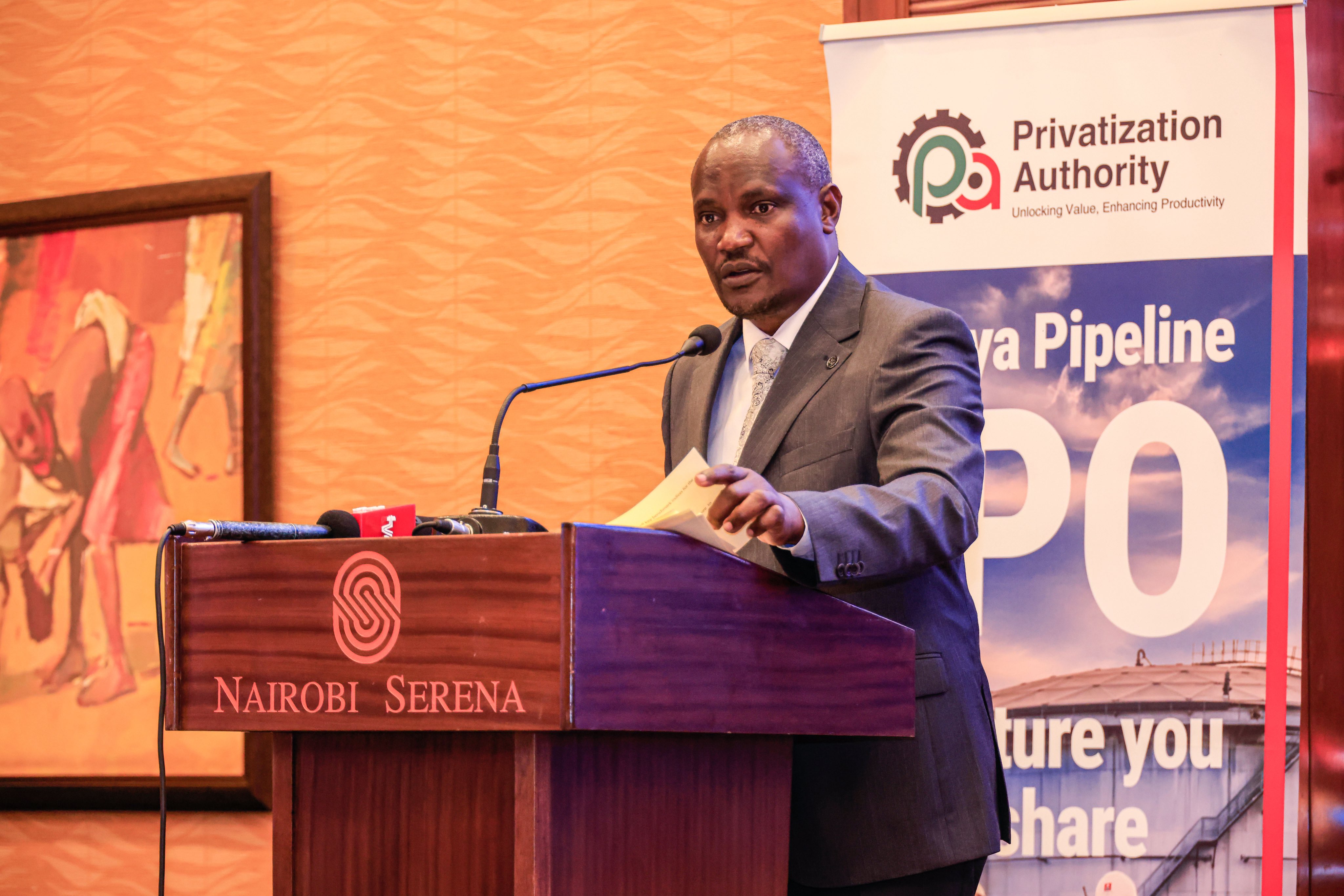
Treasury cabinet secretary John Mbadi
The Government of Kenya has confirmed it will retain a 35 per cent controlling stake in the Kenya Pipeline Company (KPC) after the successful conclusion of the company’s initial public offering (IPO), Treasury Cabinet Secretary John Mbadi said on March 4, 2026.
The IPO, which ran from January 19 to February 24, 2026, was oversubscribed at 105.7 per cent, reflecting strong investor demand for shares in the state‑owned oil infrastructure operator.
Out of the approximately 11.8 billion shares offered at KSh 9 each, about 7.95 billion shares, or 67.32 per cent, were taken up by Kenyan individual and institutional investors, Mbadi said, signalling broad domestic participation in the sale of KPC’s shares.
Institutional investors accounted for the largest share of Kenyan ownership, while retail investors — ordinary citizens who bought shares — also participated, albeit at a smaller percentage of the total allocation.
Regional investors from East African Community countries, particularly Uganda and Rwanda, also secured a significant 21.22 per cent of the offered shares, mostly through pension funds and similar investment channels.
Foreign investors from outside the EAC took up only a tiny 0.02 per cent of the shares, underscoring Mbadi’s assertion that the IPO would not cede control of KPC to outside interests.
Under the final ownership structure, local institutional investors hold around 41 per cent, retail investors about 2.56 per cent, KPC employees around 0.06 per cent, and oil marketers about 0.041 per cent, complementing the government’s retained 35 per cent stake.
Mbadi described the IPO outcome as a milestone in “democratising ownership” of key national assets, arguing that opening up KPC to Kenyan investors deepens public participation in strategic sectors of the economy.
He said strong domestic uptake reflects investor confidence in both KPC’s long‑term prospects and the government’s broader privatisation and capital markets agenda, which aims to broaden share ownership and deepen financial markets.
The total proceeds from the IPO — reported at around KSh 106.7 billion — exceeded the government’s target, enabling potential reinvestment in national infrastructure and economic development priorities.
Critics of the IPO had previously questioned the valuation and public participation in the process, but Mbadi maintained the outcome met constitutional and fiscal requirements while advancing economic reform goals.
The Kenya Pipeline Company is scheduled to begin trading on the Nairobi Securities Exchange (NSE) on March 9, 2026, marking its formal transition from a wholly state‑owned enterprise to a publicly listed company with diversified ownership.
The shift in ownership is seen as a key test of Kenya’s approach to privatising strategic state assets while retaining significant control and ensuring that domestic investors play a central role in major infrastructure firms.
Tags: CS MBADI Edit Editor's Pick National Treasury President William Ruto Signs Media Kenya Limited Signsmedia Treasury William Ruto William Samoei Ruto



Share this article

FELIX MAKONA
FACT FINDER AND DATA DRIVEN JOURNALIST. DATA MINING AT IT'S BEST. GET FACTS RANGING FROM MATTERS DISABILITY AND INCLUSION, POLITICS, ECONOMY, SPORTS AND GENERAL NEWS AROUND THE WORLD